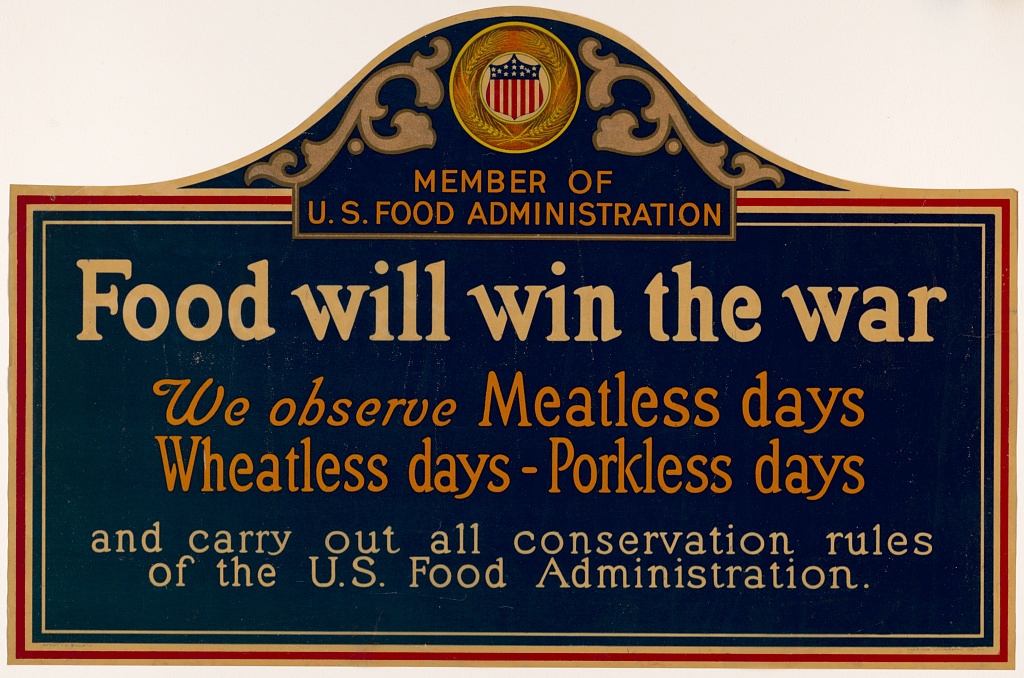
Food will win the war
 1
2
3
Library of Congress · LC-DIG-ppmsca-55869 (digital file from original print) · Public domain · Catalog record
The pins
Context
For discussion
-
1
Bandwagon Member of U.S. Food Administration This is a window card. Its first job was to show the neighbors that this household had signed the pledge, and to ask, silently, whether theirs had.
-
2
Oversimplification The headline Food did not win the war, but shipping it to the Allies mattered, and a kitchen cannot be asked to help with a sentence that long. The slogan trades accuracy for a job the reader can do.
-
3
Slogan Meatless days, Wheatless days, Porkless days Three matched words make a rule easy to remember and easy to repeat. The repetition does the persuading; nobody had to explain why pork.
Issued by Herbert Hoover's Food Administration in 1917, this poster asked households to keep "meatless days, wheatless days, porkless days" so that food could be shipped to the Allies. The administration had no power to ration and relied on voluntary pledges collected door to door; its posters made kitchen habits into war service and gave the phrase "Hooverizing" to the language.
- "Food will win the war" is a claim about causation. In what sense was it true, and in what sense not?
- The poster addresses the home kitchen. What does it gain by calling a diet a war effort?
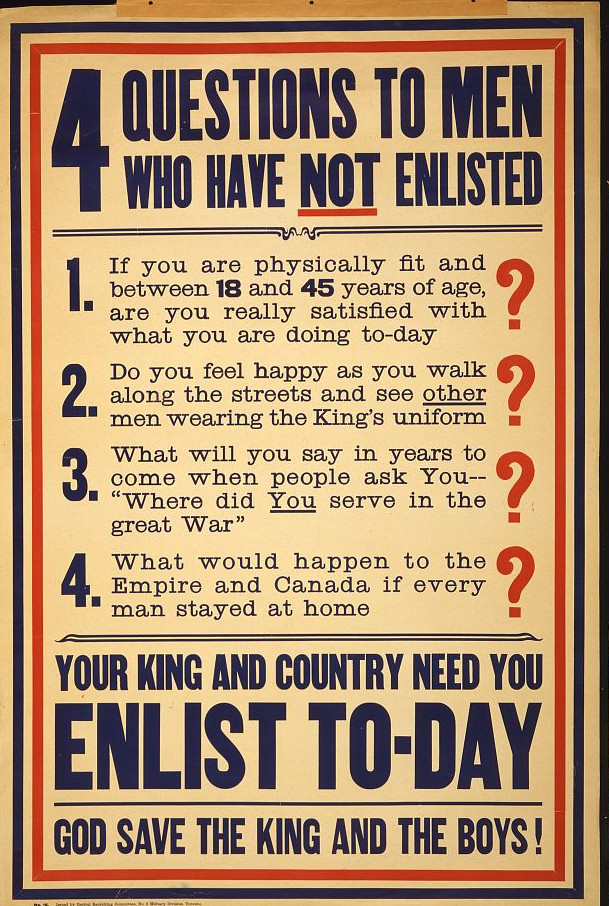
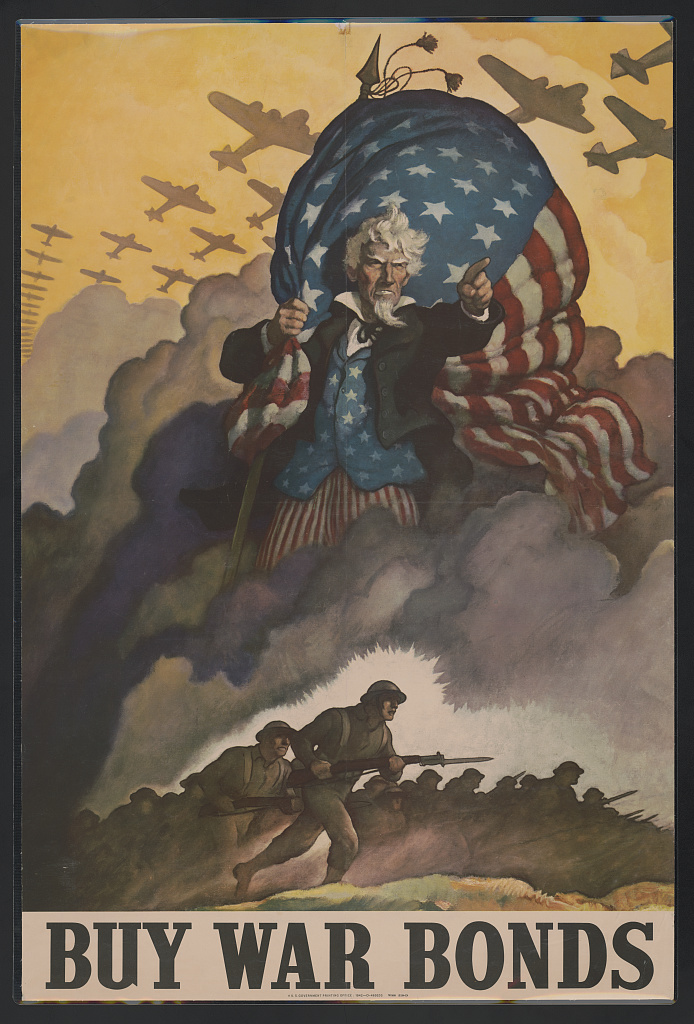
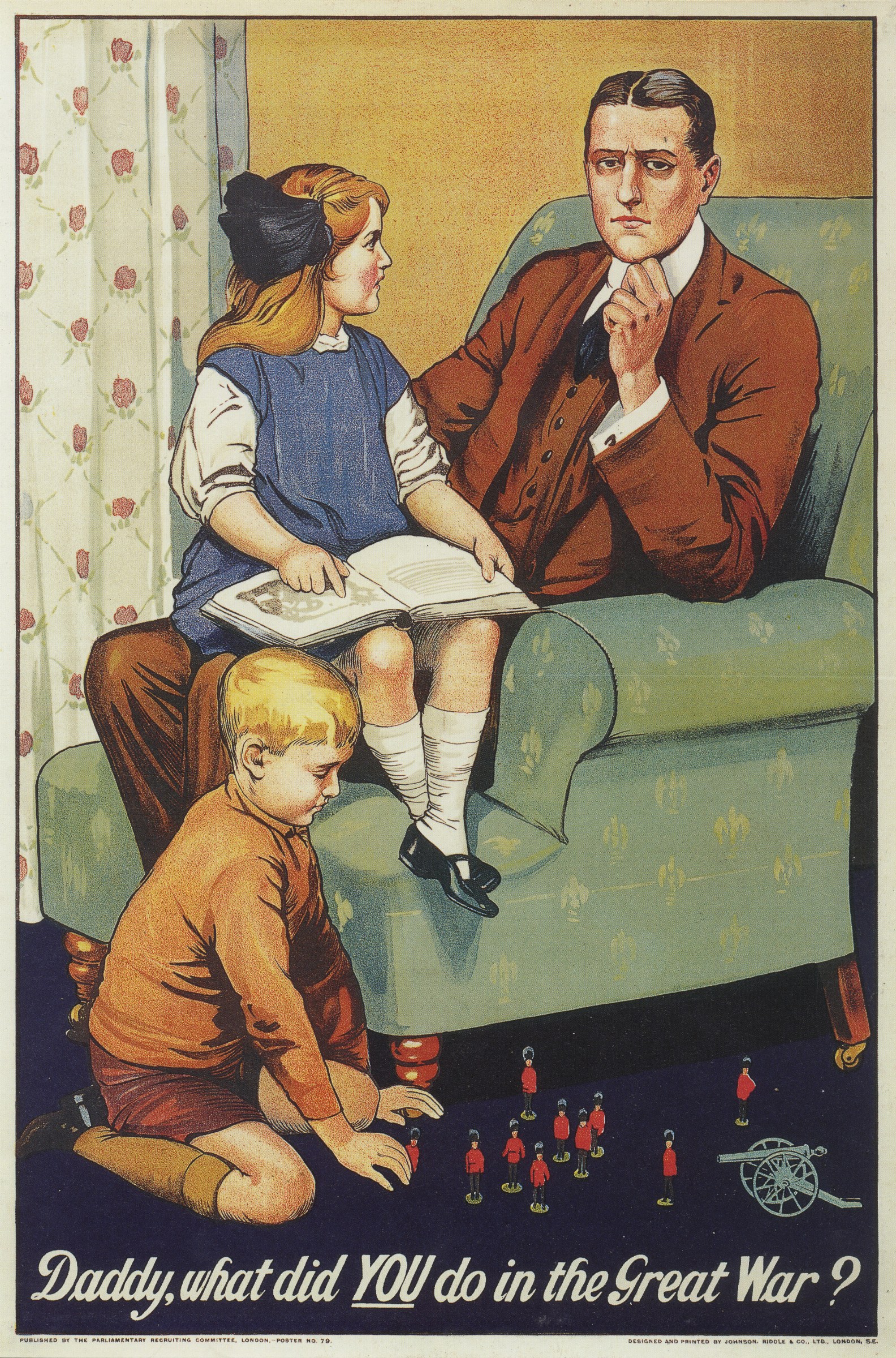
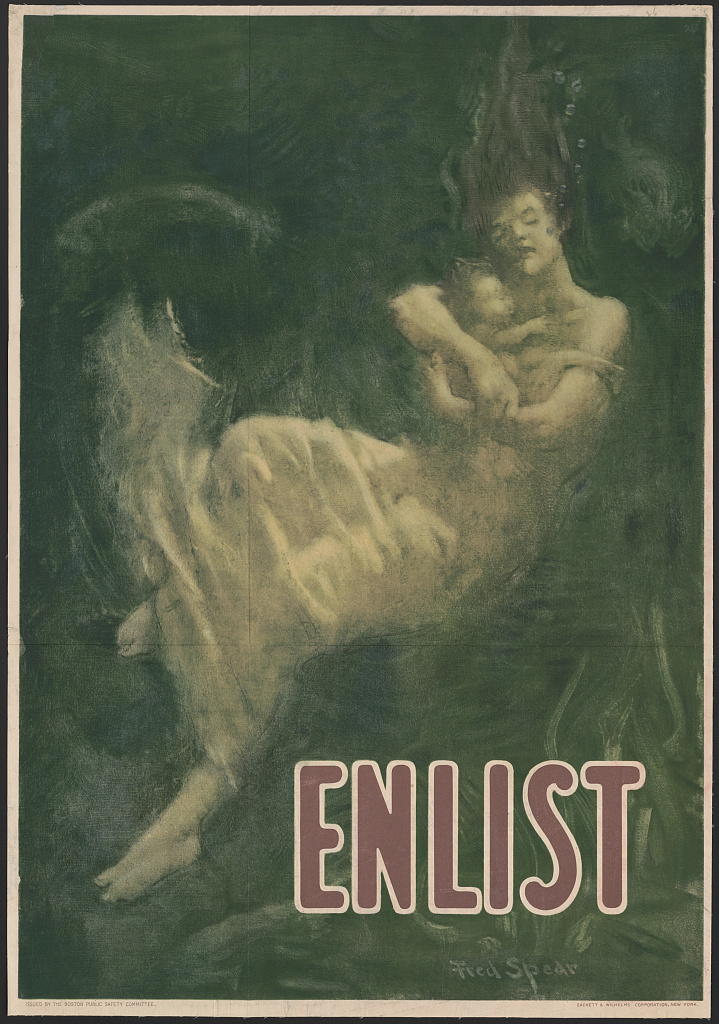
- Compare the tone with the recruiting posters. Why is this one calmer?
See also
Same era, or the same techniques.