Slogan
A short, memorable phrase that stands in for an argument, so that the audience remembers and repeats the conclusion without ever having been given the reasoning.
A slogan is an argument with the argument removed. What remains is rhythm, brevity, and repeatability, and those are enough: the phrase lodges, the audience repeats it, and each repetition feels like agreement. The slogan does not persuade so much as it colonizes; it takes up the space where a considered view would have been.
The word comes from the Gaelic for a battle cry, and the function has not changed. Good slogans are hard to argue with because there is nothing in them to argue with; "Loose lips sink ships" contains no claim that could be false. The device is neutral in itself, and public-health slogans use it well; it becomes propaganda when the phrase is the only thing offered. Exploits Cognitive Ease and Mere Exposure Effect.
Historical examples
"Loose lips sink ships" was produced by the War Advertising Council for the Office of War Information in 1942 as part of a campaign against careless talk. It is a model of the form: four words, alliteration, a rhyme, a picture, and no claim at all about what talk had sunk which ship. The campaign's posters are among the most reproduced of the war.
Bird, William L., and Harry R. Rubenstein. Design for Victory: World War II Posters on the American Home Front. New York: Princeton Architectural Press, 1998.
The Creel Committee's Four Minute Men, seventy-five thousand volunteer speakers, delivered short talks in cinemas built around watchwords supplied from Washington: "Make the world safe for democracy," "Food will win the war." The phrases were the message; the speakers supplied local color around them.
Creel, George. How We Advertised America. New York: Harper & Brothers, 1920; Axelrod, Alan. Selling the Great War: The Making of American Propaganda. New York: Palgrave Macmillan, 2009.
In advertising and commerce
"A Diamond Is Forever" was written by Frances Gerety of N. W. Ayer for De Beers in 1947 and has run ever since. It makes no claim about diamonds, which are neither rare nor a store of value at retail; it attaches the stone to permanence and lets the buyer supply the rest. The slogan did more to create the diamond engagement ring than any fact about the product.
Epstein, Edward Jay. "Have You Ever Tried to Sell a Diamond?" The Atlantic, February 1982; Sharp, Nigel. Slogans. Bloomington: AuthorHouse, 2011, on the Ayer campaign.
In the archive
Posters and advertisements annotated with this technique.
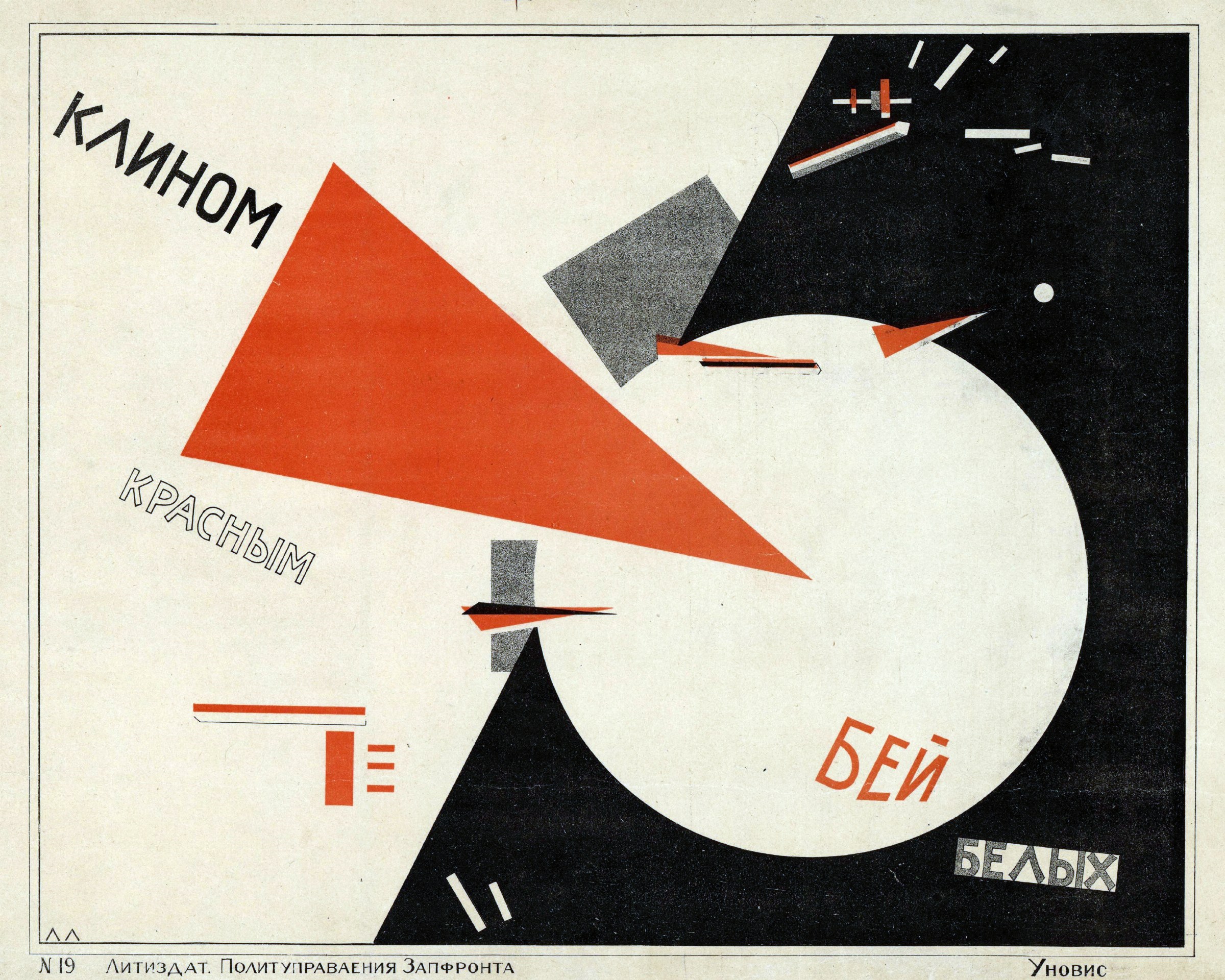
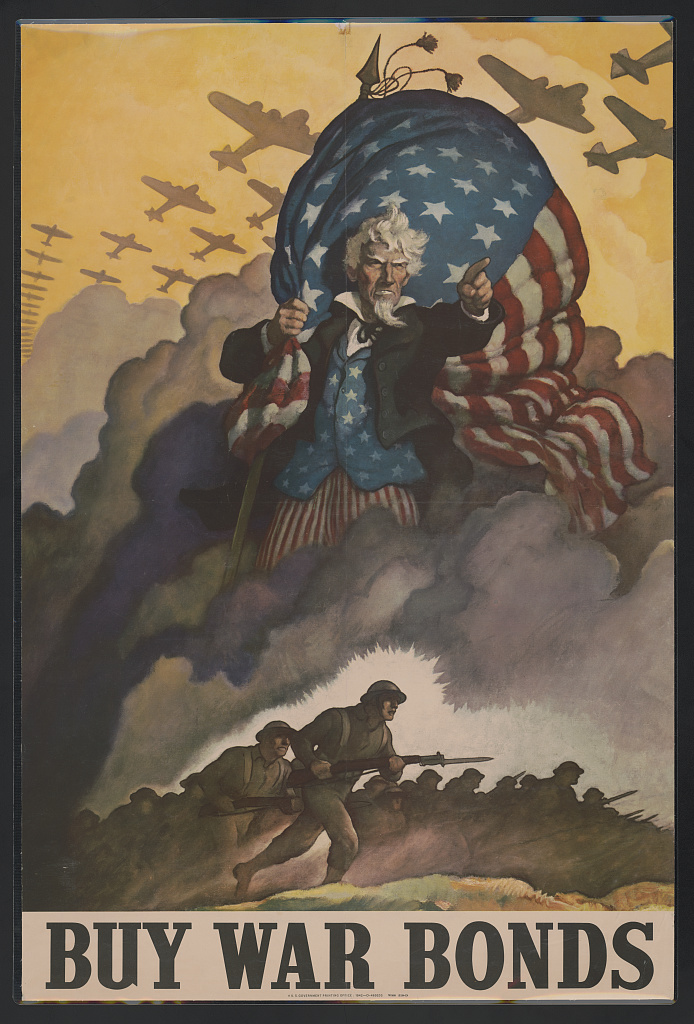
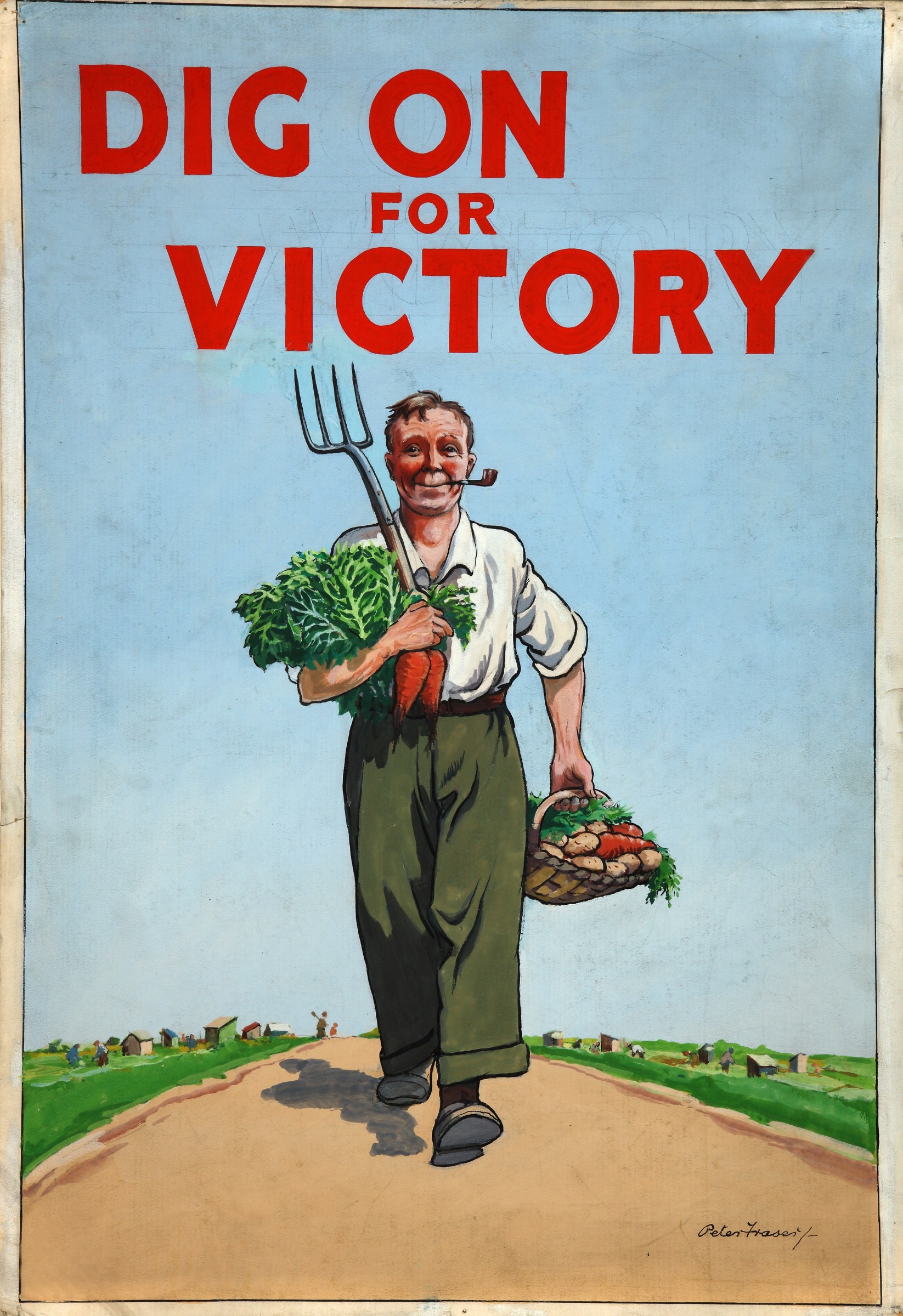
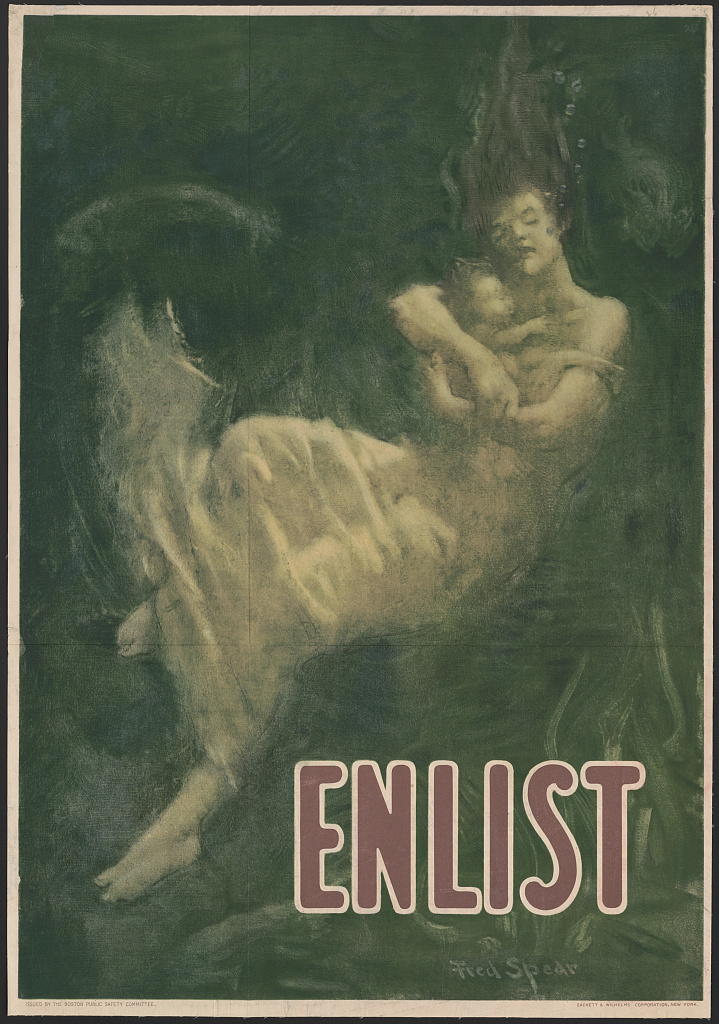
Pick a slogan you know by heart. Write out the argument it is standing in for. Does the argument hold up as well as the slogan does?
In the wild
Short examples of the technique at work, each with what to notice. The same examples are questions in the quiz, where the answer is not given away.
"Stronger together. Safer tomorrow. Vote yes." The leaflet says nothing else about the measure.
What to notice. Two three-word phrases with rhythm and no content stand in for the case for the measure.
"Because you're worth it." The advertisement shows the product and the phrase.
What to notice. A memorable phrase that contains no claim about the product does the entire job.
At every question, the spokesperson answered with the same four words, and the crowd chanted them back.
What to notice. The phrase replaces answers and the chanting is offered as agreement.
Sources
- Bird, William L., and Harry R. Rubenstein. Design for Victory. New York: Princeton Architectural Press, 1998. ISBN 978-1568981406
- Creel, George. How We Advertised America. New York: Harper & Brothers, 1920.
- Epstein, Edward Jay. "Have You Ever Tried to Sell a Diamond?" The Atlantic, February 1982.
- Pratkanis, Anthony, and Elliot Aronson. Age of Propaganda. Rev. ed. New York: W. H. Freeman, 2001. ISBN 978-0805074031