Bandwagon
Urging the audience to adopt a belief or a product because everyone else already has, so that the fear of being left out replaces a judgment of the thing itself.
People use other people as evidence. When we can't easily judge a claim, the number of others who appear to accept it becomes a proxy for whether it is true, and the bandwagon device manufactures that appearance. It adds a second pressure: not merely "they are right" but "you will be alone." The Institute for Propaganda Analysis described its theme as "Everybody, at least all of us, is doing it," and noted that the "us" is usually narrowed to the group the listener most wants to belong to.
The device is strongest where the audience cannot verify the claim and where belonging is visible: a parade, a rally, a street where every house has the sign. Exploits Social Proof and Conformity.
Historical examples
Robert Baden-Powell's poster "Are YOU in this?" arranged a soldier, a sailor, a nurse, a munitions worker, a Boy Scout, and a farmer in a line of national effort, with one idle figure in a suit standing apart. The question is the device: everyone is in, and the viewer is invited to notice that he is not.
"Are YOU in this?" Poster by Robert Baden-Powell for the Parliamentary Recruiting Committee, London, 1915. Imperial War Museums, First World War poster collection.
The Nazi party rallies at Nuremberg were designed as bandwagon spectacles: massed ranks, uniform movement, and the camera placed so that the individual viewer of Riefenstahl's Triumph of the Will (1935) sees a nation already in step. The film's argument is numerical. It shows how many, and lets the viewer draw the conclusion that being outside is being alone.
Welch, David. The Third Reich: Politics and Propaganda. 2nd ed. London: Routledge, 2002, Jowett and O'Donnell, Propaganda and Persuasion, 7th ed. (2019).
In advertising and commerce
"America's favorite," "the world's best-selling," and "the choice of millions" have been standard advertising claims for a century because they require no statement about the product. Cialdini's research on social proof explains why they work: in uncertainty, the behavior of others is the shortcut most people take.
Cialdini, Robert B. Influence: The Psychology of Persuasion. New York: William Morrow, 1984, ("Social Proof" chapter); Pratkanis and Aronson, Age of Propaganda (2001).
In the archive
Posters and advertisements annotated with this technique.
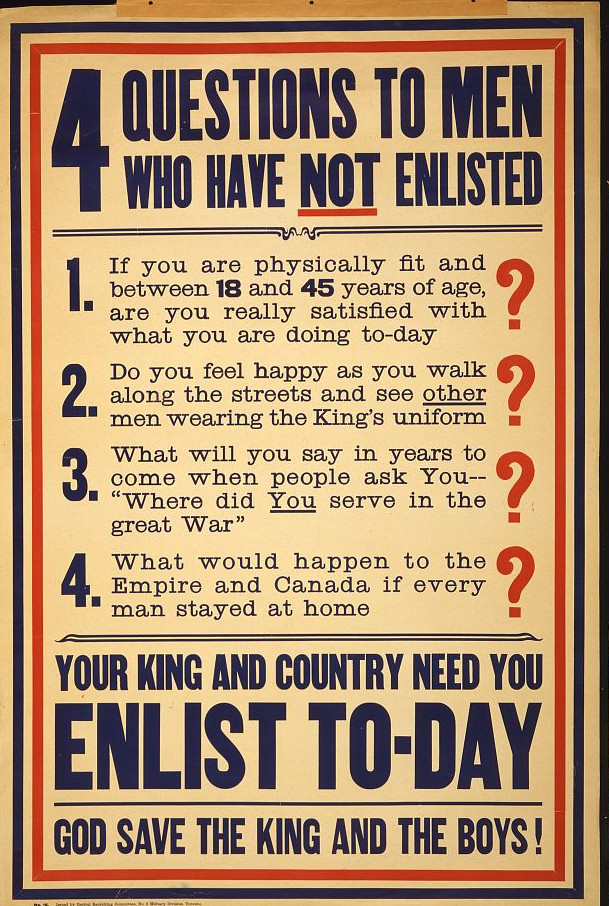
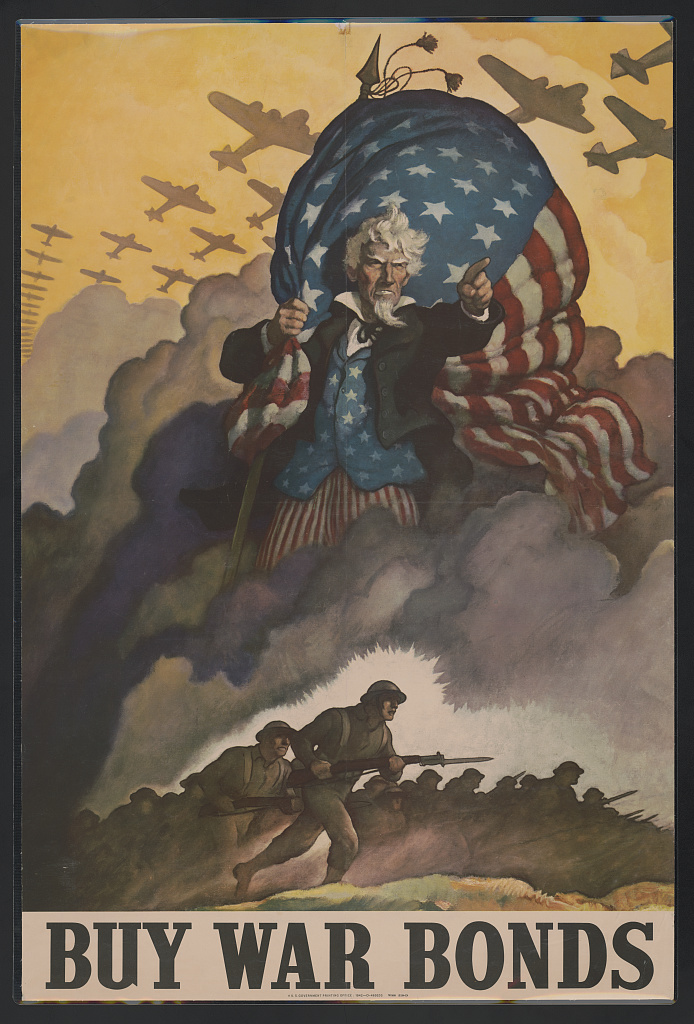
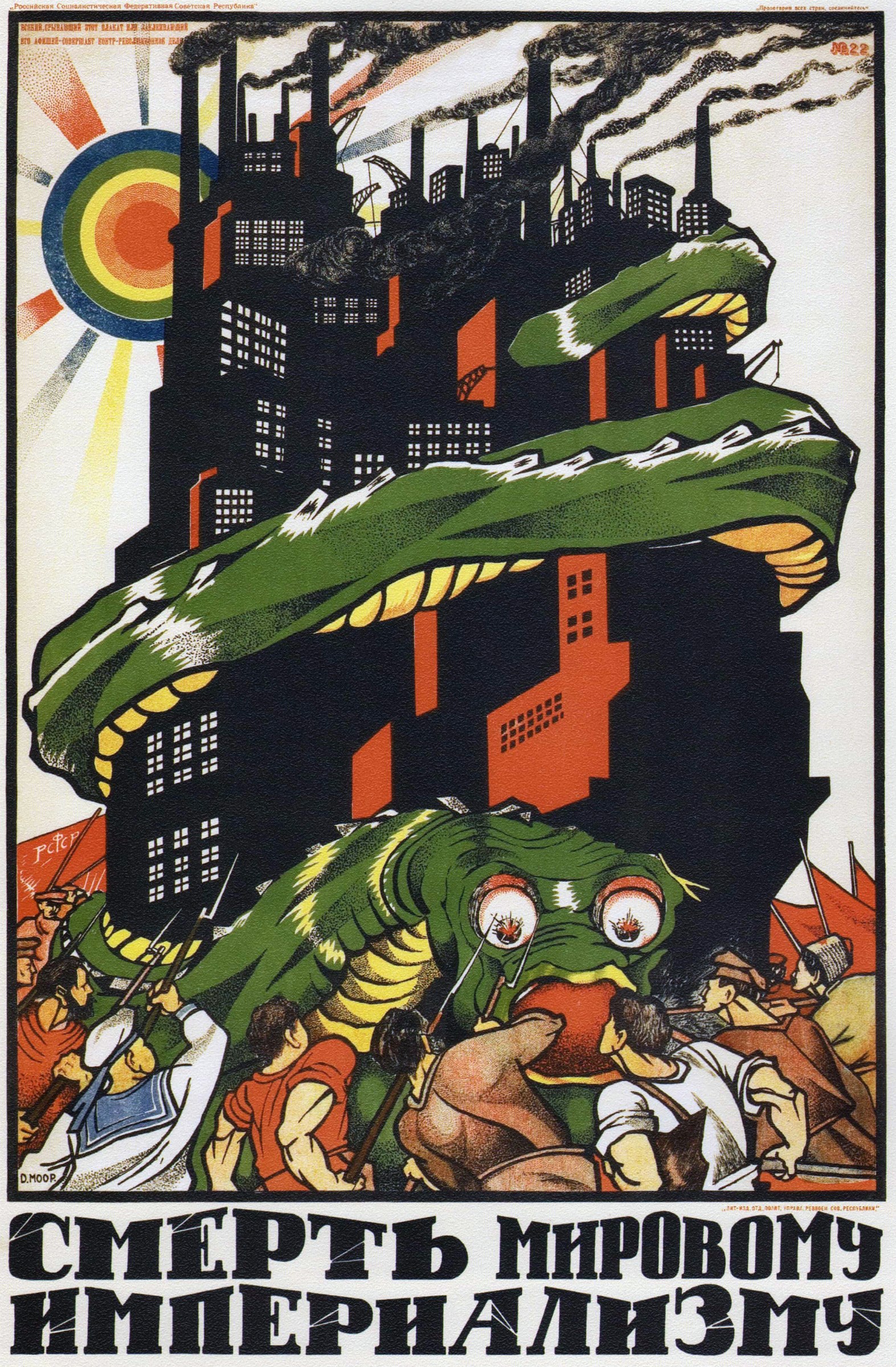
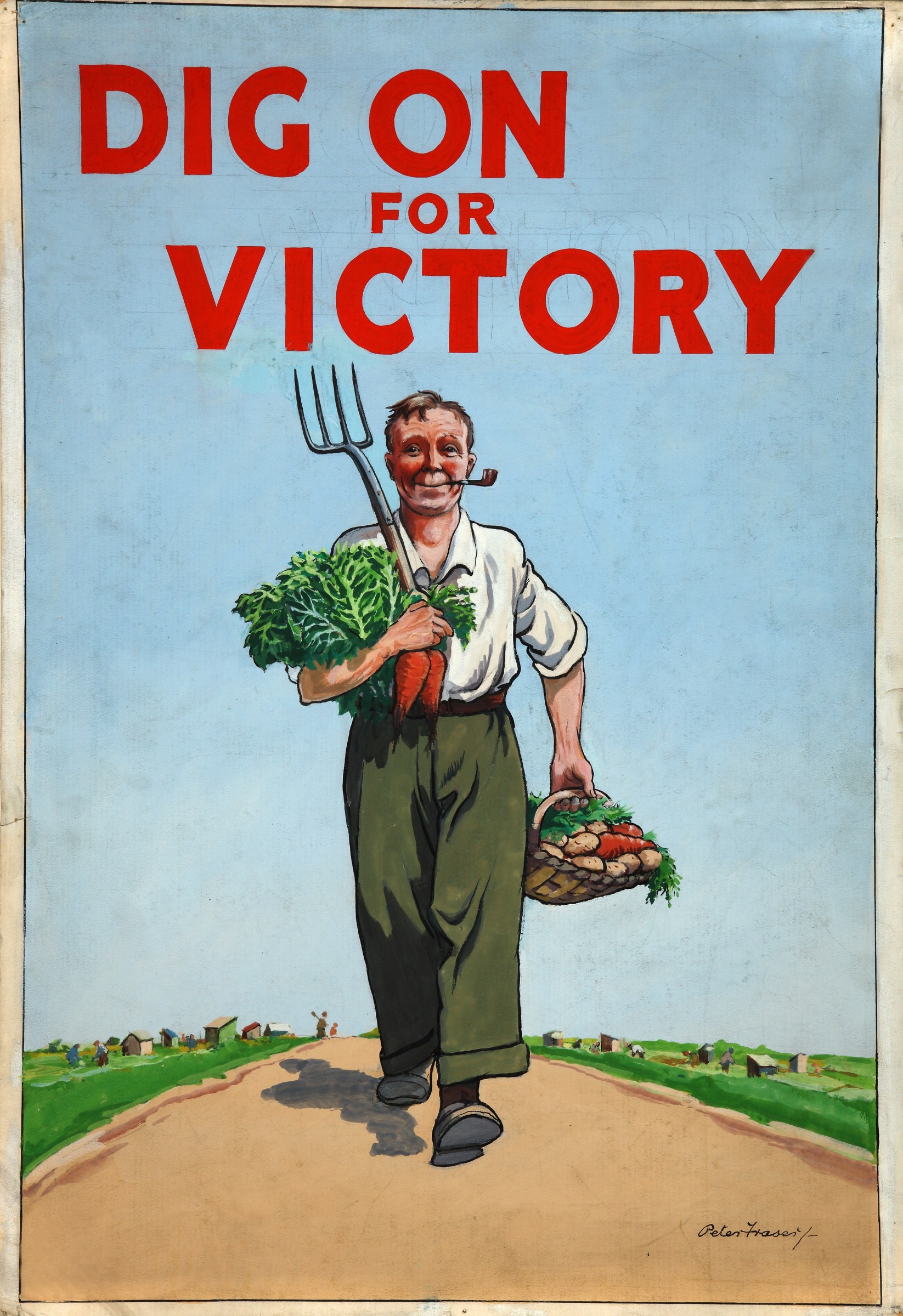
Find an advertisement or post that gives a number of people as its main reason. Rewrite it without the number. What is left?
In the wild
Short examples of the technique at work, each with what to notice. The same examples are questions in the quiz, where the answer is not given away.
"Over two million families have already made the switch. Don't be the last house on your street."
What to notice. The number of adopters and the threat of being left out are the whole argument.
"Join the movement. Be part of something bigger than yourself."
What to notice. Membership in place of argument. The glittering "something bigger" is secondary to the invitation to join the crowd.
"The fastest-growing app in the country. See what everyone's talking about."
What to notice. Growth rate and "everyone" stand in for any statement of what the app does.
Sources
- Institute for Propaganda Analysis. "How to Detect Propaganda." Propaganda Analysis 1, no. 2 (November 1937).
- Lee, Alfred McClung, and Elizabeth Briant Lee. The Fine Art of Propaganda. New York: Harcourt, Brace, 1939.
- Cialdini, Robert B. Influence: The Psychology of Persuasion. New York: William Morrow, 1984. ISBN 978-0061241895
- Welch, David. The Third Reich: Politics and Propaganda. 2nd ed. London: Routledge, 2002. ISBN 978-0415275088
- Imperial War Museums. "Are YOU in this?" Robert Baden-Powell, Parliamentary Recruiting Committee, 1915.