Loaded question
A question built on an assumption the respondent has not accepted, so that any direct answer concedes the assumption.
"Have you stopped beating your wife?" cannot be answered yes or no without admitting the beating. The device puts the claim inside the question, where it cannot be disputed without refusing to answer, and a refusal looks like evasion. It differs from the rhetorical question, which supplies its own answer, by demanding one; the trap is in the reply.
Question wording also shapes memory and opinion. Loftus and Palmer showed in 1974 that witnesses asked how fast cars were going when they "smashed" rather than "hit" gave higher speeds and later remembered broken glass that was not there. Push polling, the campaign use of the device, asks voters whether they would support a candidate "if you knew" some allegation, and calls it research. Exploits Framing Effect and the Misinformation Effect.
Historical examples
Loftus and Palmer showed participants films of car accidents and asked how fast the cars were going when they "contacted," "hit," "bumped," "collided," or "smashed." Estimates rose with the verb, and a week later those asked about "smashed" were more likely to report having seen broken glass. The question had written the memory.
Loftus, Elizabeth F., and John C. Palmer. "Reconstruction of Automobile Destruction: An Example of the Interaction between Language and Memory." Journal of Verbal Learning and Verbal Behavior 13, no. 5 (1974): 585–589. Source
"Push polls," telephone calls framed as surveys that ask whether voters would be more or less likely to support a candidate "if you knew" some damaging and often false claim, were condemned by the American Association for Public Opinion Research in the 1990s as "telemarketing masquerading as research." The question exists to deliver the premise, and no one tabulates the answers.
American Association for Public Opinion Research. "AAPOR Statement on Push Polls," 1997, revised 2007; Sabato, Larry J., and Glenn R. Simpson. Dirty Little Secrets: The Persistence of Corruption in American Politics. New York: Times Books, 1996.
In advertising and commerce
"Why do more mothers choose Radiant?" presupposes that more do. "What are you doing about your dry skin?" presupposes the skin. Advertising questions are written to be answered inside the premise, and the Lees noted the form in Coughlin's broadcasts, where "why do the bankers want war?" did the work of an accusation without making one.
Lee, Alfred McClung, and Elizabeth Briant Lee. The Fine Art of Propaganda. New York: Harcourt, Brace, 1939; Pratkanis and Aronson, Age of Propaganda (2001).
In the archive
Posters and advertisements annotated with this technique.
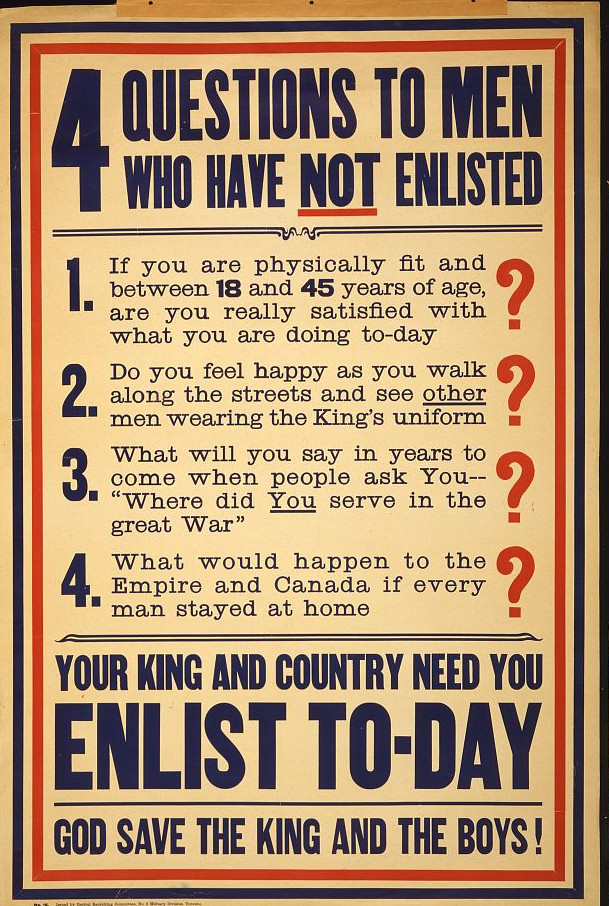 4 questions to men who have not enlisted
Canada · 1915 · 5 techniques annotated
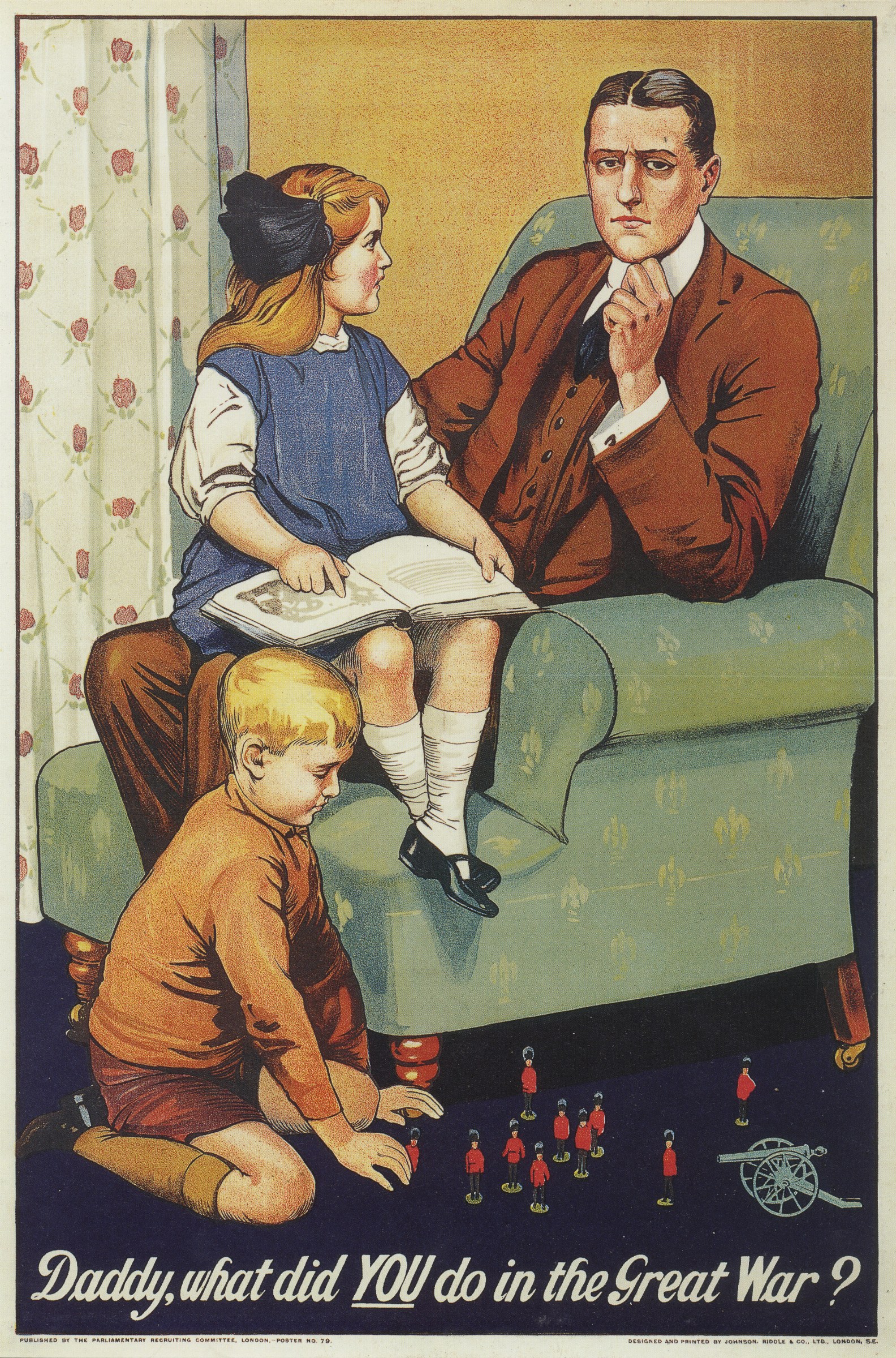 Daddy, what did YOU do in the Great War?
United Kingdom · 1915 · 3 techniques annotated
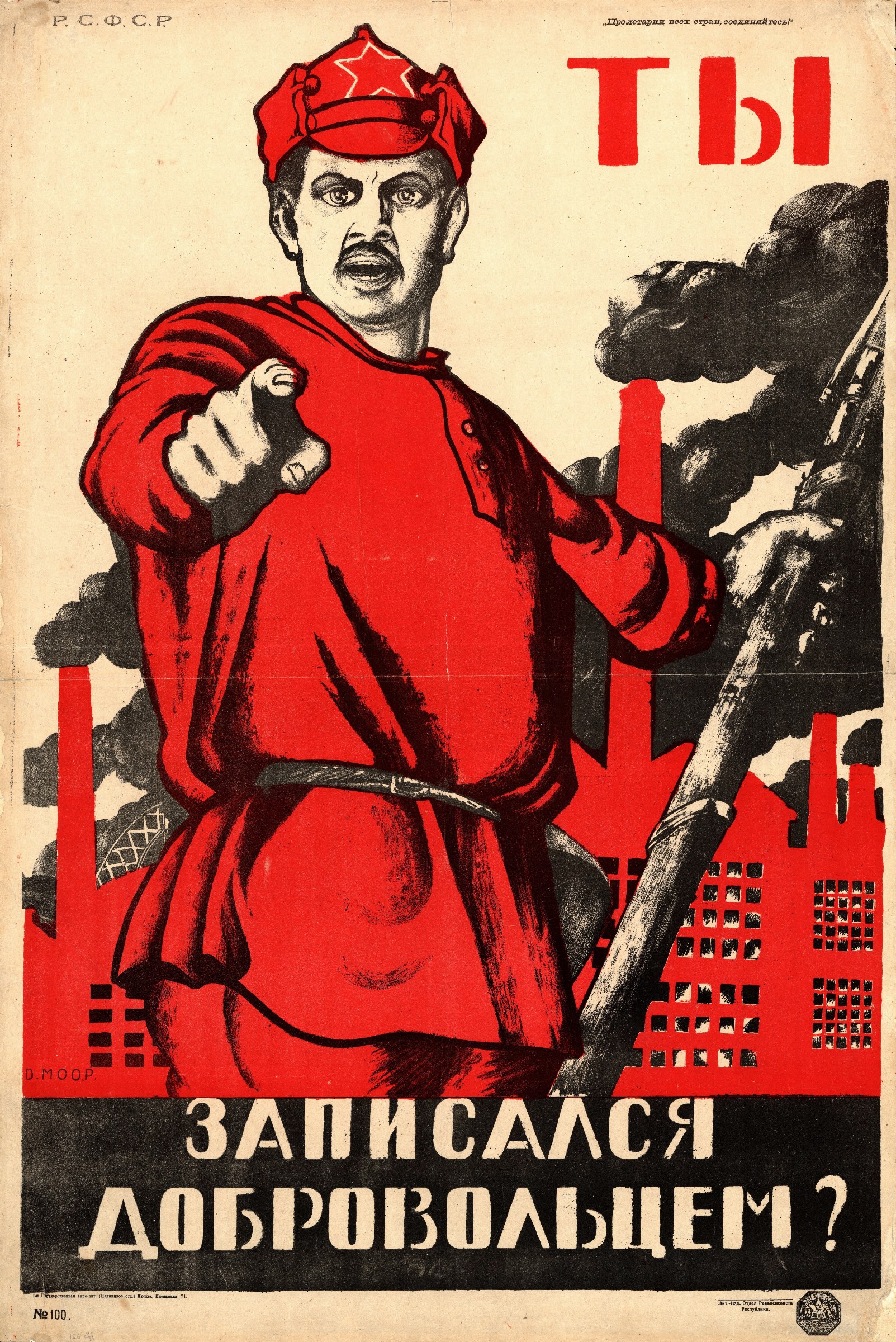 Have you volunteered?
Soviet Union · 1920 · 5 techniques annotated
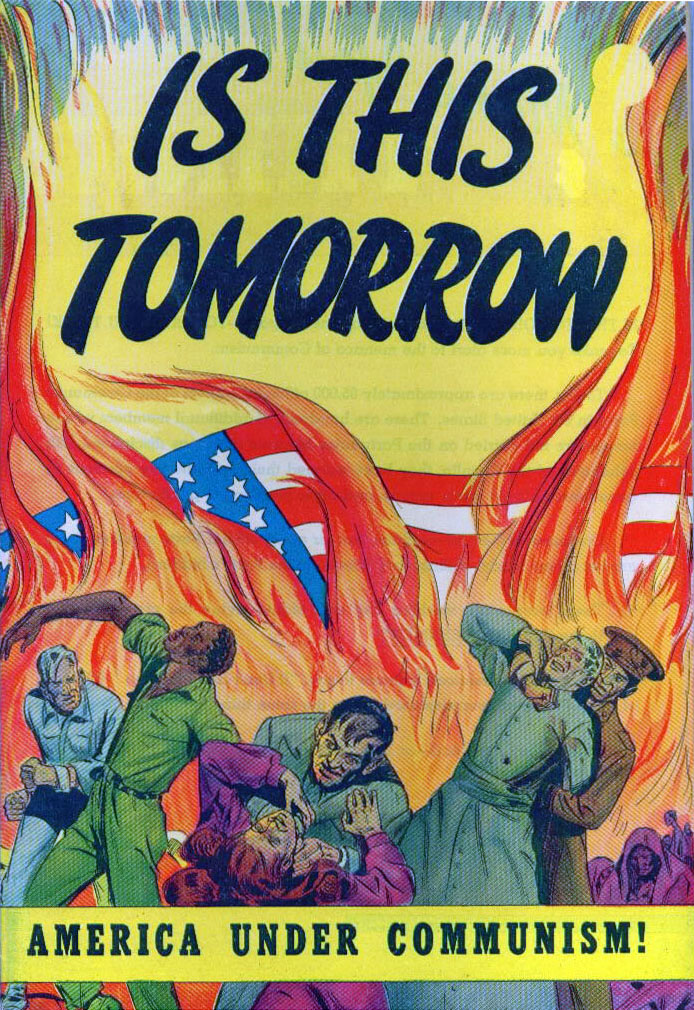 Is this tomorrow? America under Communism
United States · 1947 · 4 techniques annotated
Find a question in a poll, an interview, or an advertisement that assumes something. Write the assumption. Rewrite the question without it.
In the wild
Short examples of the technique at work, each with what to notice. The same examples are questions in the quiz, where the answer is not given away.
"Why has the mayor been hiding the true cost of the stadium?"
What to notice. Any answer about the cost concedes the hiding; the accusation is inside the question.
"Would you be more or less likely to support the candidate if you learned he had been investigated for fraud?" No investigation exists.
What to notice. The question delivers an unproven premise under the cover of asking; push polling is its campaign form.
"When did you first notice your energy levels dropping?" The advertisement is for a supplement.
What to notice. The reader is asked to date a decline the question assumes; answering it adopts the premise.
Sources
- Loftus, Elizabeth F., and John C. Palmer. "Reconstruction of Automobile Destruction." Journal of Verbal Learning and Verbal Behavior 13, no. 5 (1974): 585–589. doi:10.1016/S0022-5371(74)80011-3
- Walton, Douglas. "The Fallacy of Many Questions: On the Notions of Complexity, Loadedness and Unfair Entrapment in Interrogative Theory." Argumentation 13, no. 4 (1999): 379–383.
- American Association for Public Opinion Research. "AAPOR Statement on Push Polls." 1997, revised 2007.
- Sabato, Larry J., and Glenn R. Simpson. Dirty Little Secrets. New York: Times Books, 1996. ISBN 978-0812924510