Techniques · Family
Framing and omission propaganda techniques
Techniques that work by what is left out or how the rest is arranged.
- Agenda-setting Controlling which topics the audience thinks about, and how prominently, so that the question of what matters is settled before any question of what is true.
- Burying the lede Disclosing an inconvenient fact in a place, at a time, or in a form where almost no one will notice it, so that the speaker can later say it was disclosed.
- Cherry-picking Presenting only the data points, studies, or cases that support a conclusion while ignoring the larger body of evidence that would undermine it.
- Distraction Drawing the audience's attention to something vivid and beside the point, so that the matter the speaker would rather not discuss drops out of view.
- False balance Presenting two positions as equally supported when the evidence overwhelmingly favors one, so that the audience concludes the question is open.
- False dilemma Presenting two options as the only ones available, usually one unacceptable and one the speaker wants, so that the audience chooses the speaker's without noticing the others. 2 in the archive
- False equivalence Treating two things as equivalent because they share a feature, when they differ in scale, kind, or consequence so much that the comparison misleads.
- Frame control Choosing the context in which a fact is presented, gain or loss, cost or investment, problem or opportunity, so that the same fact leads the audience to a different conclusion.
- Half-truth A statement that is literally true but leaves out the part that would change what the audience concludes from it.
- Historical revisionism Altering the public account of the past, by omission, invention, or the removal of inconvenient people and facts, so that the present arrangement appears to have been inevitable or deserved. 1 in the archive
- Loaded question A question built on an assumption the respondent has not accepted, so that any direct answer concedes the assumption. 4 in the archive
- Manufactured doubt Presenting a settled question as an open one by amplifying uncertainty, funding contrary studies, and demanding a standard of proof no evidence can meet, so that action is delayed without any claim ever being disproved.
- Misleading statistics Presenting numbers that are accurate in themselves but chosen, scaled, or displayed so that the audience draws a conclusion the full data would not support.
- Paltering Answering a direct question with a true statement chosen to create a false impression, so that the speaker deceives while saying nothing false.
- Quoting out of context Reproducing a real quotation with the surrounding words removed, so that the speaker appears to have said something they did not mean.
- Stereotyping Presenting a simplified, fixed image of a group as though it described every member, so that the audience judges individuals by the image instead of by anything they have done. 5 in the archive
- Straw man Restating an opponent's position in a weaker, more extreme, or more absurd form, and then refuting that version instead of the one they hold.
- Whataboutism Answering a criticism by pointing at a fault of the critic or of someone else, so that the original charge is never addressed and the conversation moves to the counter-charge.
In the archive
Posters and advertisements annotated with techniques from this family.
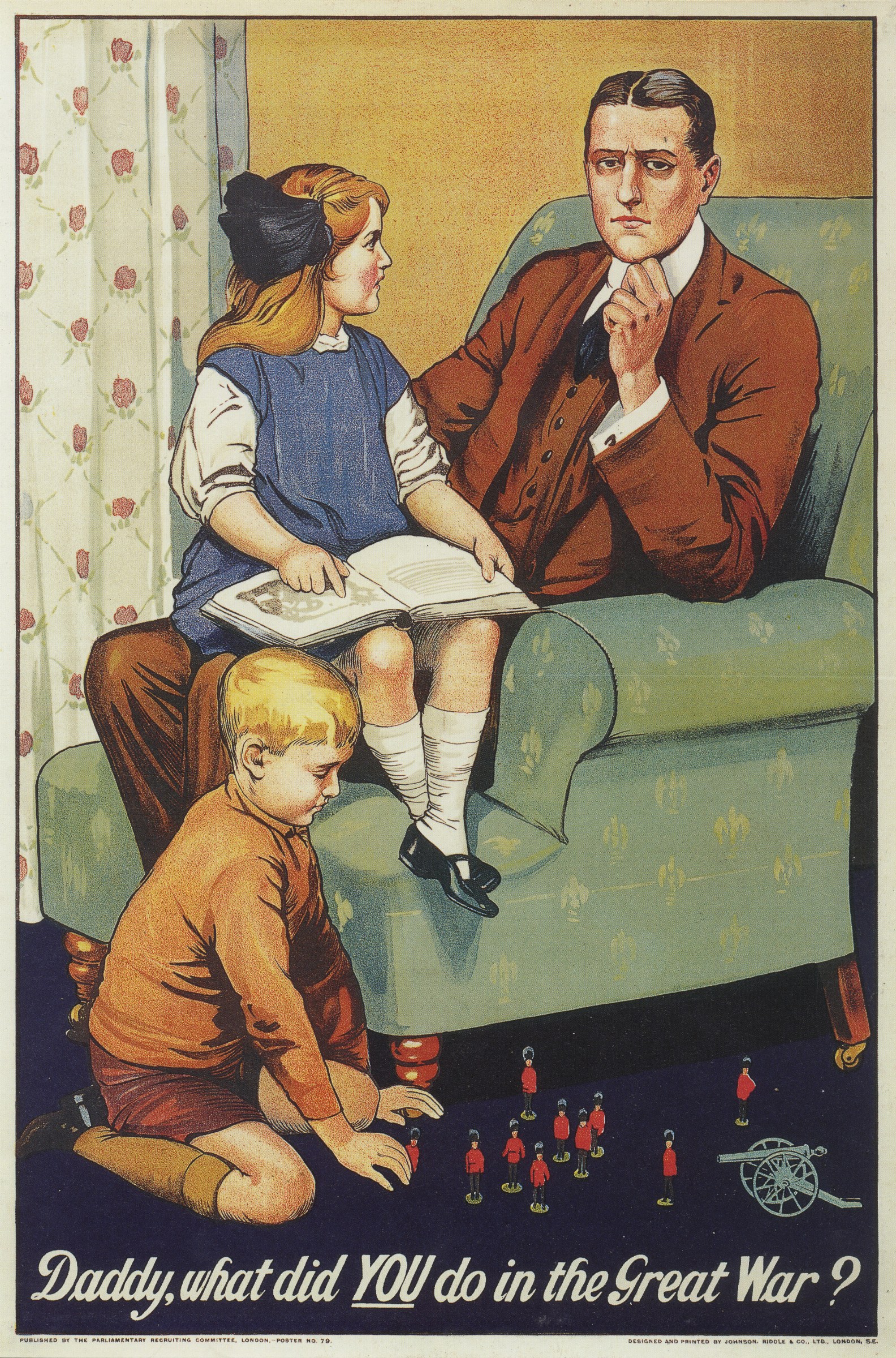 Daddy, what did YOU do in the Great War?
United Kingdom · 1915 · 3 techniques annotated
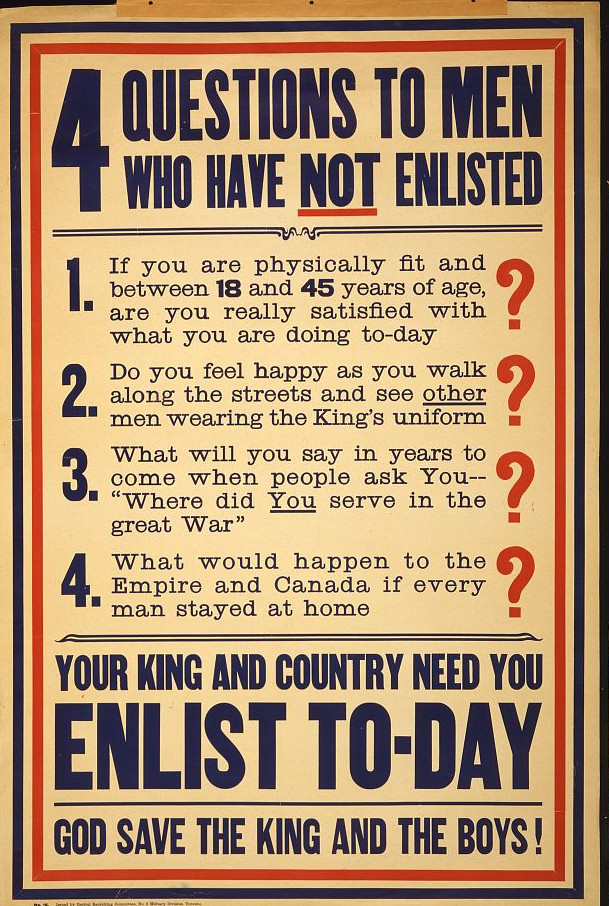 4 questions to men who have not enlisted
Canada · 1915 · 5 techniques annotated
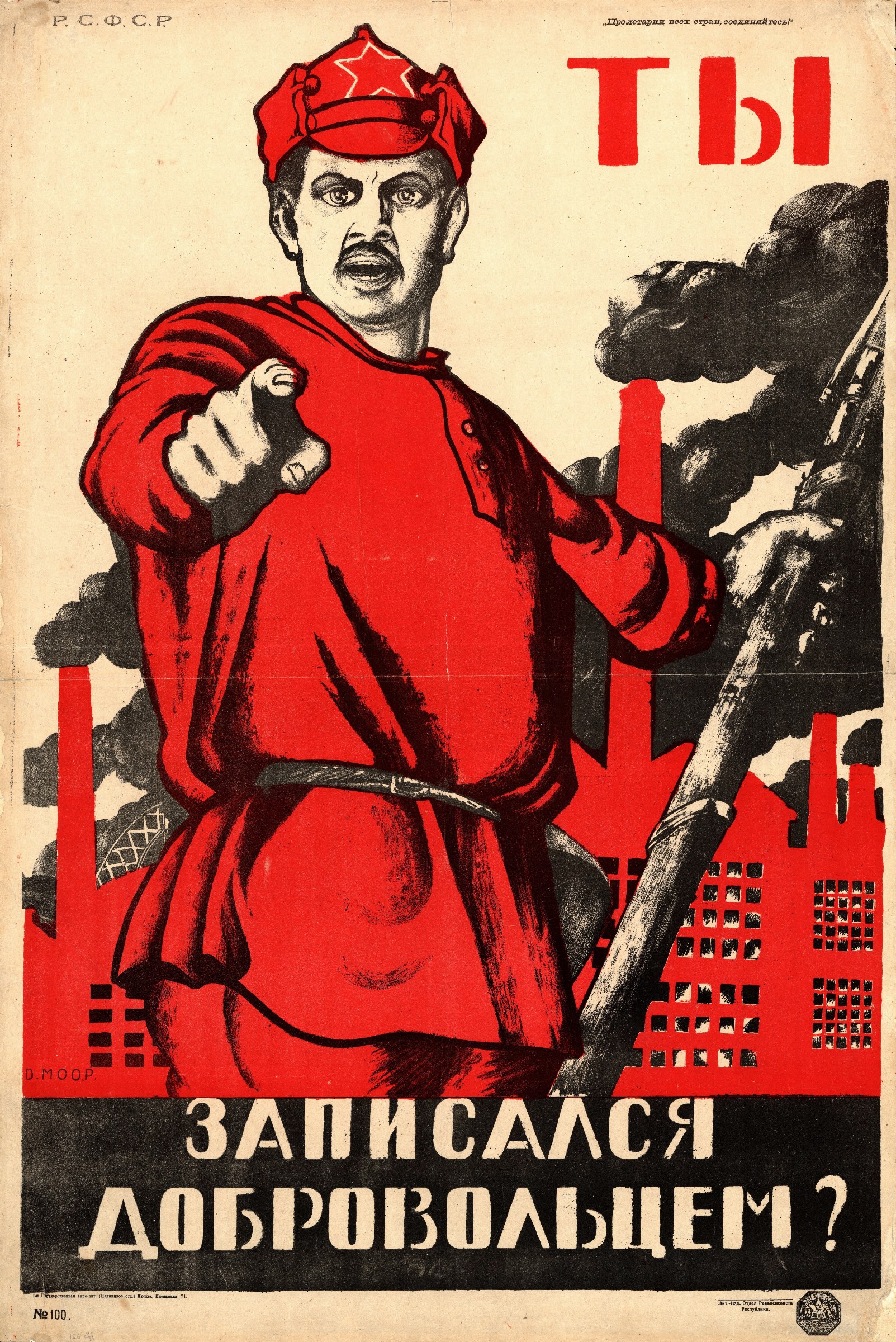 Have you volunteered?
Soviet Union · 1920 · 5 techniques annotated
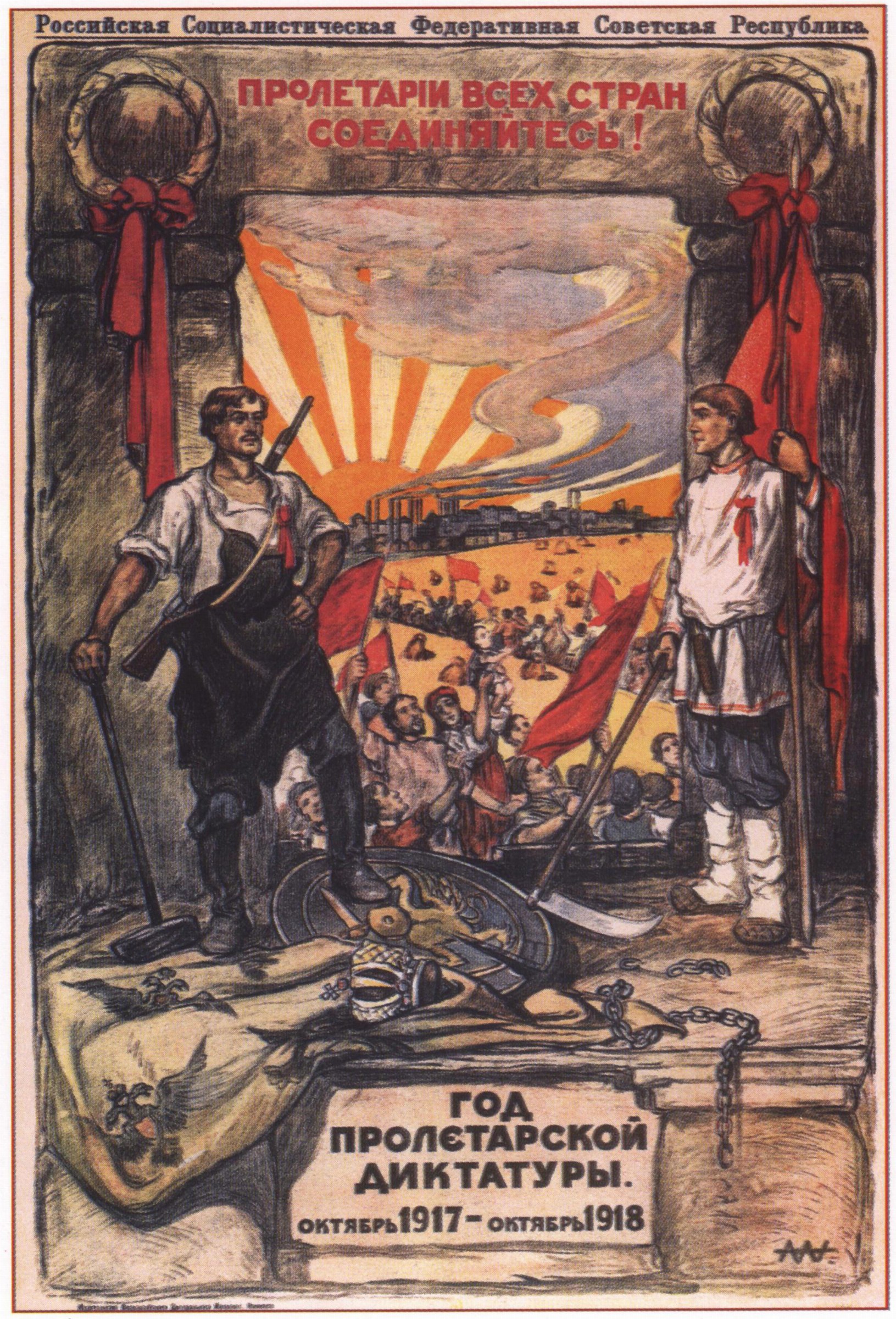 A year of the proletarian dictatorship
Soviet Union · 1918 · 5 techniques annotated
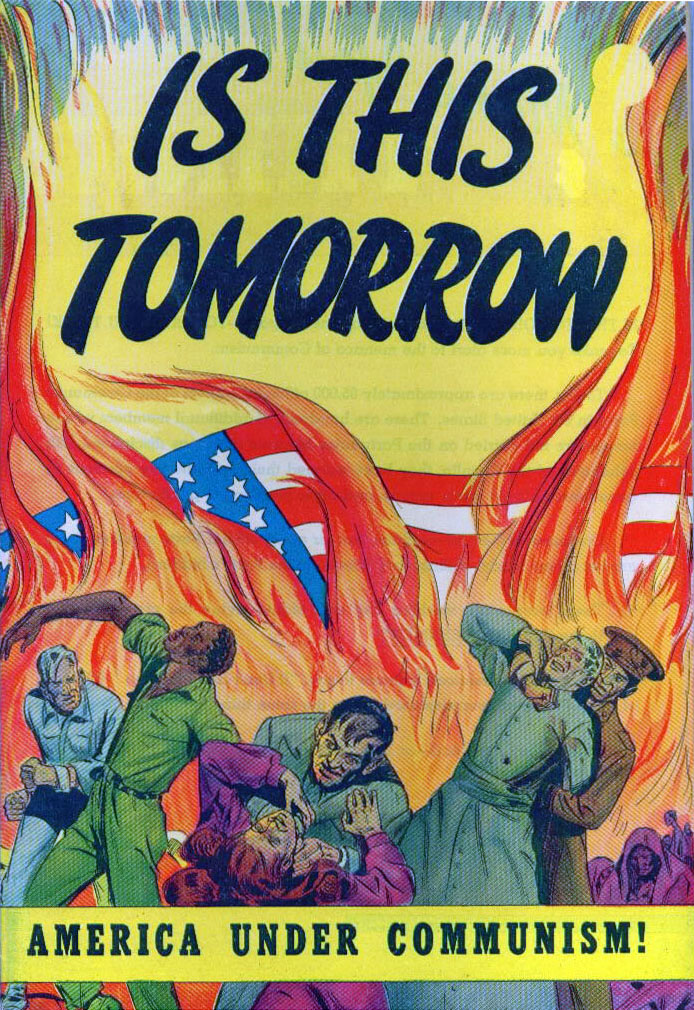 Is this tomorrow? America under Communism
United States · 1947 · 4 techniques annotated
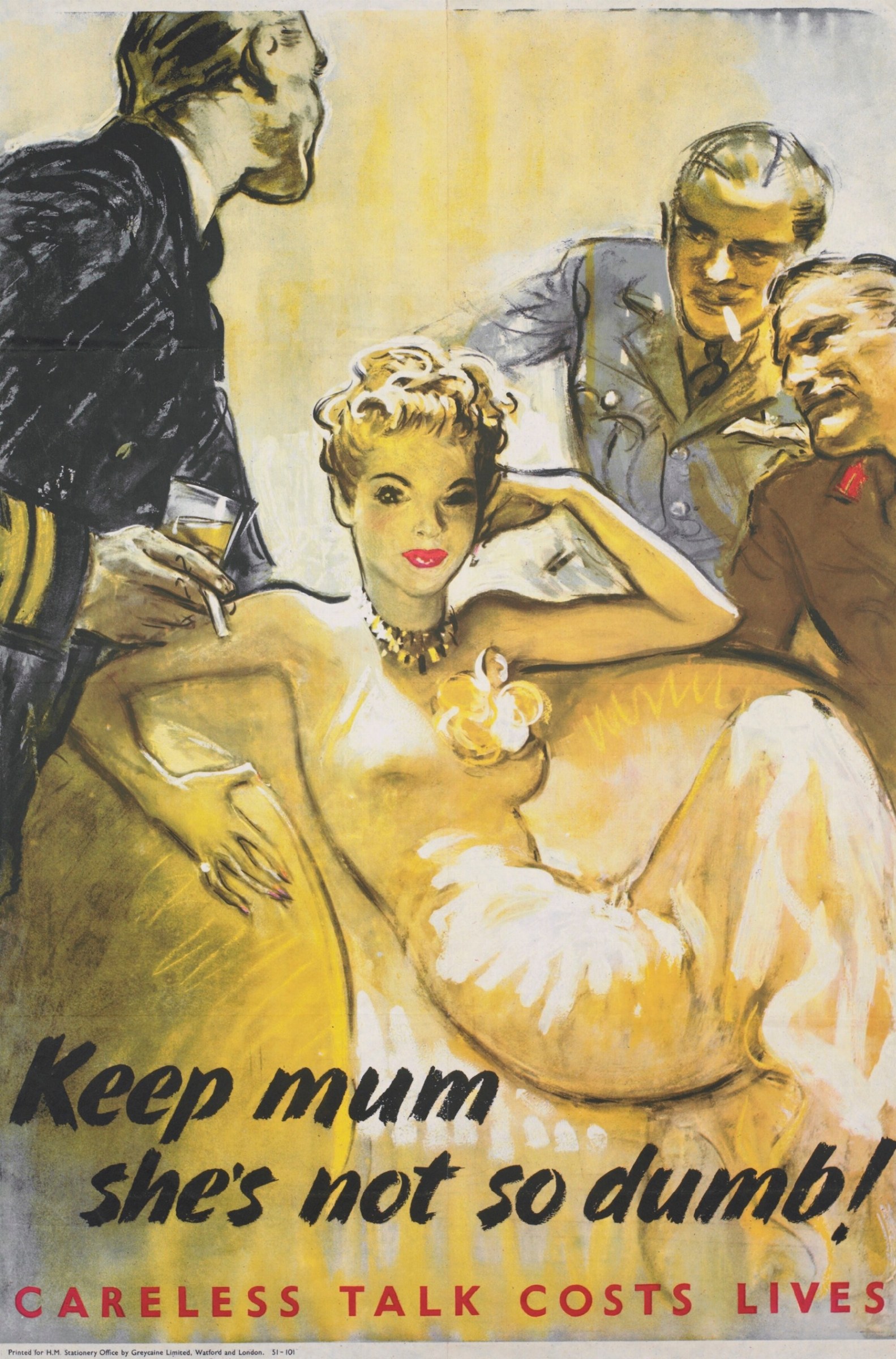 Keep mum, she's not so dumb
United Kingdom · 1942 · 4 techniques annotated