Native advertising
Advertising designed to look like the editorial content around it, so that the audience reads a paid message with the trust it gives to independent reporting.
Readers discount advertisements and trust articles. Native advertising dresses the first as the second: the same typeface, the same layout, a byline, a headline in the house style, and a label, "sponsored," "partner content," "presented by," sized and placed to be missed. The audience's trust in the publication is transferred to the advertiser's message, and studies find that most readers do not recognize the piece as an advertisement even after reading it.
The device is old. "Reading notices," advertisements set as news, were common enough in the nineteenth-century American press that the Newspaper Publicity Act of 1912 required them to be marked. Every generation of media has reinvented it under a new name. Exploits Halo Effect and Authority Bias.
Historical examples
The Newspaper Publicity Act of 1912 required that "all editorial or other reading matter" published for pay be plainly marked "advertisement," a response to the widespread practice of "reading notices," paid items set in news type. The requirement exists in every later advertising code because the practice never stopped.
Lawson, Linda. Truth in Publishing: Federal Regulation of the Press's Business Practices, 1880–1920. Carbondale: Southern Illinois University Press, 1993.
In advertising and commerce
The Atlantic published a "sponsor content" piece by the Church of Scientology in January 2013, in the magazine's own design, praising the church's leader and its growth. The piece was withdrawn within hours after reader protest, and the episode became the case that pushed publishers and the Federal Trade Commission toward clearer labeling.
"The Atlantic Apologizes for Scientology Ad," The New York Times, 15 January 2013; Federal Trade Commission. Enforcement Policy Statement on Deceptively Formatted Advertisements. December 2015.
Wojdynski and Evans tested native advertisements with different labels and placements and found that fewer than one reader in ten recognized the piece as advertising, and that recognition rose when the label was in the middle of the page and used the word "advertising" rather than "sponsored." The industry's preferred labels were the least recognized.
Wojdynski, Bartosz W., and Nathaniel J. Evans. "Going Native: Effects of Disclosure Position and Language on the Recognition and Evaluation of Online Native Advertising." Journal of Advertising 45, no. 2 (2016): 157–168. Source
In the archive
Posters and advertisements annotated with this technique.
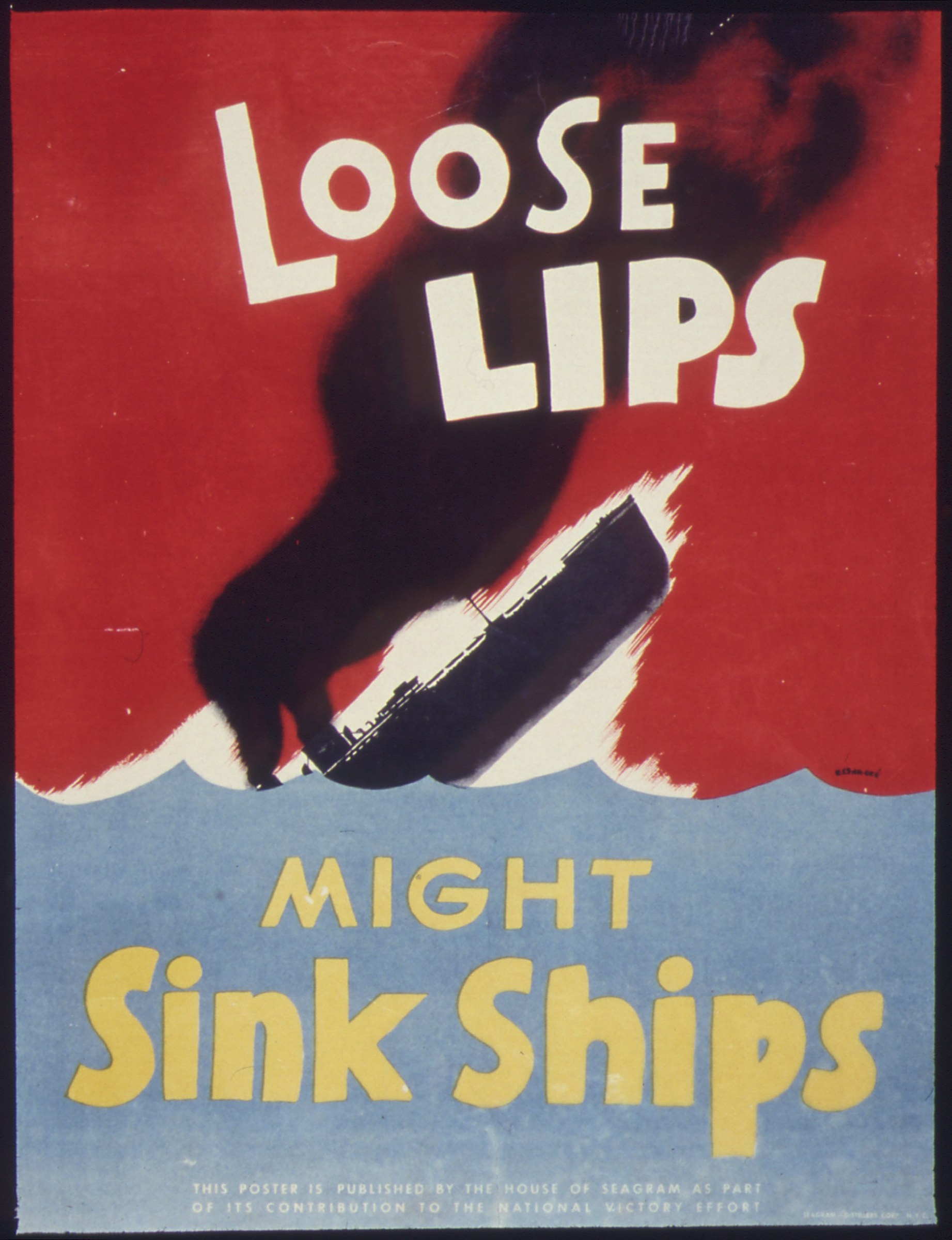
Find an article on a news site that is labeled sponsored, promoted, or partner content. How long did it take you to notice the label? What would you have thought if you hadn't?
In the wild
Short examples of the technique at work, each with what to notice. The same examples are questions in the quiz, where the answer is not given away.
"Five ways to protect your retirement," bylined "Content Studio," recommends one firm's products and is set in the site's news typeface.
What to notice. A paid message formatted as reporting so it inherits the publication's trust.
A travel feature praises one resort at length; the label "in partnership with" appears in 9-point gray below the photograph.
What to notice. Disclosure present and designed to be missed; the format is the device.
A 1905 newspaper column of local news includes a paragraph recommending a patent tonic in the same type as the items around it.
What to notice. A reading notice, the original form of the device, and the reason the 1912 Act was passed.
Sources
- Wojdynski, Bartosz W., and Nathaniel J. Evans. "Going Native." Journal of Advertising 45, no. 2 (2016): 157–168. doi:10.1080/00913367.2015.1115380
- Federal Trade Commission. Enforcement Policy Statement on Deceptively Formatted Advertisements. December 2015.
- Lawson, Linda. Truth in Publishing. Carbondale: Southern Illinois University Press, 1993. ISBN 978-0809318285