Loose lips might sink ships
 1
2
3
4
National Archives · File:"Loose lips might sink ships" - NARA - 513543.jpg · Public domain · Catalog record
The pins
Context
For discussion
-
1
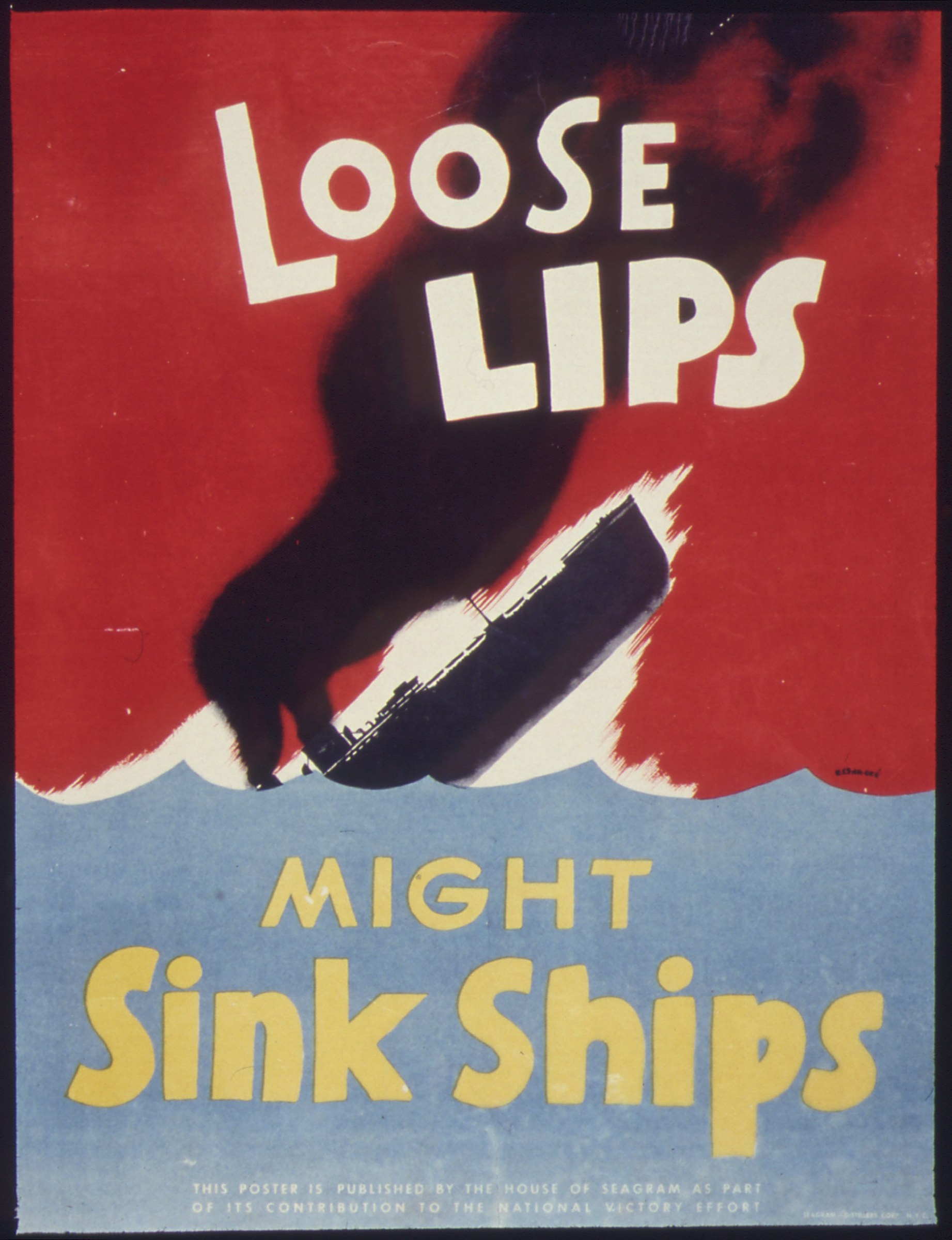
Slogan "Loose lips" Alliteration and a near-rhyme made the line the campaign's survivor. It is still quoted by people who could not say what it was warning against.
-
2
Appeal to fear The sinking ship A ship going down by the stern in a red sea. The consequence is shown; the cause is left to the viewer to supply from his own conscience.
-
3
Weasel words "Might" The one hedged word on the sheet. The campaign never showed that careless talk had sunk a ship, and "might" let it keep saying so.
-
4
Native advertising The Seagram line "Published by the House of Seagram as part of its contribution to the national victory effort." A distiller's name on a government message, displayed in the bars where its product was sold.
"Loose lips might sink ships" was produced in 1942 by the Seagram distilling company for display in bars, as part of the War Advertising Council's security campaign. A ship goes down in a red sea under the rhyme. The phrase became the campaign's best-known line, and the poster's history shows how much American wartime propaganda was made by private companies on the government's behalf, with their names on it.
- The poster hung in bars and was paid for by a distiller. What interest did the sponsor have?
- Why does the rhyme say "might"?
- Compare this with "Someone talked!" Which is the harsher accusation?
See also
Same era, or the same techniques.