Transfer
Carrying the authority, prestige, or emotional charge of one thing over to another by placing them together, so that a flag, a cross, or a uniform lends its standing to a product or a policy.
The audience already feels something about the symbol. The propagandist puts the proposal next to the symbol and lets the feeling move across. Nothing is claimed; the connection is made by proximity, and proximity is not an argument, which is why it is hard to argue with. Transfer can run in either direction: a respected symbol to lift an idea, or a despised one to sink it.
The Institute for Propaganda Analysis described it as the device by which "the authority, sanction, and prestige of something we respect and revere" is carried over to something the propagandist wants us to accept. Exploits Halo Effect and Association.
Historical examples
James Montgomery Flagg's "I Want You for U.S. Army" puts the nation itself, personified as Uncle Sam in the flag's colors, behind a recruiting-office instruction. The viewer is not asked to weigh the war; the figure's authority is carried over to the act of enlisting. Over four million copies were printed between 1917 and 1918.
Library of Congress, Prints and Photographs Division, LC-USZC4-3859 ("I want you for U.S. Army," James Montgomery Flagg, 1917); Meyer, Susan E. James Montgomery Flagg. New York: Watson-Guptill, 1974.
The Lees documented Father Coughlin's habit of framing economic proposals with religious symbols and language, so that the standing of the Church was lent to positions the Church had not taken. The transfer ran from the collar to the policy.
Lee, Alfred McClung, and Elizabeth Briant Lee. The Fine Art of Propaganda. New York: Harcourt, Brace, 1939, on the "transfer" device.
In advertising and commerce
The Marlboro Man campaign, created by the Leo Burnett agency in 1954, sold a filtered cigarette originally marketed to women by placing it in the hands of cowboys. Nothing about the product changed. The standing of the American West, independence, and masculinity was carried over to it, and Marlboro became the world's best-selling cigarette brand.
Brandt, Allan M. The Cigarette Century. New York: Basic Books, 2007; Stanford Research into the Impact of Tobacco Advertising, "Marlboro Man" collection, tobacco.stanford.edu. Source
In the archive
Posters and advertisements annotated with this technique.
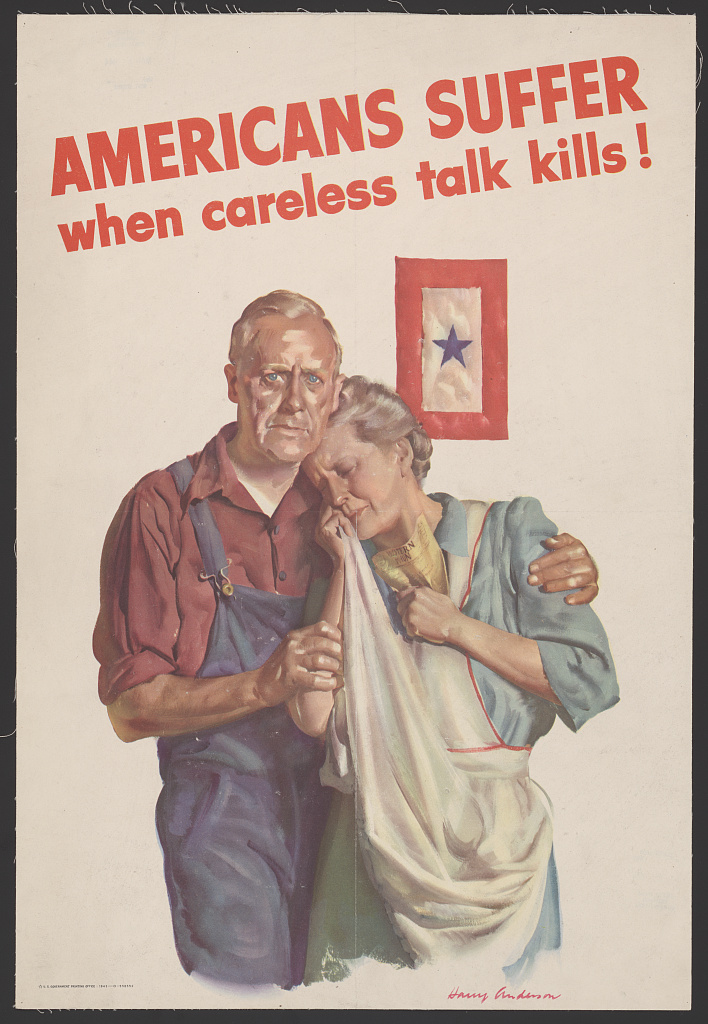 Americans suffer when careless talk kills!
United States · 1943 · 4 techniques annotated
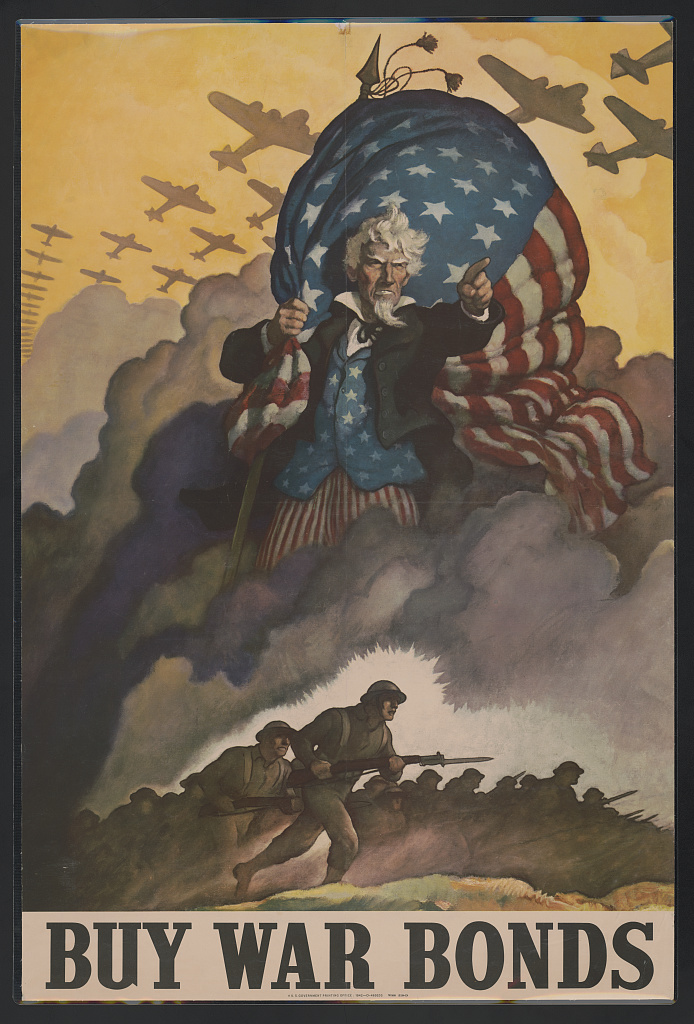 Buy war bonds
United States · 1942 · 5 techniques annotated
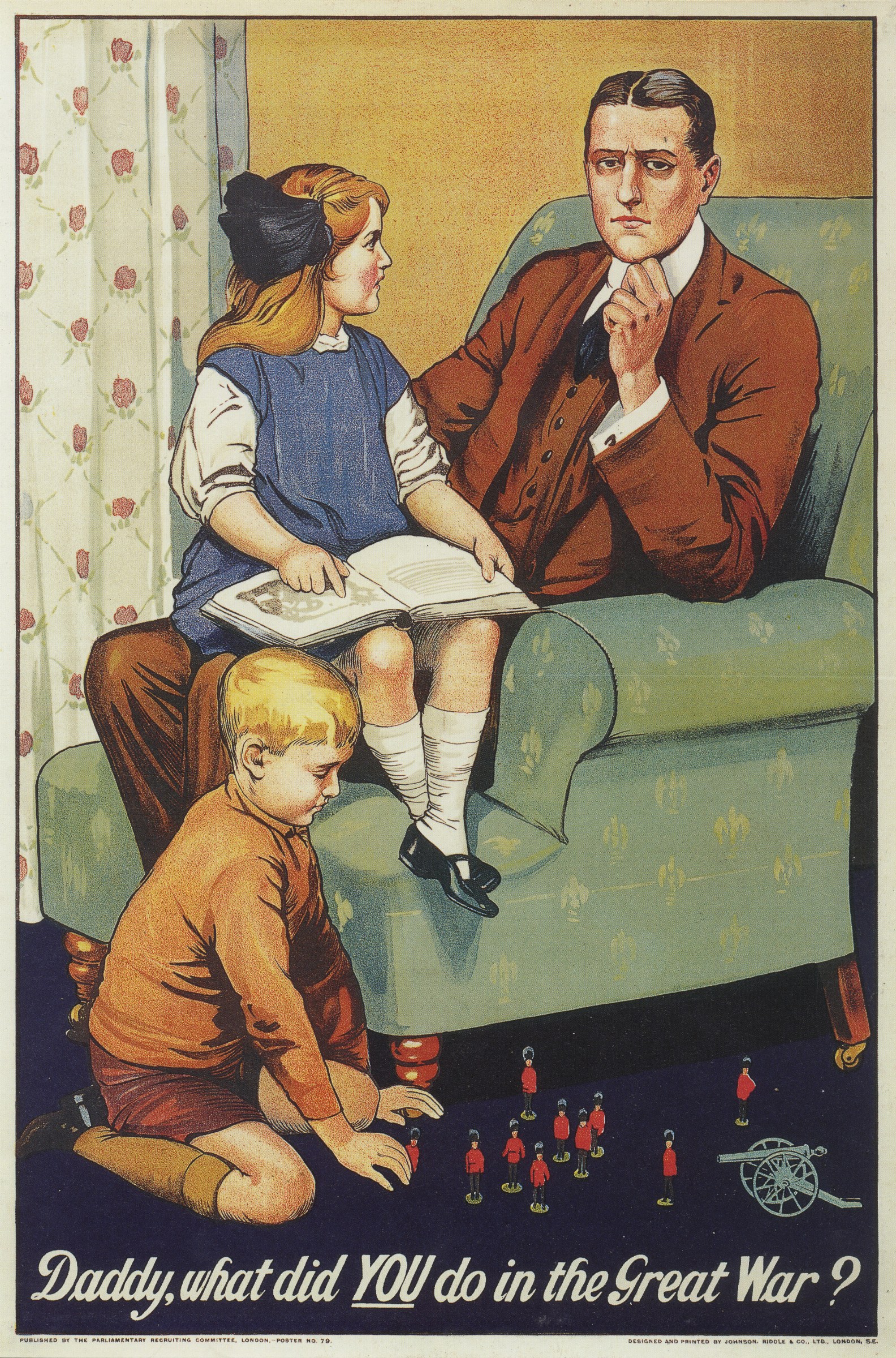 Daddy, what did YOU do in the Great War?
United Kingdom · 1915 · 3 techniques annotated
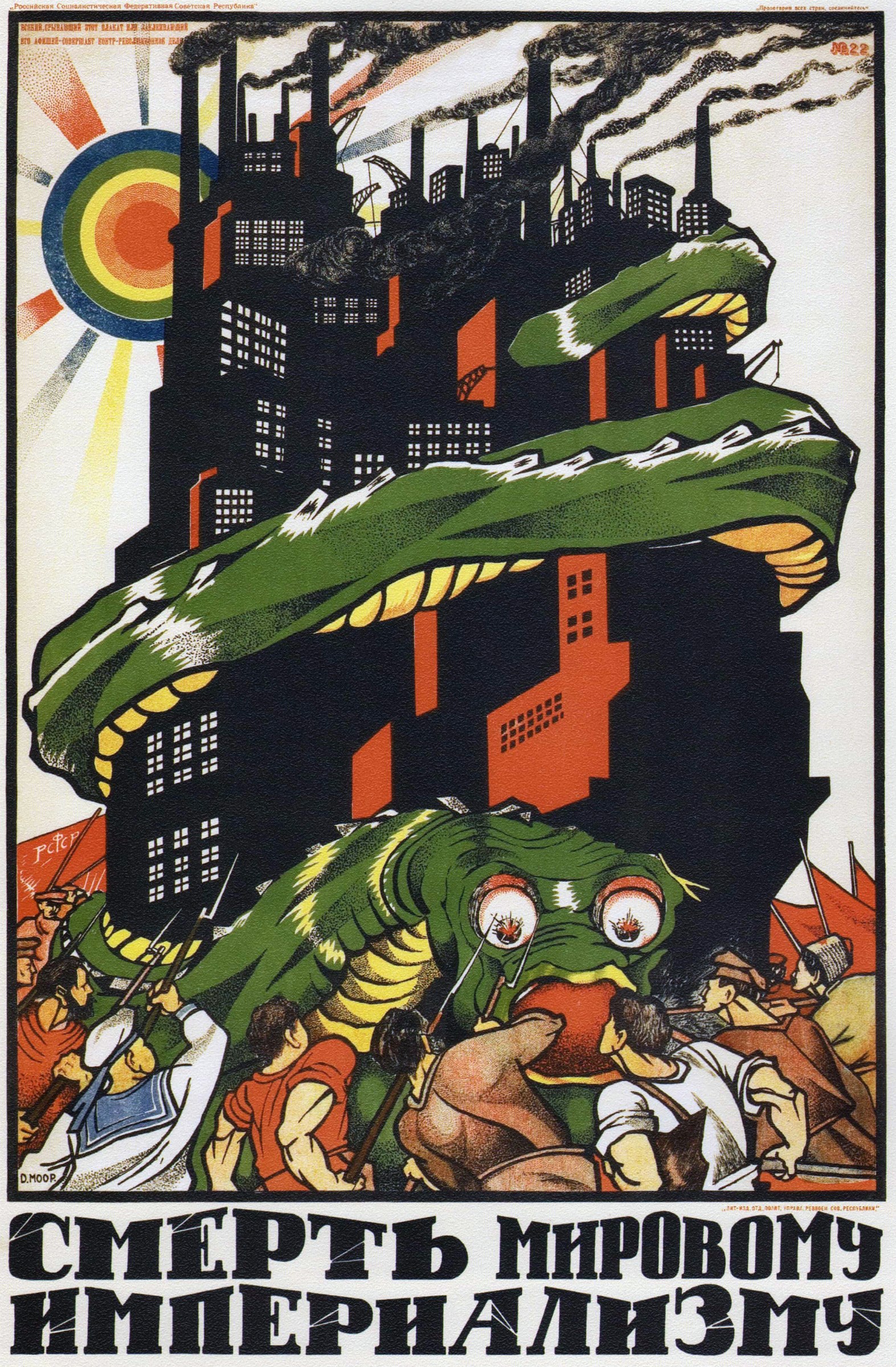 Death to world imperialism
Soviet Union · 1919 · 5 techniques annotated
Find an advertisement that uses a national, religious, or scientific symbol. What is the product, what is the symbol, and what does one have to do with the other?
In the wild
Short examples of the technique at work, each with what to notice. The same examples are questions in the quiz, where the answer is not given away.
A bank's advertisement shows a family under a large flag with the words "Rooted in American values."
What to notice. The flag's standing is carried over to the bank. "American values" glitters too, but the symbol is the main move.
A supplement is photographed beside a stethoscope and a white coat. No doctor is quoted.
What to notice. No one endorses the product, so it isn't testimonial; the props lend medical authority by association.
A politician gives every speech in front of a cathedral, and the campaign posters show the spire behind him.
What to notice. The Church's prestige is transferred to the candidate without any claim that the Church supports him.
An opponent's proposal is illustrated in a leaflet with a photograph of a notorious prison.
What to notice. Transfer in reverse: a hated image is placed beside the idea so its charge moves across.
Sources
- Institute for Propaganda Analysis. "How to Detect Propaganda." Propaganda Analysis 1, no. 2 (November 1937).
- Lee, Alfred McClung, and Elizabeth Briant Lee. The Fine Art of Propaganda. New York: Harcourt, Brace, 1939.
- Brandt, Allan M. The Cigarette Century. New York: Basic Books, 2007. ISBN 978-0465070473
- Library of Congress, Prints and Photographs Division. "I want you for U.S. Army." LC-USZC4-3859. https://www.loc.gov/item/96507165/