Appeal to tradition
Defending a practice or a claim on the grounds that it is old, customary, or how things have always been done, so that its age stands in for a reason.
Age feels like a track record. If something has lasted, the audience assumes it has been tested, and often it has; but the device offers the age itself as the argument and lets the audience skip the test. It works in both directions: a policy is right because it is old, and a proposal is wrong because it is new.
The device has a twist that historians have documented at length: many of the traditions invoked are recent inventions dressed as ancient ones. Hobsbawm and Ranger's The Invention of Tradition traces the Scottish clan tartan, the pageantry of the British monarchy, and much else to the nineteenth century, manufactured precisely to lend the weight of antiquity to present arrangements. Exploits Status Quo Bias and Mere Exposure Effect.
Historical examples
Hugh Trevor-Roper's chapter in The Invention of Tradition shows that the Highland kilt in its modern form was devised by an English industrialist around 1727 and the system of clan tartans largely by two brothers of doubtful ancestry in the 1840s; both were promptly invoked as ancient. The same volume traces the "immemorial" ceremonies of the British monarchy to reinventions after 1870.
Hobsbawm, Eric, and Terence Ranger, eds. The Invention of Tradition. Cambridge: Cambridge University Press, 1983.
Fascist regimes presented themselves as restorations: the Third Reich of the medieval Reich, the Roman Empire of Mussolini's Rome. Party rallies borrowed liturgy, the state borrowed classical architecture, and radical, new arrangements were sold as the return of something ancient. Mosse's study of the "nationalization of the masses" documents the construction.
Mosse, George L. The Nationalization of the Masses: Political Symbolism and Mass Movements in Germany from the Napoleonic Wars through the Third Reich. New York: Howard Fertig, 1975.
In advertising and commerce
When Coca-Cola changed its formula in April 1985, the public response was less about the taste, which had won in blind tests, than about tradition: the old formula was "the real thing," and its removal felt like vandalism. Within three months the company reintroduced the old product as "Coca-Cola Classic," and the label has traded on age ever since.
Pendergrast, Mark. For God, Country, and Coca-Cola: The Definitive History of the Great American Soft Drink and the Company That Makes It. 3rd ed. New York: Basic Books, 2013.
In the archive
Posters and advertisements annotated with this technique.
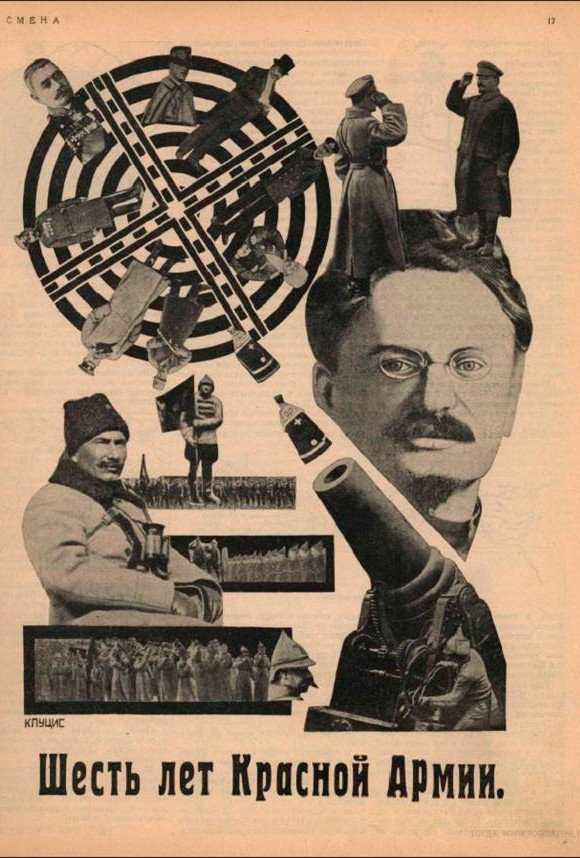
Find a message that defends something because it is traditional. When did the tradition start? What would be lost if it changed, in specific terms?
In the wild
Short examples of the technique at work, each with what to notice. The same examples are questions in the quiz, where the answer is not given away.
"This town has elected its council this way for a hundred years. That should tell you something."
What to notice. The age of the practice is offered as the argument; what it should "tell you" is never said.
"Original recipe. Unchanged since 1888." The advertisement says nothing about what is in it.
What to notice. Age as quality. The date is the claim.
"Our fathers didn't need a license to do this, and neither do we."
What to notice. Past practice is offered as a reason against a present rule; whether the rule would do any good is not discussed.
Sources
- Hobsbawm, Eric, and Terence Ranger, eds. The Invention of Tradition. Cambridge: Cambridge University Press, 1983. ISBN 978-1107604674
- Mosse, George L. The Nationalization of the Masses. New York: Howard Fertig, 1975. ISBN 978-0865274259
- Pendergrast, Mark. For God, Country, and Coca-Cola. 3rd ed. New York: Basic Books, 2013. ISBN 978-0465029174
- Walton, Douglas. Fundamentals of Critical Argumentation. Cambridge: Cambridge University Press, 2006.