Glittering generalities
Attaching an idea to words that sound like values, such as freedom, progress, or family, so that the audience approves of it without asking what it actually proposes.
Name-calling in reverse. Where a bad name makes us reject without examining, a virtue word makes us accept without examining. The words are chosen because everyone already agrees with them and because they mean different things to different people, so each listener fills in a private, favorable meaning. "A stronger community" costs nothing to say and commits the speaker to nothing in particular.
The device exploits the audience's tendency to take agreement with the word for agreement with the proposal. Exploits Halo Effect and Ambiguity Effect.
Historical examples
The Institute for Propaganda Analysis coined the term while analyzing 1930s political speech, in which "the American way," "true democracy," and "Christian civilization" were invoked by speakers who disagreed about nearly everything else. The Lees' study of Father Coughlin shows the same words carrying opposite programs from one broadcast to the next.
Institute for Propaganda Analysis. "How to Detect Propaganda." Propaganda Analysis 1, no. 2 (November 1937); Lee and Lee, The Fine Art of Propaganda (1939), on "glittering generality."
Liberty Loan posters sold bonds with "Liberty," "Democracy," and "Civilization" set in the largest type, while the actual instrument, a government bond paying interest, appeared in small print if at all. The value word was the product.
Library of Congress, Prints and Photographs Division, World War I posters collection (Liberty Loan series, 1917–1918); Jowett and O'Donnell, Propaganda and Persuasion, 7th ed. (2019).
In advertising and commerce
"Wholesome," "natural," "pure," and "authentic" recur in food and cosmetics advertising because they attract approval and commit the advertiser to nothing testable. Regulators in several countries have had to define "natural" precisely because the word had come to mean whatever the reader hoped.
Pratkanis and Aronson, Age of Propaganda (2001), on "glittering generalities" in advertising; U.S. Food and Drug Administration, "Use of the Term Natural on Food Labeling," request for comments, Federal Register, 12 November 2015.
In the archive
Posters and advertisements annotated with this technique.
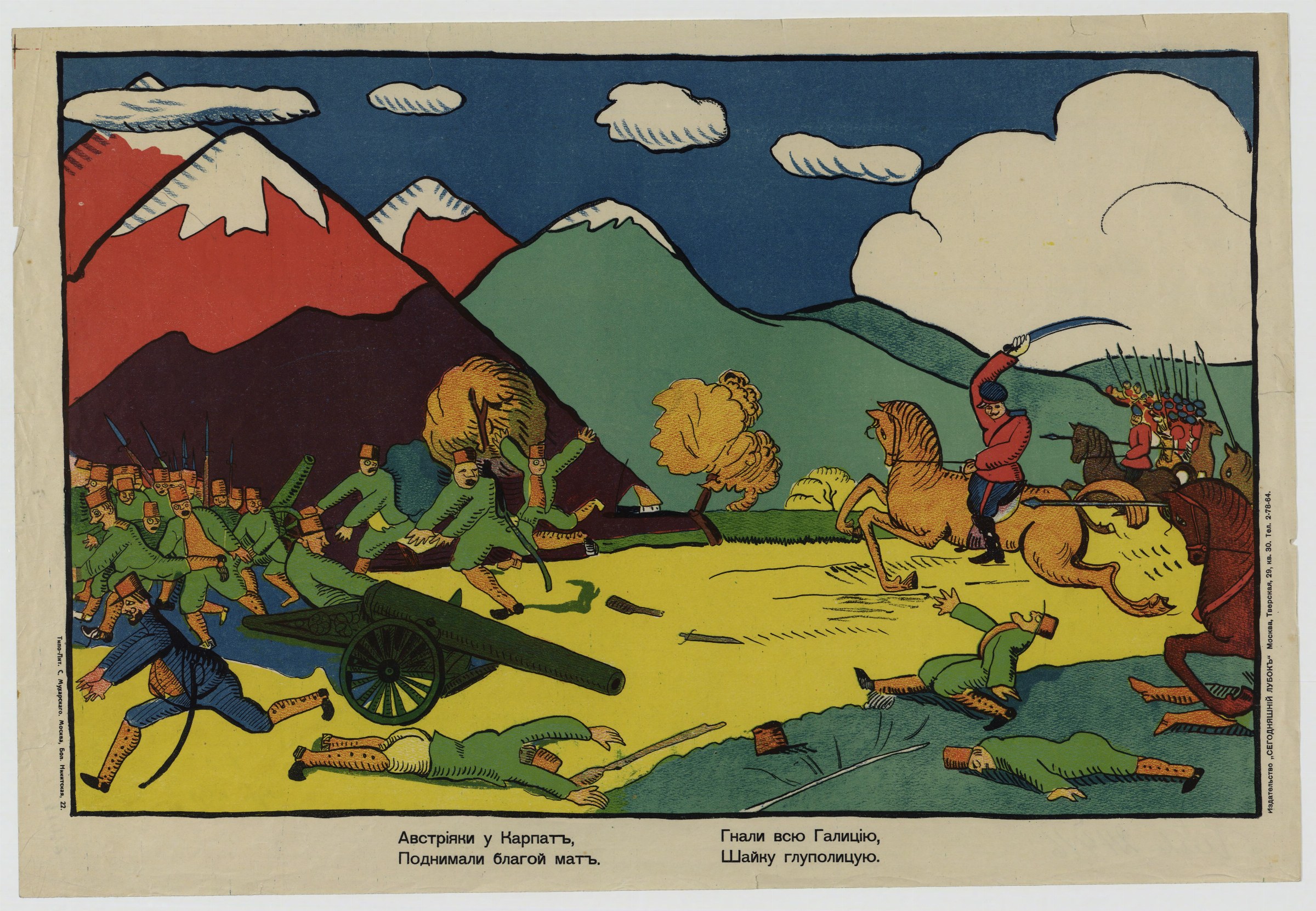 The Austrians cursed loudly near the Carpathian Mountains
Russia · 1914 · 4 techniques annotated
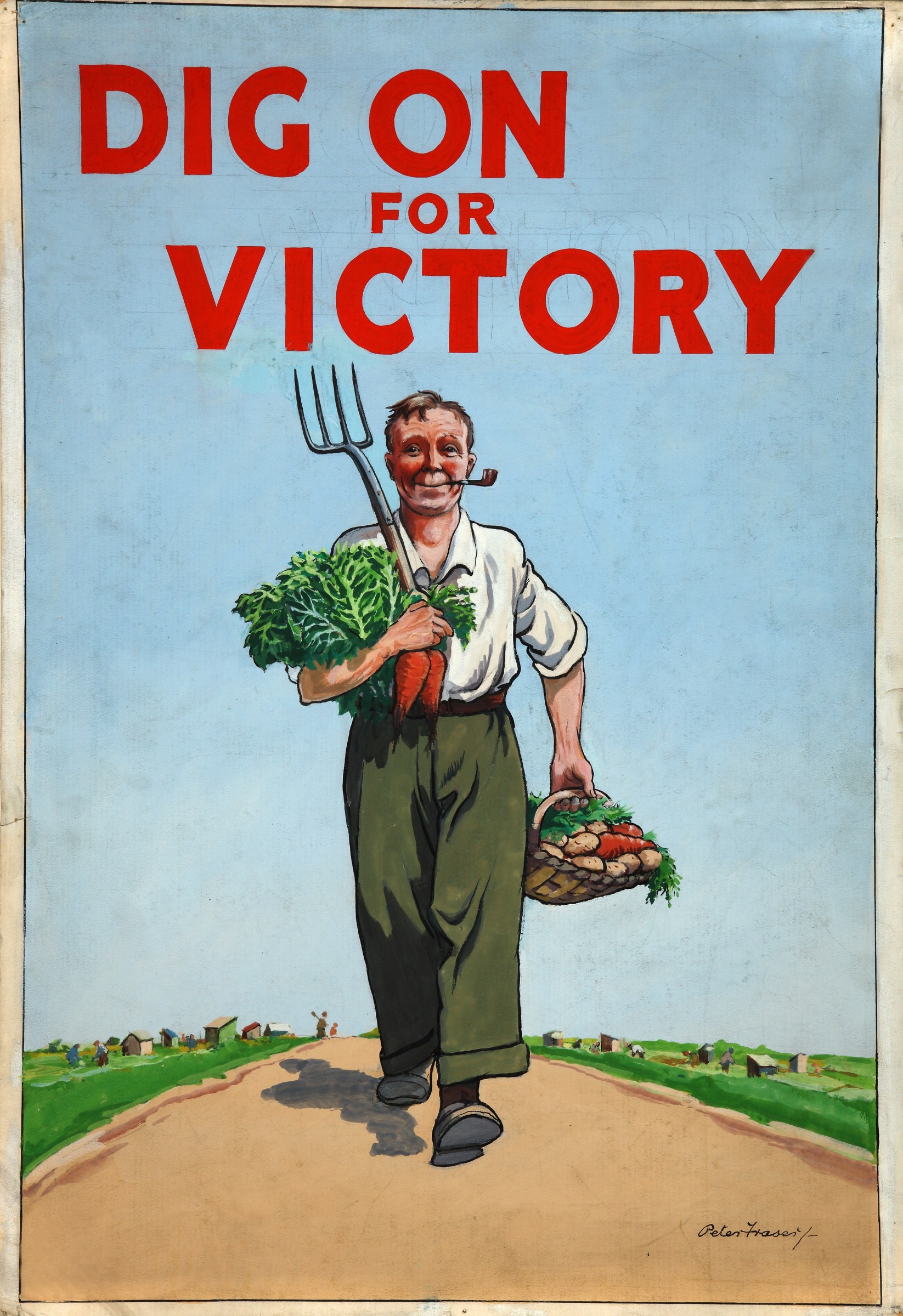 Dig on for victory
United Kingdom · 1941 · 4 techniques annotated
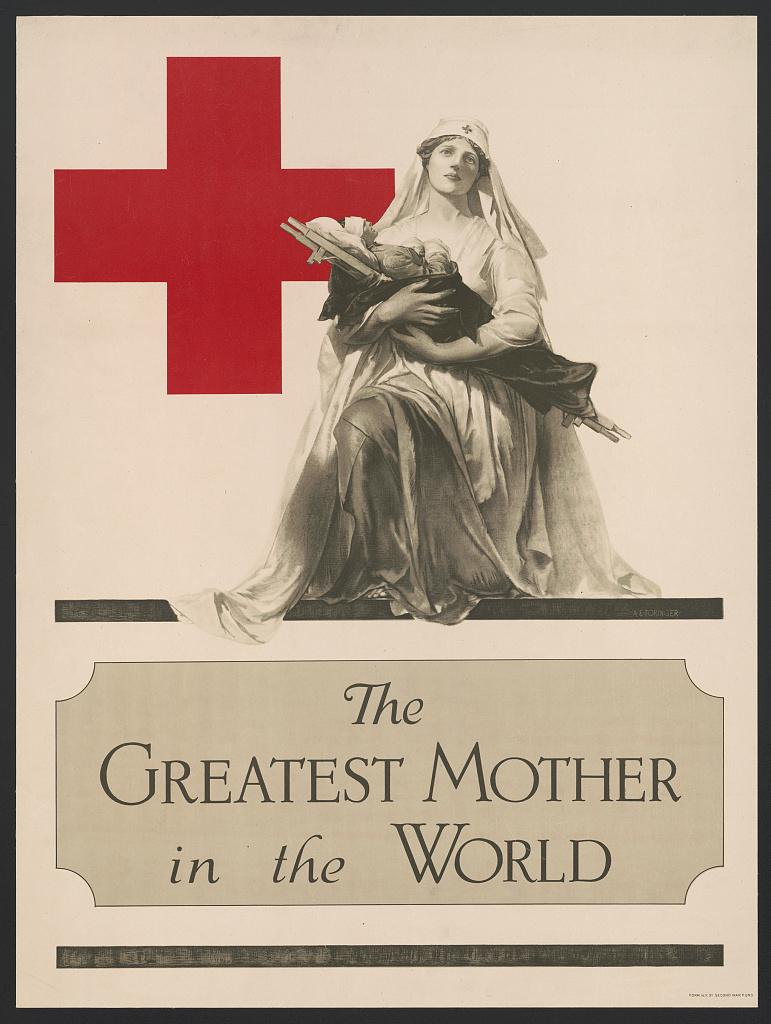 The greatest mother in the world
United States · 1918 · 4 techniques annotated
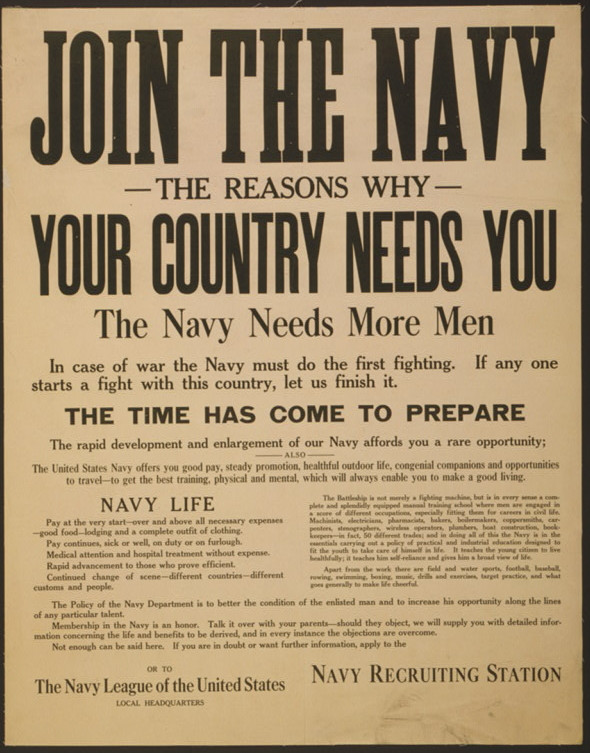 Join the Navy, your country needs you
United States · 1917 · 4 techniques annotated
Take a current advertising slogan built on a value word. Write two opposite products or policies the same slogan could sell without changing a word.
In the wild
Short examples of the technique at work, each with what to notice. The same examples are questions in the quiz, where the answer is not given away.
"Vote yes for real progress, a stronger community, and a future our children deserve."
What to notice. Three value words and no proposal. Nothing in the sentence can be checked.
"New Radiant Tonic: wholesome, scientifically prepared, the modern family's first line of defense."
What to notice. "Wholesome," "scientifically prepared," and "modern" glow without saying what the tonic contains or does.
"This bill is an attack on freedom itself."
What to notice. "Freedom" is the glittering word; the sentence asserts a value violation without naming a provision.
"We stand for common sense, decency, and the values that built this country."
What to notice. Every phrase is one the audience already approves of, and none says what will be done.
Sources
- Institute for Propaganda Analysis. "How to Detect Propaganda." Propaganda Analysis 1, no. 2 (November 1937).
- Lee, Alfred McClung, and Elizabeth Briant Lee. The Fine Art of Propaganda. New York: Harcourt, Brace, 1939.
- Pratkanis, Anthony, and Elliot Aronson. Age of Propaganda. Rev. ed. New York: W. H. Freeman, 2001. ISBN 978-0805074031
- Jowett, Garth S., and Victoria O'Donnell. Propaganda and Persuasion. 7th ed. Thousand Oaks: SAGE, 2019. ISBN 978-1506371344