Techniques · Family
Appeals propaganda techniques
Techniques that work on emotion and identity rather than on the claim.
- Appeal to authority Offering the rank, title, or institutional standing of a source as the reason to accept a claim, in place of the evidence the source would need to be right. 6 in the archive
- Appeal to fear Raising the audience's fear of a threat, real, exaggerated, or invented, so that the proposed action is accepted as the way to be safe rather than judged on whether it works. 16 in the archive
- Appeal to outrage Provoking anger at an act, a person, or a group so that the audience acts on the anger before it has examined what actually happened. 6 in the archive
- Appeal to pity Presenting suffering, one's own or someone else's, so that the audience's sympathy substitutes for a judgment about whether the request attached to it is justified. 7 in the archive
- Appeal to tradition Defending a practice or a claim on the grounds that it is old, customary, or how things have always been done, so that its age stands in for a reason. 1 in the archive
- Common enemy Building or magnifying an external enemy so that the audience closes ranks behind the speaker and stops questioning the speaker's own conduct. 2 in the archive
- Cult of personality Building a leader into a figure of devotion through relentless praise, imagery, and staged intimacy, so that loyalty to the person replaces judgment of the person's decisions. 3 in the archive
- Dehumanization Describing a group as animals, vermin, disease, or objects, so that the moral rules the audience applies to people no longer seem to apply to them. 2 in the archive
- Flag-waving Presenting a proposal as an act of loyalty to the nation, so that supporting it becomes patriotism and questioning it becomes disloyalty. 5 in the archive
- Guilt by association Discrediting a person or an idea by linking it to someone or something the audience already condemns, so that the link does the work an argument should. 2 in the archive
- Moral panic Amplifying a minor or unrepresentative behavior into a threat to society's values, so that fear and outrage sweep in measures that would not survive a calm look at the facts.
- Nostalgia Invoking an idealized past, one the audience half-remembers and half-invents, so that a proposal is accepted as a return to it rather than judged as a change to the present.
- Scapegoating Assigning the blame for a complex problem to a single person or group, so that anger has a target and the real causes, and the speaker's own share of them, go unexamined. 2 in the archive
- Us versus them Dividing the world into an in-group the audience belongs to and an out-group it does not, so that positions are judged by which side holds them rather than by their merits. 3 in the archive
In the archive
Posters and advertisements annotated with techniques from this family.
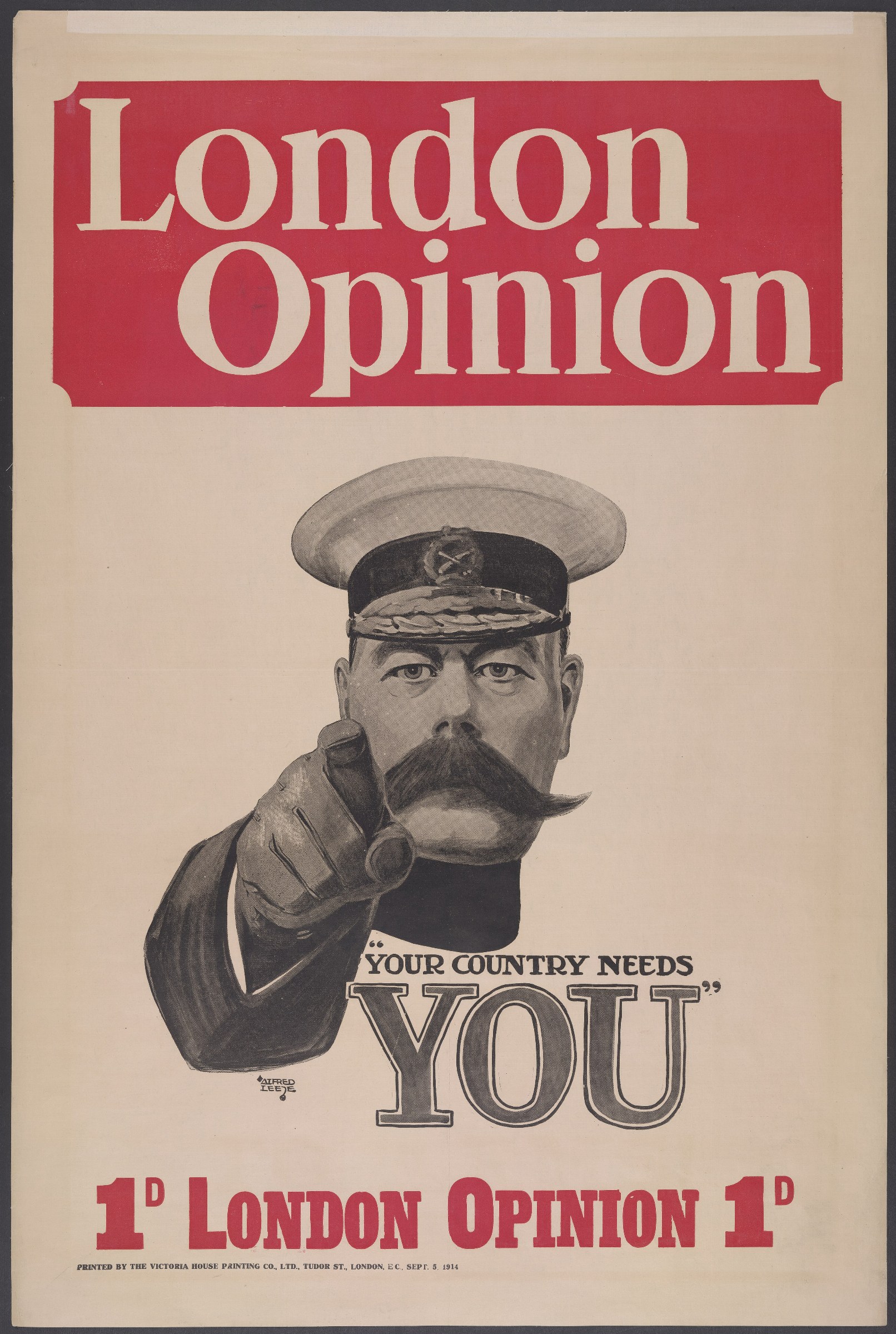 Your country needs you
United Kingdom · 1914 · 5 techniques annotated
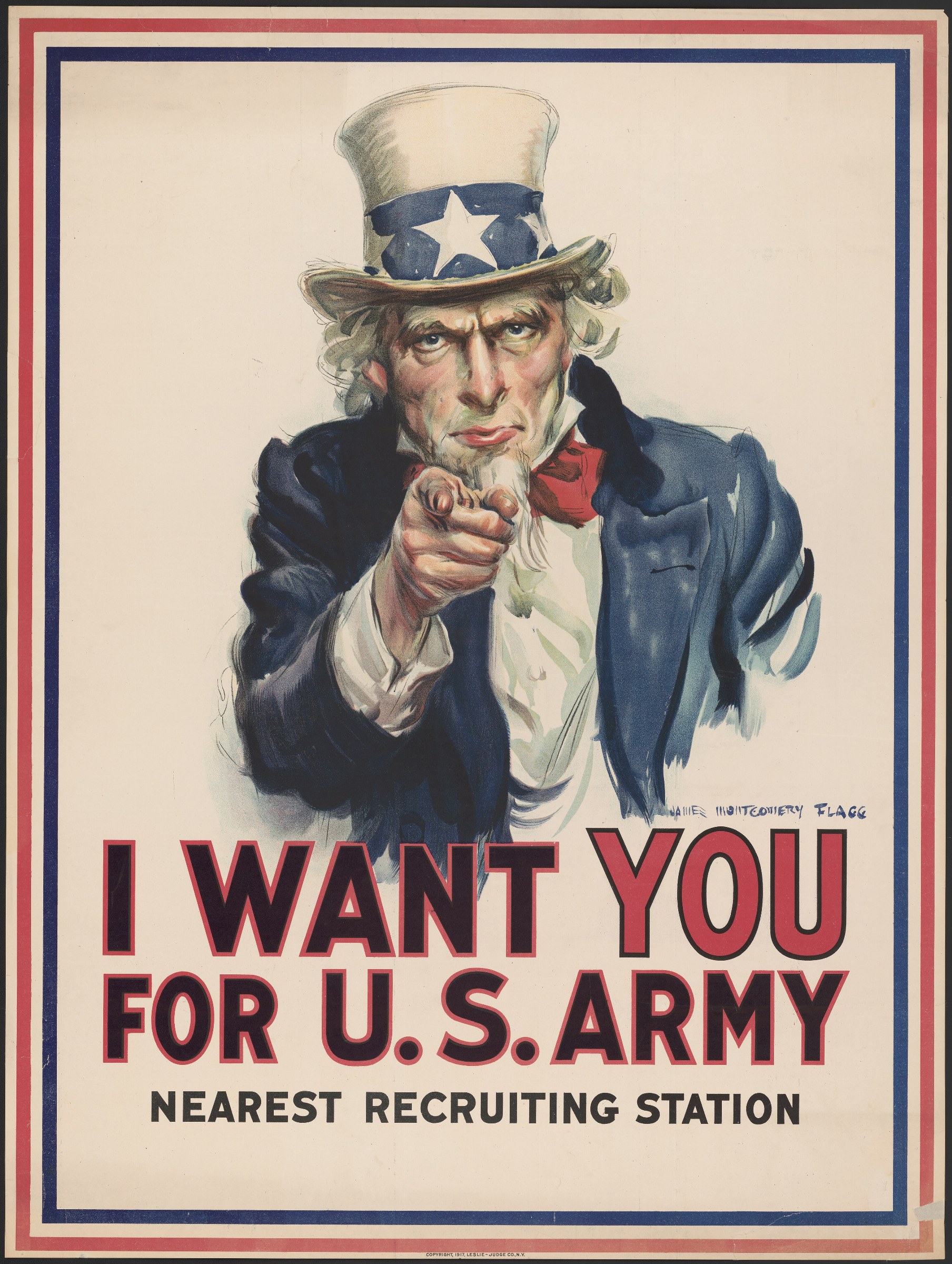 I want YOU for U.S. Army
United States · 1917 · 4 techniques annotated
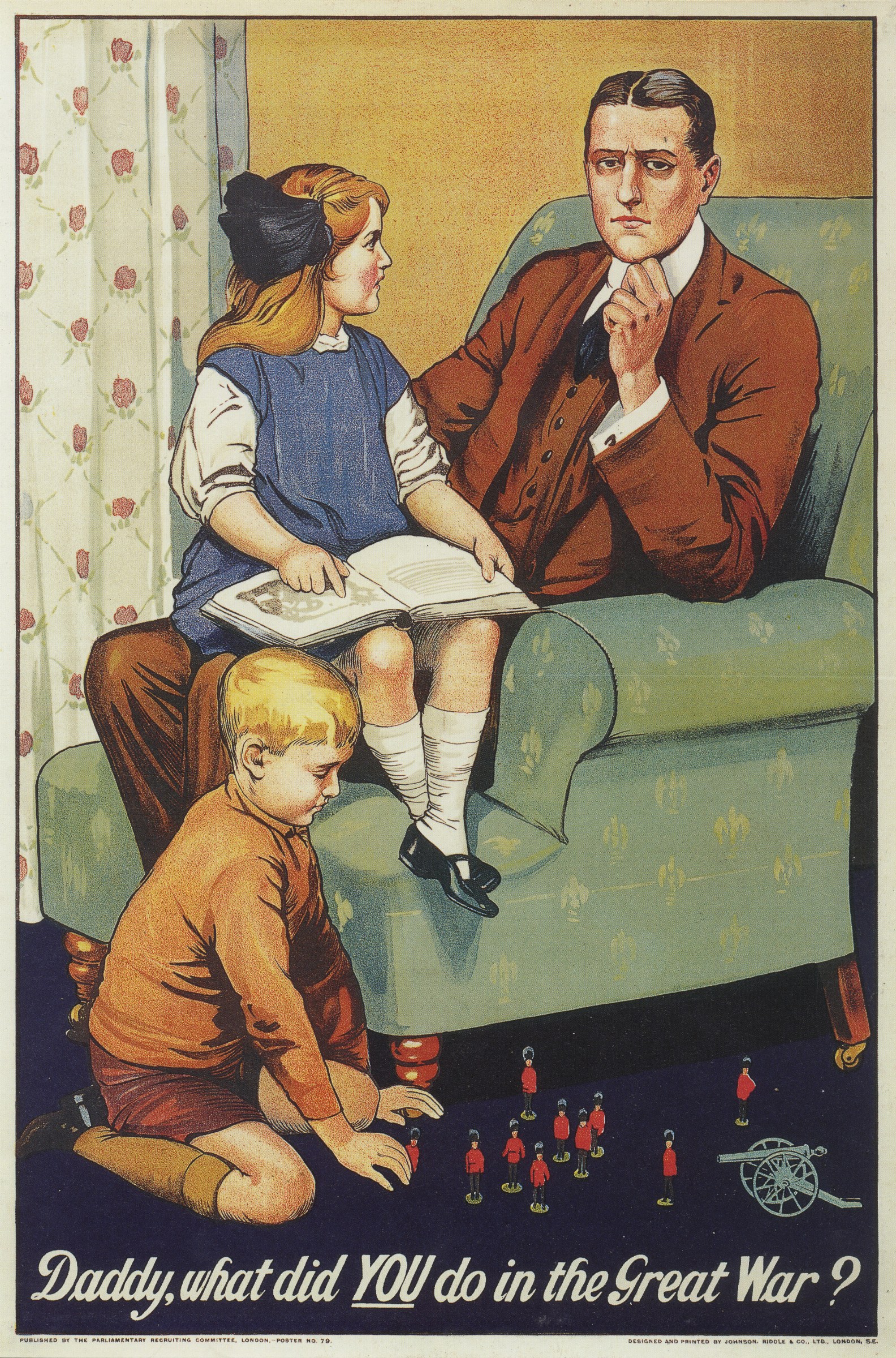 Daddy, what did YOU do in the Great War?
United Kingdom · 1915 · 3 techniques annotated
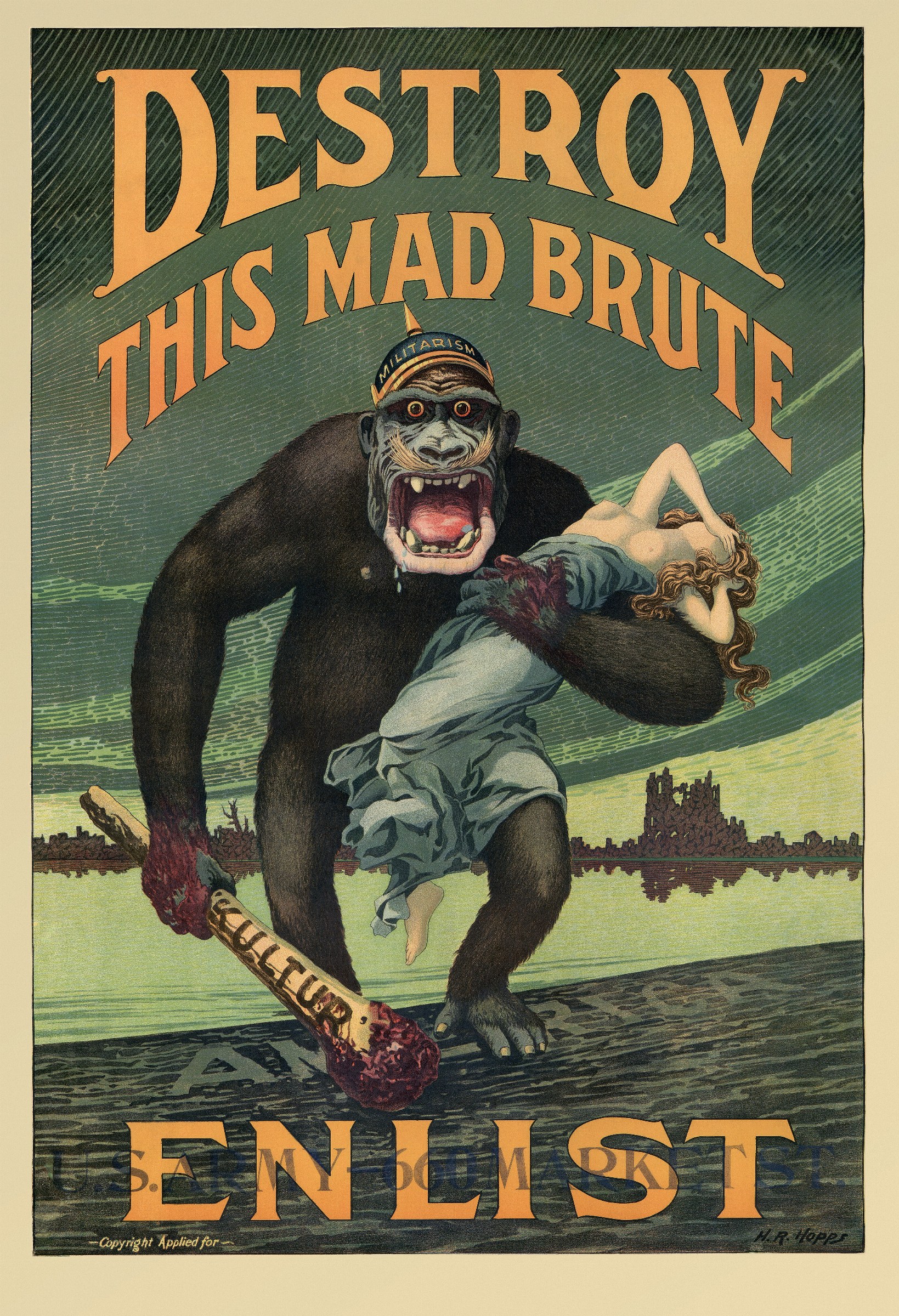 Destroy this mad brute
United States · 1917 · 4 techniques annotated
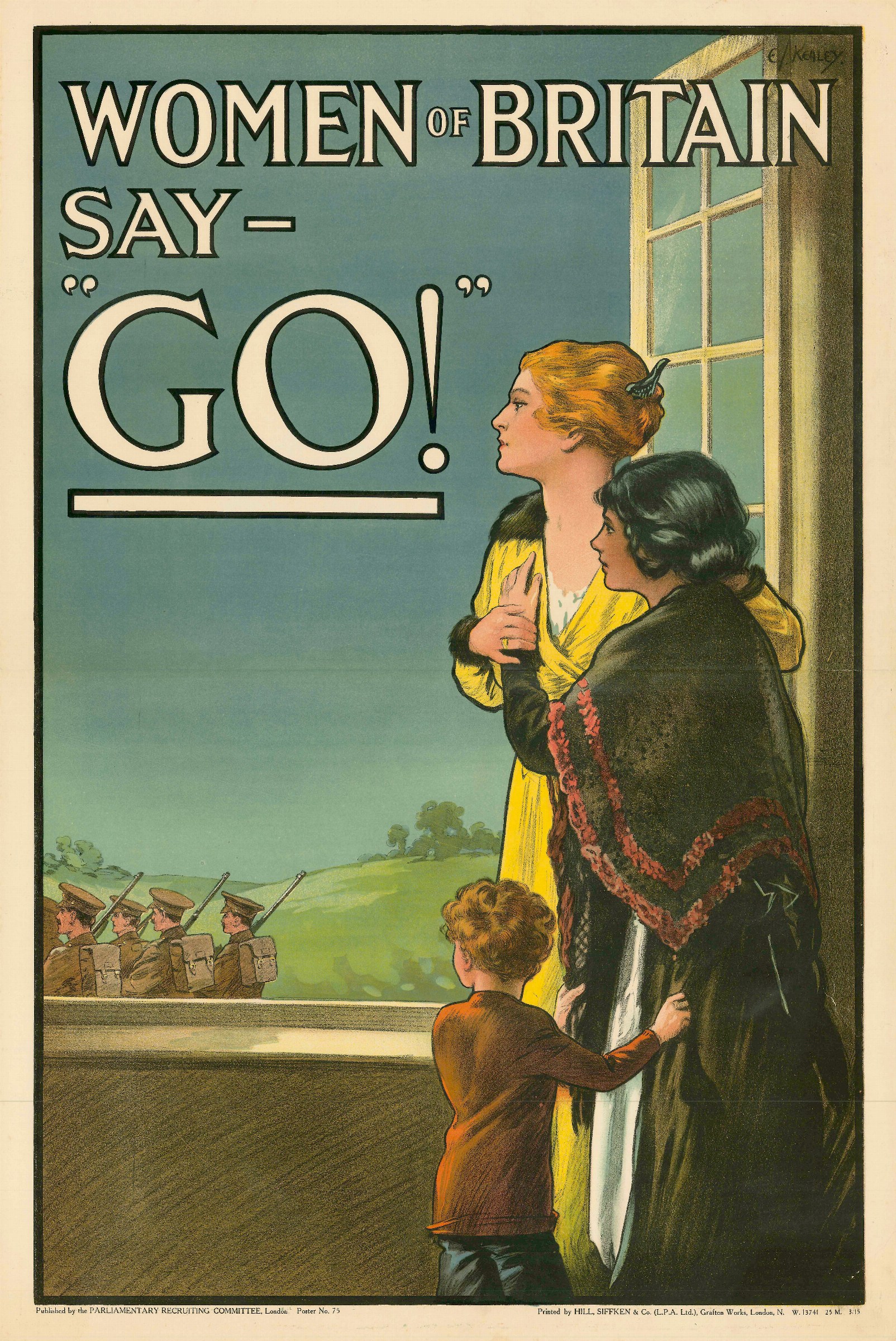 Women of Britain say "Go!"
United Kingdom · 1915 · 4 techniques annotated
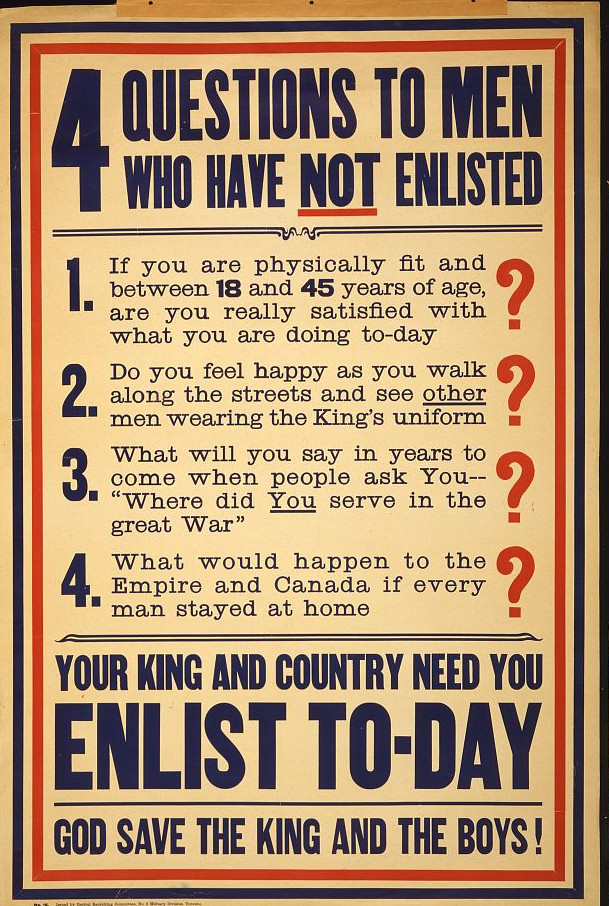 4 questions to men who have not enlisted
Canada · 1915 · 5 techniques annotated