Flag-waving
Presenting a proposal as an act of loyalty to the nation, so that supporting it becomes patriotism and questioning it becomes disloyalty.
Flag-waving converts a policy question into an identity question. The audience is no longer asked whether the proposal is wise but whether they love their country, and since nearly everyone answers yes to the second, the first goes unasked. The device also raises the cost of dissent: to argue against the proposal is to argue against the flag it has been wrapped in.
It is transfer applied to the nation's symbols and turned into a demand. The word jingoism dates from an 1878 music-hall song ("We don't want to fight, but by jingo if we do") sung during a war scare, which is the device in its natural habitat: a crisis, a chorus, and a policy carried along by both. Exploits In Group Favoritism and Identity Protective Cognition.
Historical examples
The four Liberty Loan drives sold war bonds under flags, eagles, and the Statue of Liberty, and their copy tied purchase to loyalty: buying was "doing your bit," not buying was leaving it to others. The bonds were a financial product with a yield; the posters sold them as a test of citizenship.
Library of Congress, Prints and Photographs Division, World War I posters collection (Liberty Loan series, 1917–1918); Kang, Sung Won, and Hugh Rockoff. "Capitalizing Patriotism: The Liberty Loans of World War I." Financial History Review 22, no. 1 (2015): 45–78.
G. W. Hunt's song "MacDermott's War Song," with its refrain "by jingo if we do," was sung in London music halls during the Russo-Turkish crisis and gave the language the word jingoism. The song offered no argument about the Eastern Question; it offered a chorus, and the chorus was the argument.
Cunningham, Hugh. "Jingoism in 1877–78." Victorian Studies 14, no. 4 (1971): 429–453.
In advertising and commerce
"Made in America" and "Buy British" campaigns ask the consumer to treat a purchase as an act of loyalty. Where the claim is about where a product is made it is information; where it is offered as the reason to prefer the product regardless of price or quality, it is flag-waving, and the regulators who police the phrase exist because it works.
Federal Trade Commission. Enforcement Policy Statement on U.S. Origin Claims. 62 Federal Register 63756, 2 December 1997.
In the archive
Posters and advertisements annotated with this technique.
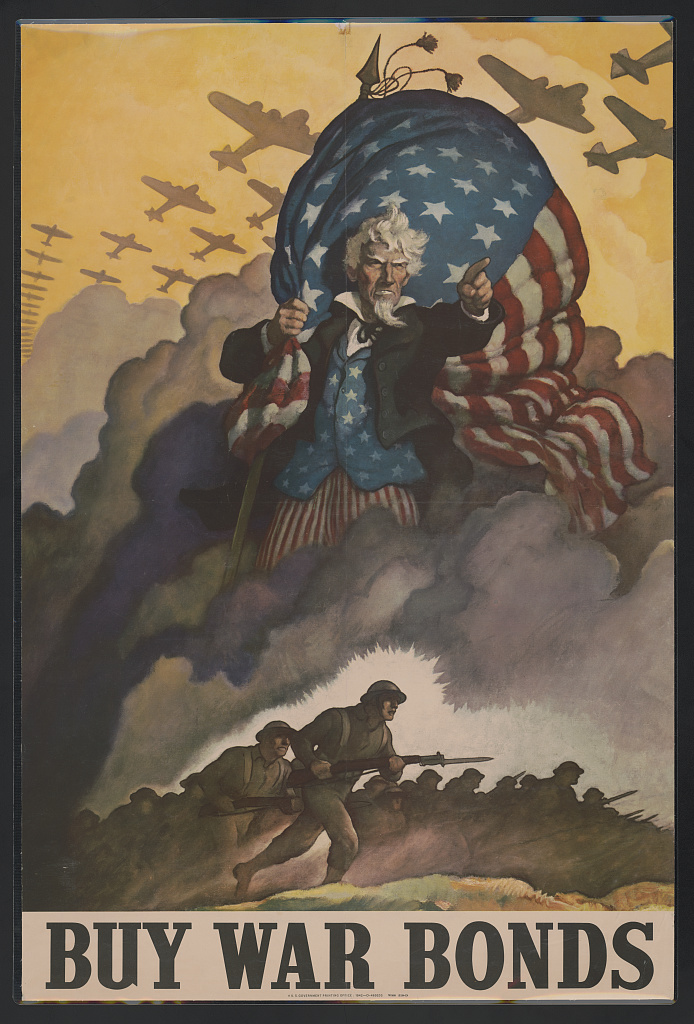
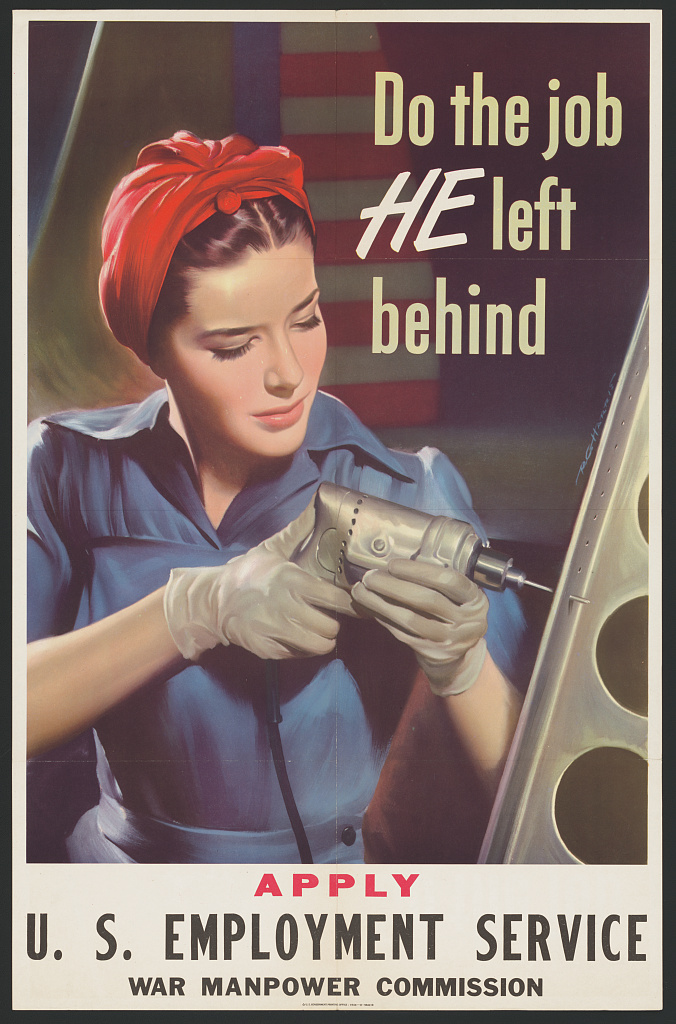
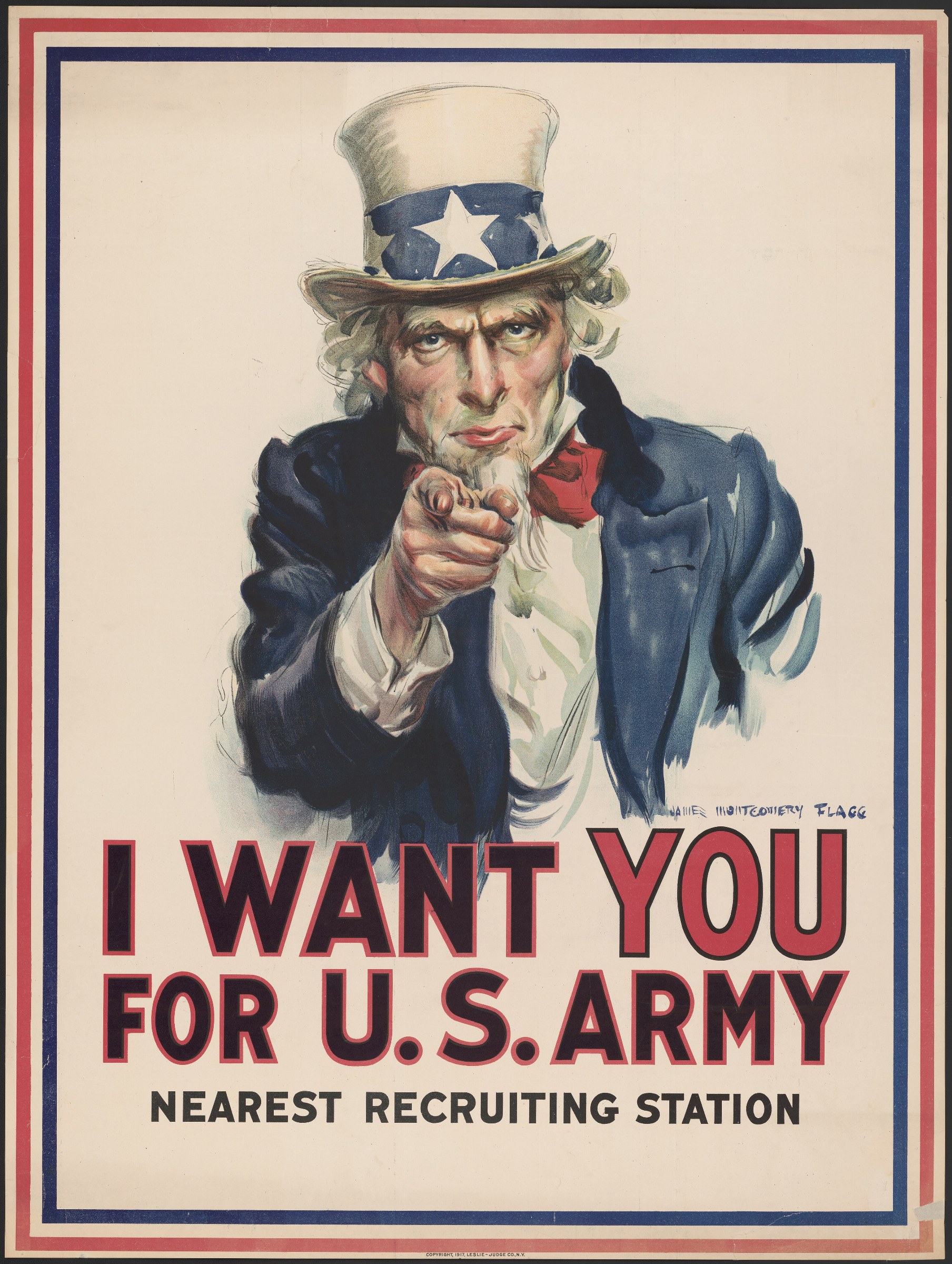
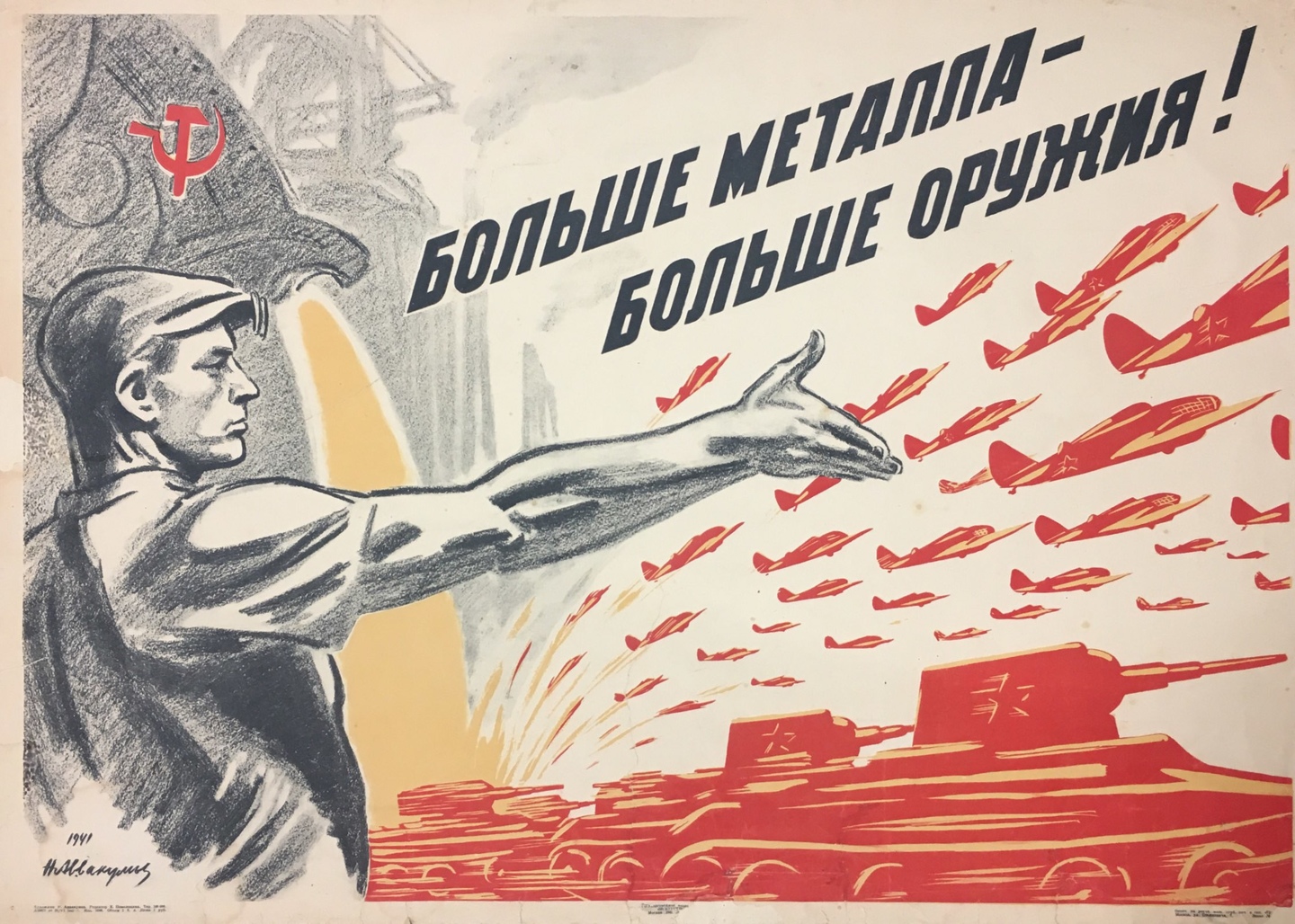
Find a message that says supporting something is patriotic. Rewrite it without any reference to the country. What is being proposed?
In the wild
Short examples of the technique at work, each with what to notice. The same examples are questions in the quiz, where the answer is not given away.
"A real patriot backs this bill. Which side are you on?"
What to notice. Support for a specific bill is redefined as patriotism; the bill's contents never appear.
An insurance advertisement ends on a waving flag and the line "Protecting American families since 1922."
What to notice. The flag is attached to a financial product; the company's policy terms are not the pitch.
"Anyone who questions the contract is questioning our troops."
What to notice. Dissent about a procurement decision is recast as disloyalty to soldiers.
Sources
- Cunningham, Hugh. "Jingoism in 1877–78." Victorian Studies 14, no. 4 (1971): 429–453.
- Kang, Sung Won, and Hugh Rockoff. "Capitalizing Patriotism: The Liberty Loans of World War I." Financial History Review 22, no. 1 (2015): 45–78.
- Cull, Nicholas J., David Culbert, and David Welch. Propaganda and Mass Persuasion: A Historical Encyclopedia, 1500 to the Present. Santa Barbara: ABC-CLIO, 2003. ISBN 978-1576078204
- Jowett, Garth S., and Victoria O'Donnell. Propaganda and Persuasion. 7th ed. Thousand Oaks: SAGE, 2019. ISBN 978-1506371344