Juxtaposition
Placing two images side by side, or cutting from one to the next, so that the viewer reads a relation between them, cause, contrast, or identity, that neither image states and no sentence has to defend.
The mind cannot see two pictures in sequence without connecting them. Lev Kuleshov showed in the 1920s that the same shot of an actor's face read as hunger, grief, or desire depending on the shot cut next to it; the viewer supplied the feeling and credited it to the actor. Photomontage does the same on a page: a politician's photograph beside a pile of coins, a child's face beside a factory, and the relation is asserted by adjacency.
The device is strong because it is not a statement. A caption that said "this man is paid by these interests" could be denied; two pictures cannot be, since they claimed nothing. Exploits Framing Effect and Illusory Correlation.
Historical examples
John Heartfield's photomontage for the Arbeiter-Illustrierte-Zeitung, "Adolf the Superman: Swallows Gold and Spouts Junk," shows Hitler in mid-speech with an X-ray of his torso, a spine of coins running down to his stomach. Heartfield made more than two hundred such pages for the magazine; this one was pasted up as a poster across Berlin during the election.
Pachnicke, Peter, and Klaus Honnef, eds. John Heartfield. New York: Abrams, 1992; Evans, David. John Heartfield: AIZ/VI, 1930–38. New York: Kent, 1992.
Kuleshov's film workshop cut a single expressionless close-up of the actor Ivan Mosjoukine against a bowl of soup, a child in a coffin, and a woman on a divan; audiences praised the actor's subtle hunger, grief, and desire. Pudovkin's account of the experiment became the founding anecdote of montage theory and of the political cinema built on it.
Pudovkin, Vsevolod. Film Technique and Film Acting. Translated by Ivor Montagu. London: Vision Press, 1954; Kuleshov, Lev. Kuleshov on Film. Berkeley: University of California Press, 1974.
In advertising and commerce
Oliviero Toscani's campaigns for the clothing company set a dying AIDS patient, a newborn with its cord uncut, and a soldier's bloodied uniform beside the United Colors logo, with no copy. The adjacency gave the brand the gravity of the images; the company sold sweaters, and the campaigns were banned in several countries for saying nothing while claiming everything.
Salvemini, Lorella Pagnucco. United Colors: The Benetton Campaigns. London: Scriptum, 2002; Tinic, Serra. "United Colors and Untied Meanings: Benetton and the Commodification of Social Issues." Journal of Communication 47, no. 3 (1997).
In the archive
Posters and advertisements annotated with this technique.
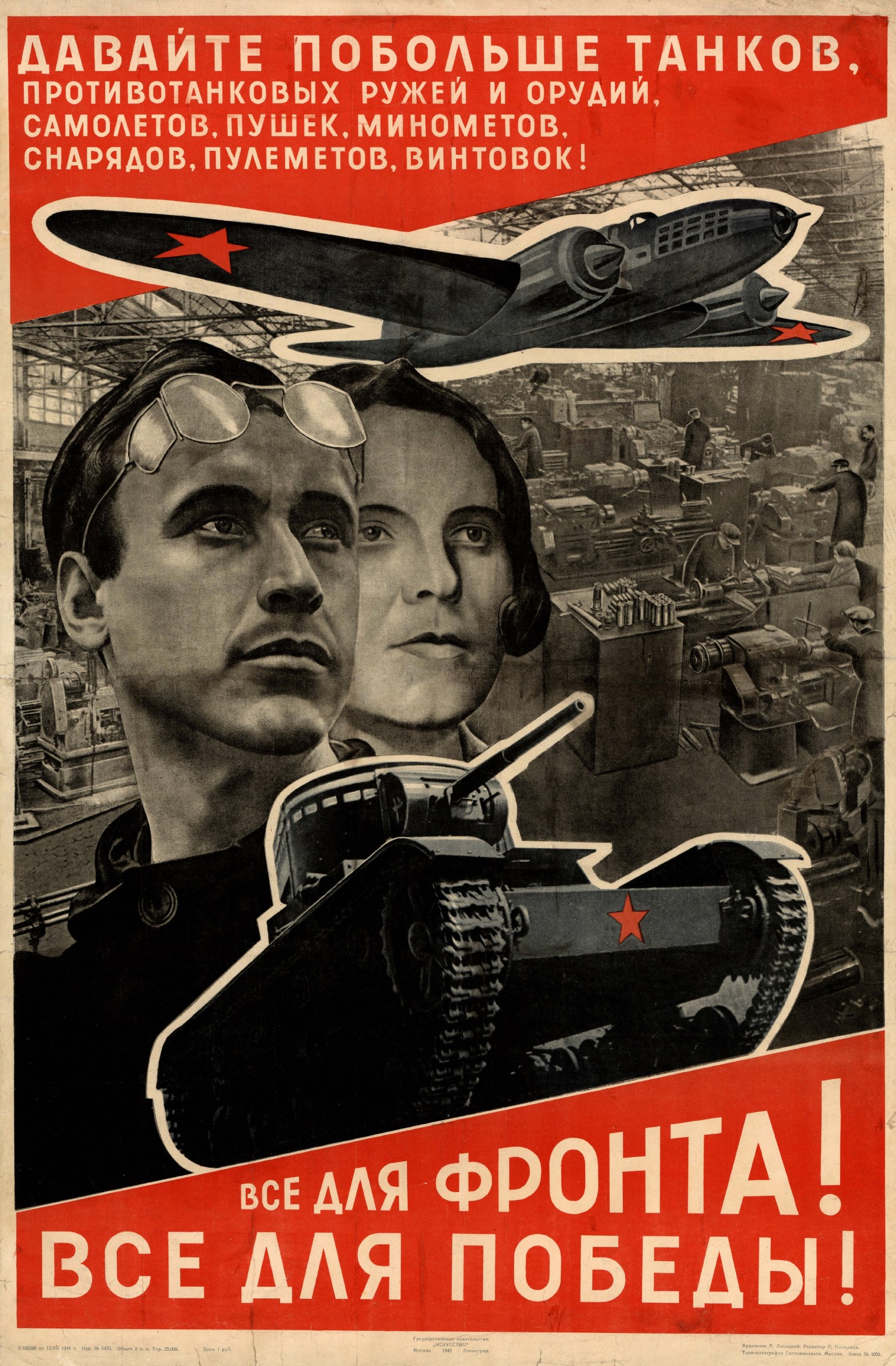
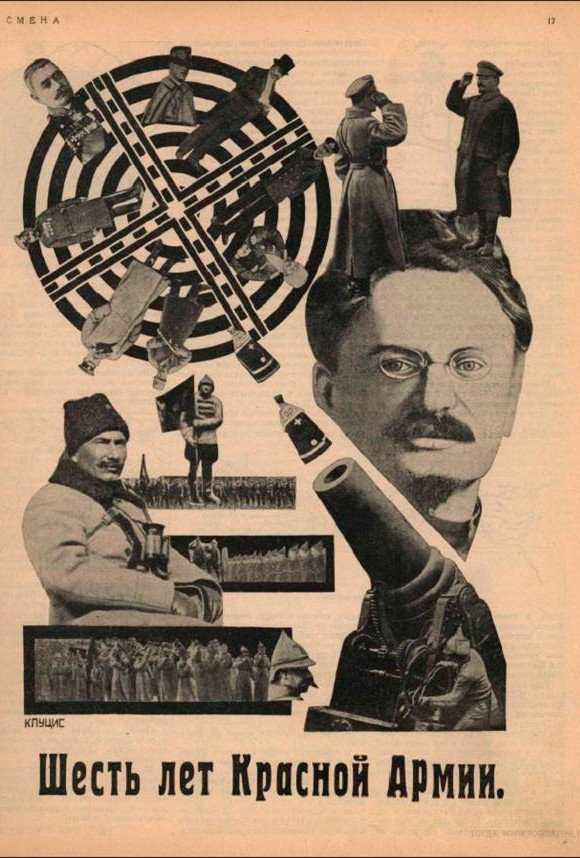
Find an advertisement or political ad that cuts between two unrelated images. Write the sentence the cut wants you to believe. Would the advertiser say it in words?
In the wild
Short examples of the technique at work, each with what to notice. The same examples are questions in the quiz, where the answer is not given away.
A campaign ad cuts from the opponent laughing at a dinner to a closed factory gate, then back to the laugh, with music and no narration.
What to notice. The two shots assert that he laughed at the closure; neither shot says so, and the ad never has to.
A poster pastes a politician's photograph above a map of the country with a stain spreading across it.
What to notice. Adjacency makes him the cause of the stain. The picture claims a relation it does not state.
A diet advertisement pairs a photograph of a woman in gray light, slumped, with the same woman in sunlight, upright, and the words "12 weeks."
What to notice. The contrast is in the lighting and the pose. The pair is read as a result; the result is the montage.
Sources
- Pudovkin, Vsevolod. Film Technique and Film Acting. Translated by Ivor Montagu. London: Vision Press, 1954. OCLC 2003636
- Pachnicke, Peter, and Klaus Honnef, eds. John Heartfield. New York: Harry N. Abrams, 1992. ISBN 978-0810934139
- Ades, Dawn. Photomontage. Rev. ed. London: Thames & Hudson, 1986. ISBN 978-0500202081