Techniques · Family
Visual propaganda techniques
Techniques carried by the image rather than the text.
- Camera angle Choosing where the camera stands so that the viewer looks up at the leader, down on the enemy, or out from inside the crowd, and takes the position for a judgment. 2 in the archive
- Caricature Drawing a person or class with its features exaggerated into a type, the banker's belly, the priest's jowls, the enemy leader's mustache, so that the type is recognized before the argument, and the argument is the type. 3 in the archive
- Chart distortion Drawing a chart so that the picture says something the numbers do not: an axis that starts near the top, a pictogram that grows in area when the quantity grows in length, two series on scales chosen to cross where the argument needs them to.
- Color and typography Using color and letterforms to carry a claim the words do not make: one side red and the other white, the enemy's name in a foreign-looking face, the key word in capitals so that the eye obeys before the mind has read. 3 in the archive
- Dehumanizing imagery Drawing or photographing a group as animals, insects, monsters, or objects so that the viewer sees something to be exterminated or handled rather than people to be answered. 3 in the archive
- Heroic scale Drawing the leader, the nation, or the cause far larger than the people and places around it, so that size does the work of argument: what is this big must be this important. 2 in the archive
- Idealized figure Drawing the worker, soldier, mother, or citizen as a flawless type, young, strong, clean, and smiling, so that the viewer measures herself against a person who does not exist and the regime or brand that drew her. 4 in the archive
- Juxtaposition Placing two images side by side, or cutting from one to the next, so that the viewer reads a relation between them, cause, contrast, or identity, that neither image states and no sentence has to defend. 2 in the archive
- Mass spectacle Staging a crowd as an image: thousands arranged in blocks, moving as one, lit and filmed so that the viewer sees unanimity and feels the choice already made. 1 in the archive
- Misleading maps Drawing a map so that projection, color, scale, or symbol makes a claim about size, threat, or ownership that the territory does not support.
- Photo cropping Choosing the edges of a photograph so that what lies outside them cannot contradict what lies inside: the empty half of the square, the photographer beside the victim, the handler beside the leader.
- Photo manipulation Altering a photograph after it is taken, by painting, cutting, airbrushing, or software, so that it shows a person, object, or event that was not there, or hides one that was.
- Staged photography Arranging a scene and photographing it as if it had been found, so that the camera's reputation for recording what happened lends truth to what was made to happen. 2 in the archive
- Symbol appropriation Taking a symbol that already carries authority or feeling, a cross, a crown, a flag, a classical pose, and attaching it to a cause, product, or leader so that the symbol's standing passes to the new owner. 3 in the archive
In the archive
Posters and advertisements annotated with techniques from this family.
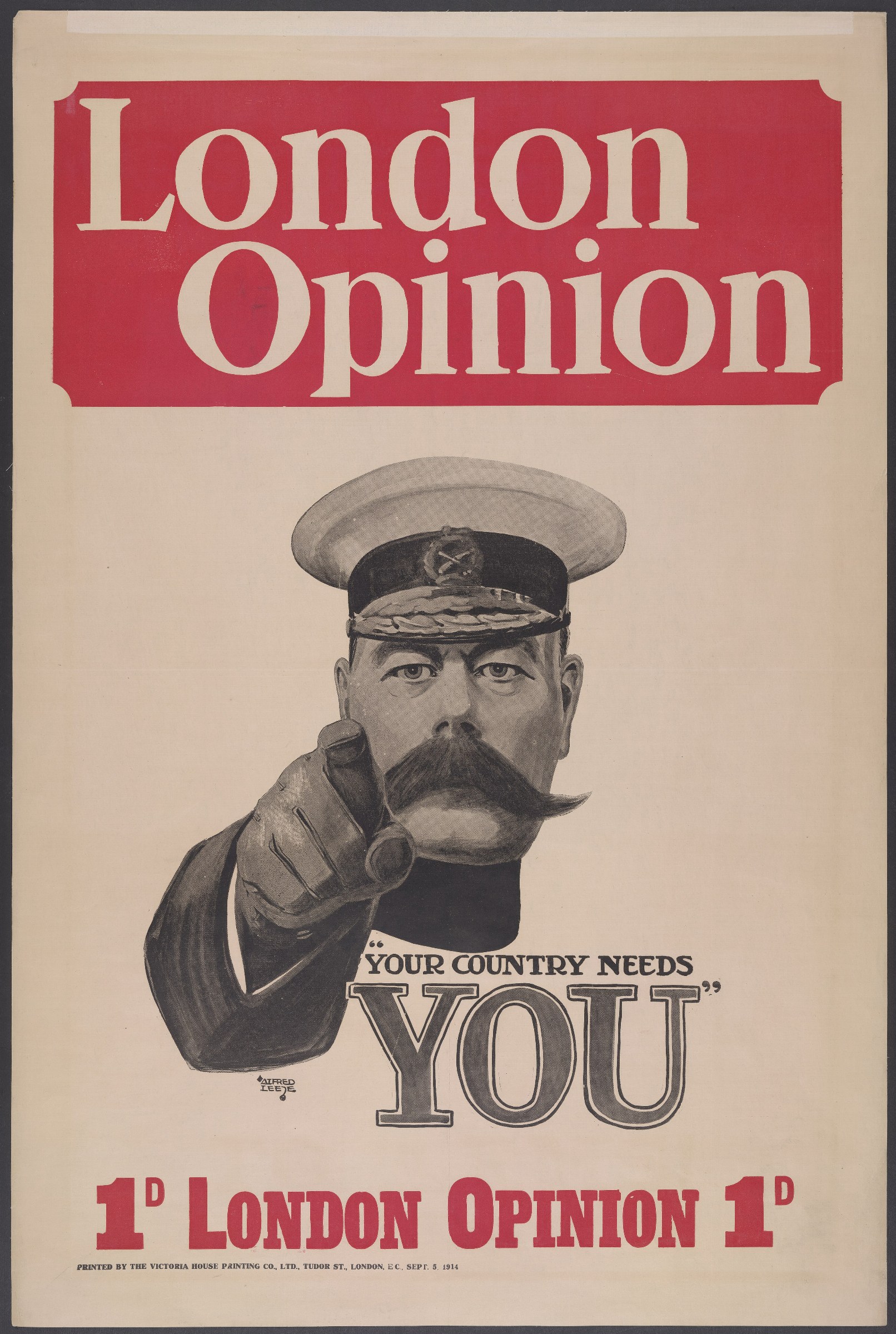 Your country needs you
United Kingdom · 1914 · 5 techniques annotated
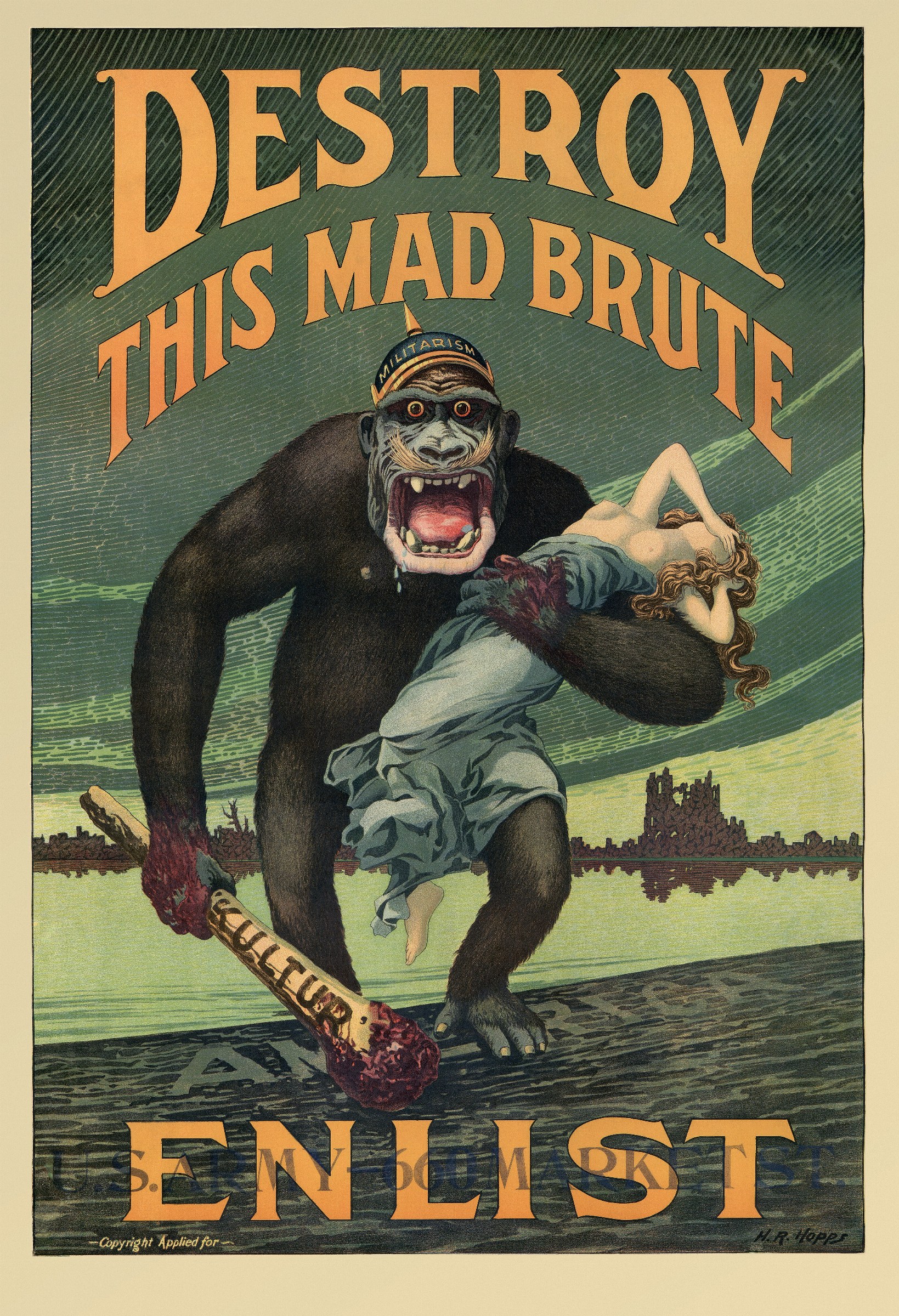 Destroy this mad brute
United States · 1917 · 4 techniques annotated
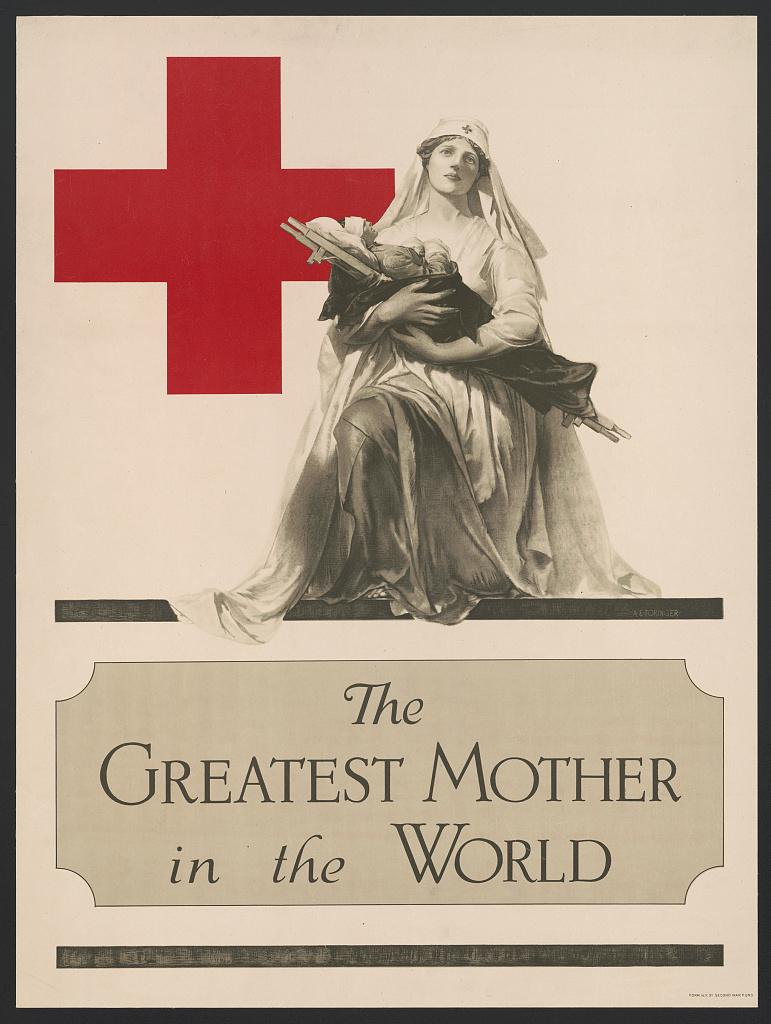 The greatest mother in the world
United States · 1918 · 4 techniques annotated
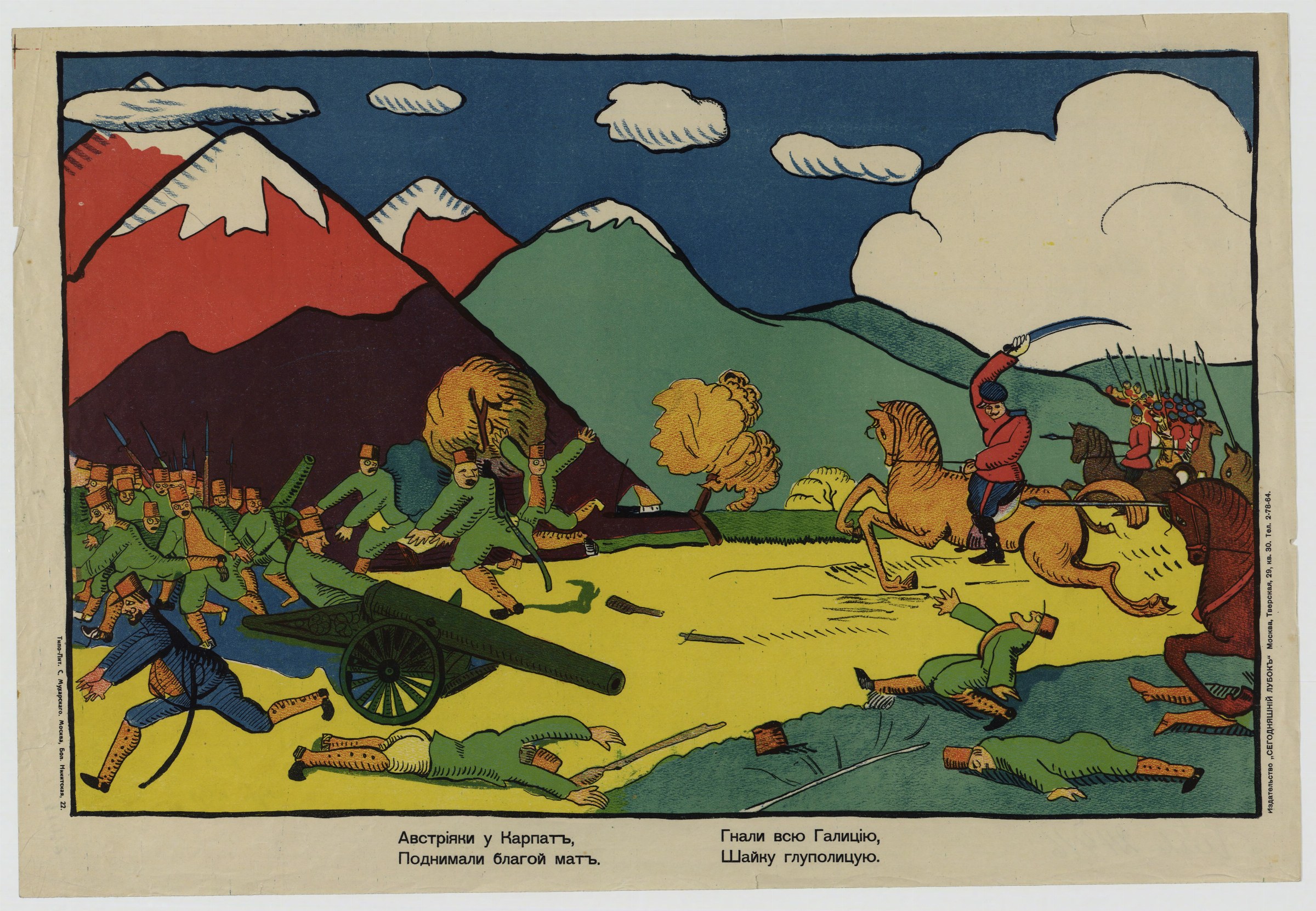 The Austrians cursed loudly near the Carpathian Mountains
Russia · 1914 · 4 techniques annotated
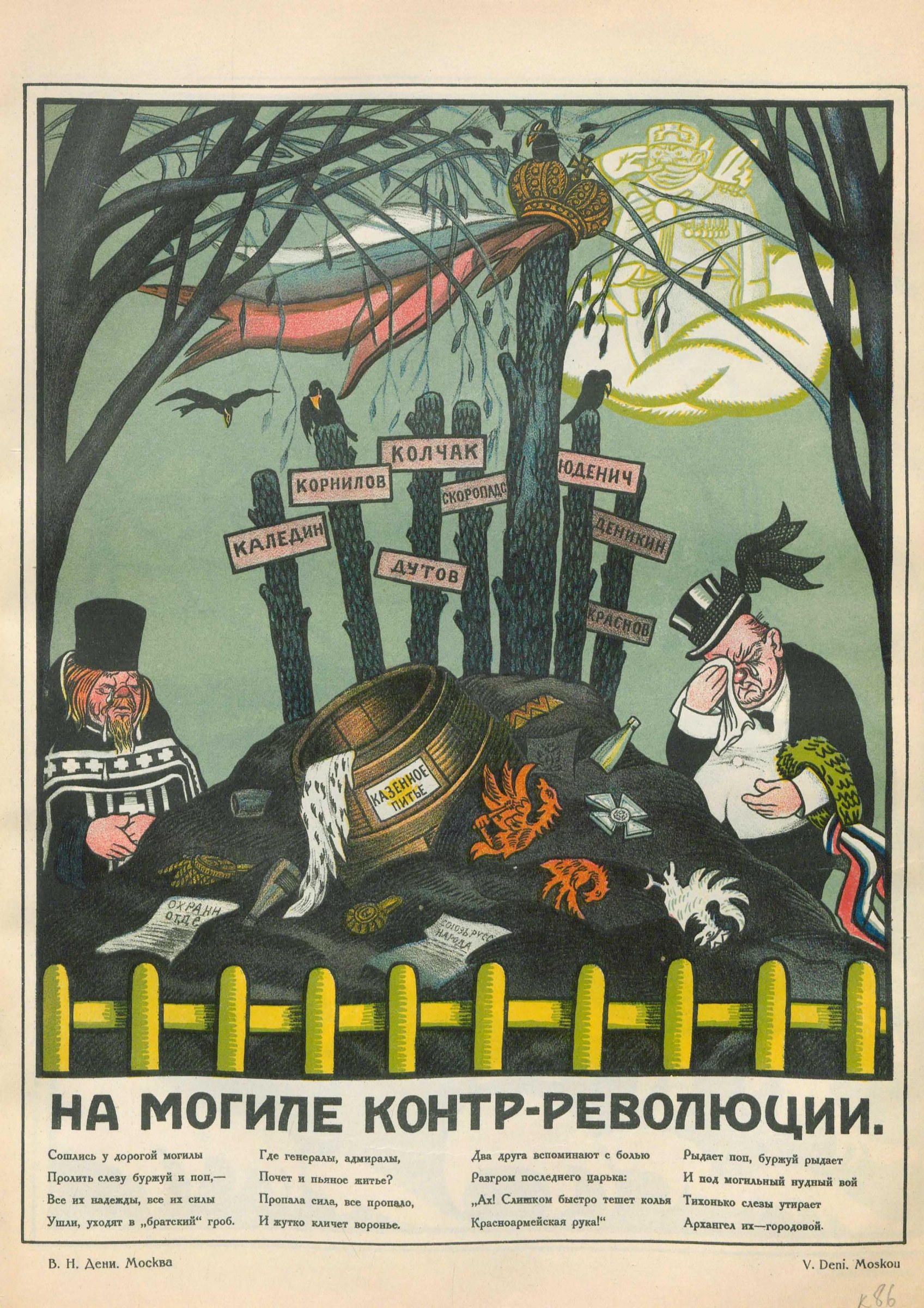 At the grave of the counter-revolution
Soviet Union · 1920 · 4 techniques annotated
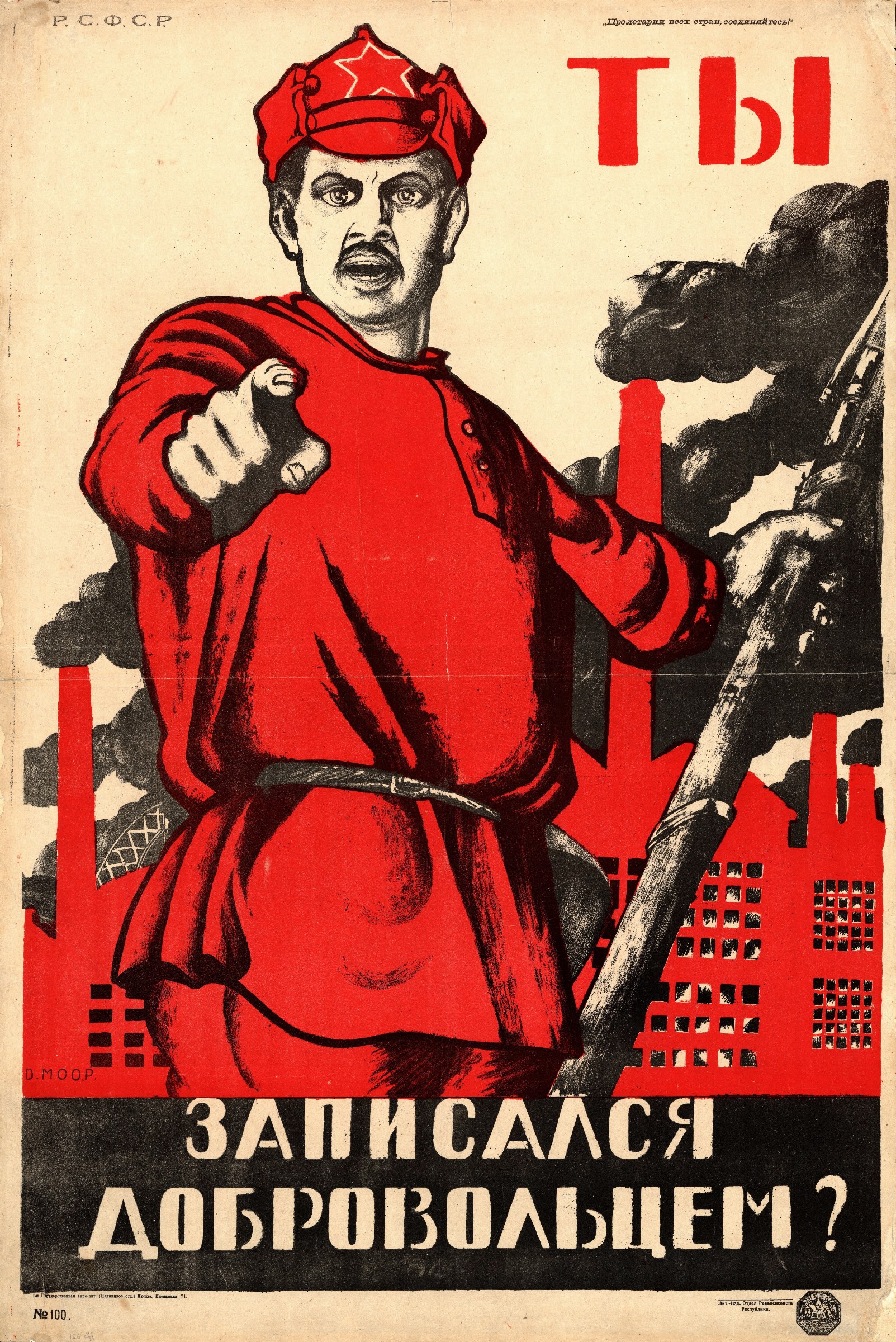 Have you volunteered?
Soviet Union · 1920 · 5 techniques annotated