Keep calm and carry on
 1
2
3
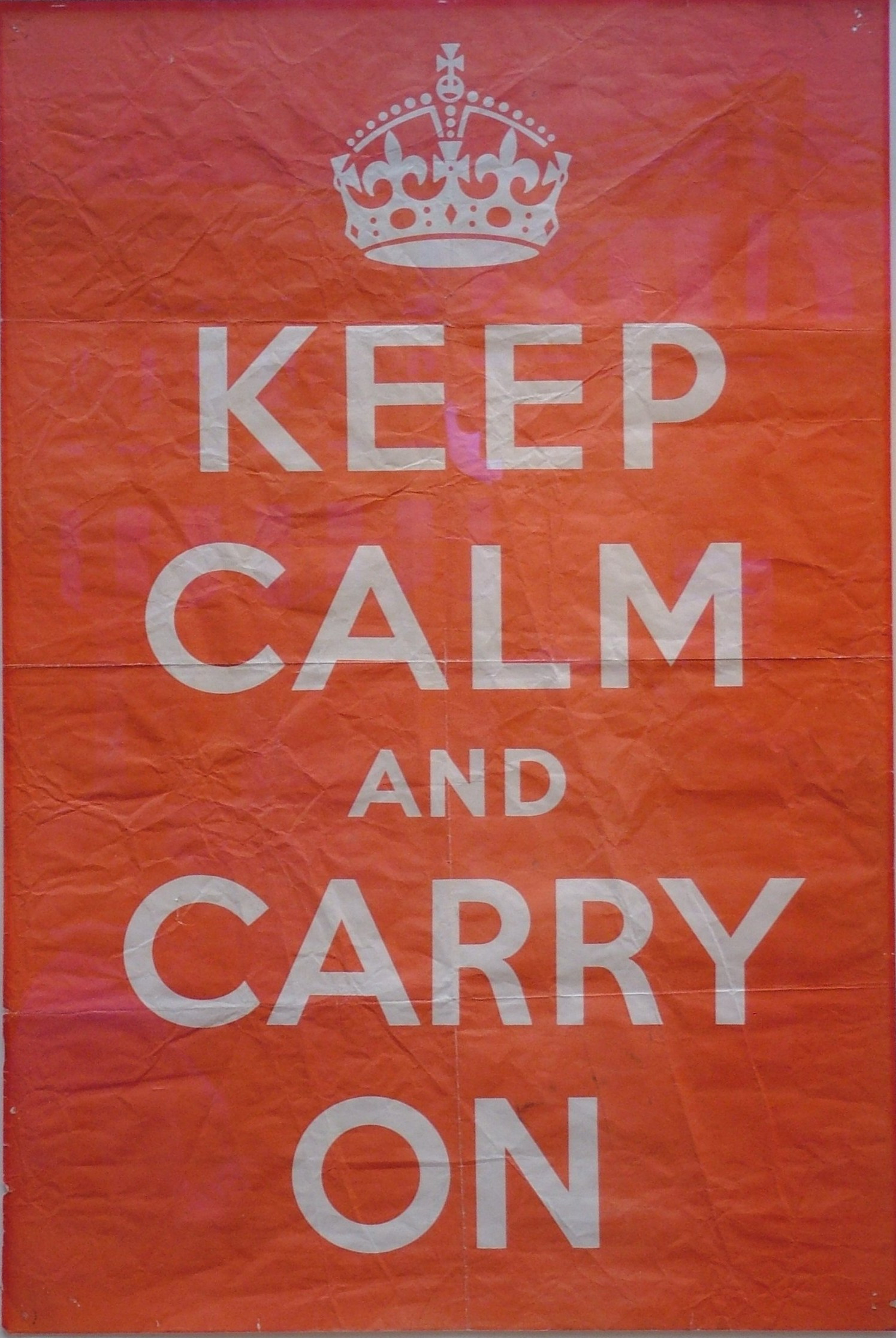
Other · File:Keep Calm And Carry On - Original poster - Barter Books - 17-Oct-2011.jpg · Public domain · Catalog record
The pins
Context
For discussion
-
1
Symbol appropriation The crown A Tudor crown, the only image on the sheet. The instruction below comes from the monarch, not the ministry, which is why it does not have to explain itself.
-
2
Thought-terminating cliché "Keep calm" An instruction to stop thinking about it. Printed for the day after an invasion, it would have told people what to feel before telling them anything else.
-
3
Slogan "Carry on" Five words, no reason, no information. It failed as a 1939 poster and succeeded as a 2009 tea towel for the same reason: it says nothing in particular.
The Ministry of Information printed about 2.5 million copies of "Keep calm and carry on" in the summer of 1939, to be posted only after a German invasion or heavy bombing. It never was; the stock was pulped for paper in 1940, and a handful survived. Two companion posters with the same crown and typeface did go up and were disliked for their tone. The sheet was unknown until a bookshop in Alnwick found one in 2000, after which it became the most reproduced British poster of the century.
- The poster was never displayed. In what sense is it wartime propaganda?
- The crown is the only image. What does it say, and to whom?
- Why might the same five words have failed in 1939 and succeeded in 2009?
See also
Same era, or the same techniques.