Symbol appropriation
Taking a symbol that already carries authority or feeling, a cross, a crown, a flag, a classical pose, and attaching it to a cause, product, or leader so that the symbol's standing passes to the new owner.
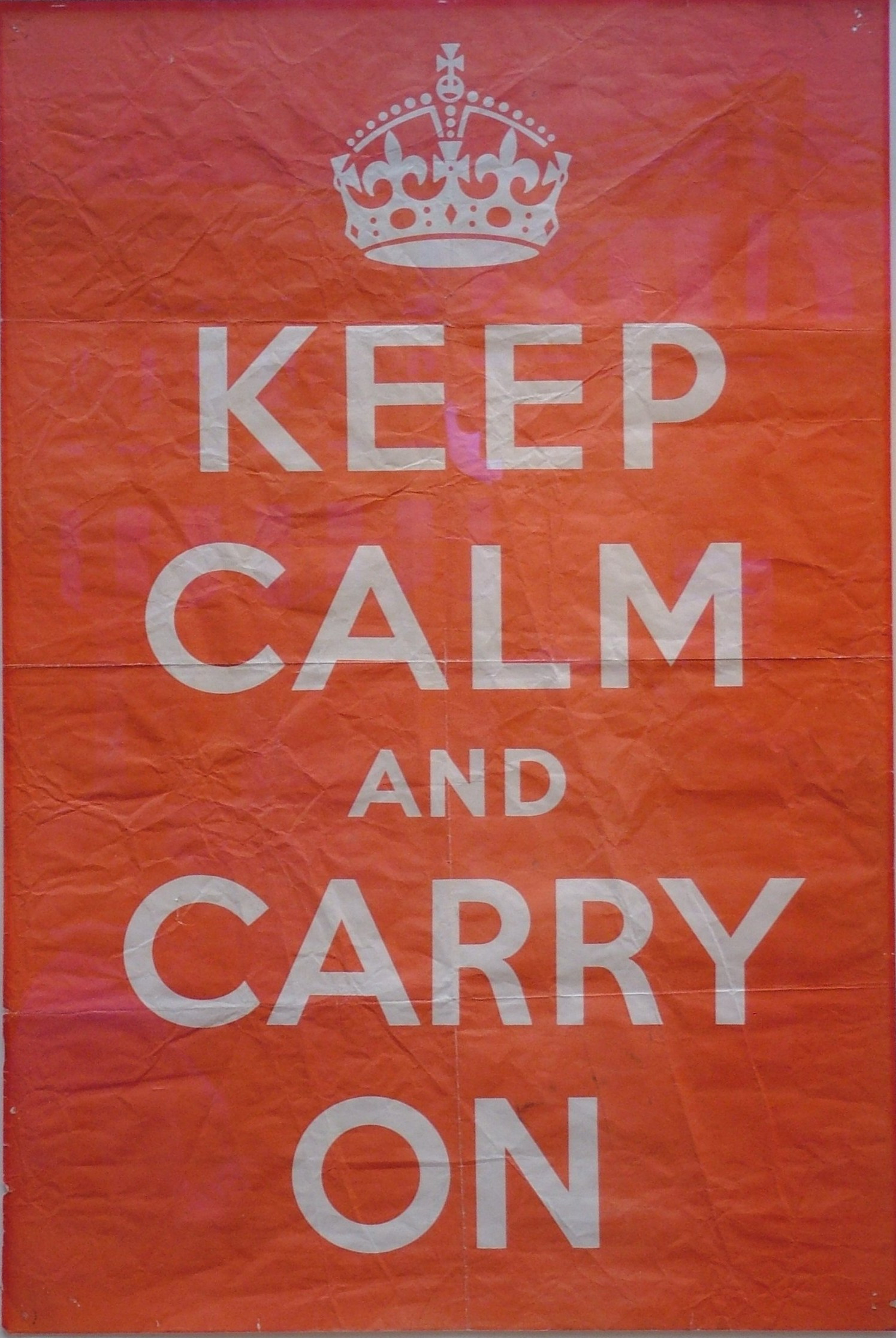
Symbols are stored feeling. A crown means legitimacy before anyone has argued for it; a Pietà means grief and sanctity; a flag means belonging. A campaign that borrows one gets the feeling without doing the work, and the audience rarely notices the transfer because the symbol was already theirs. The device is the visual form of Transfer, and it works best with symbols too old or too sacred to be questioned.
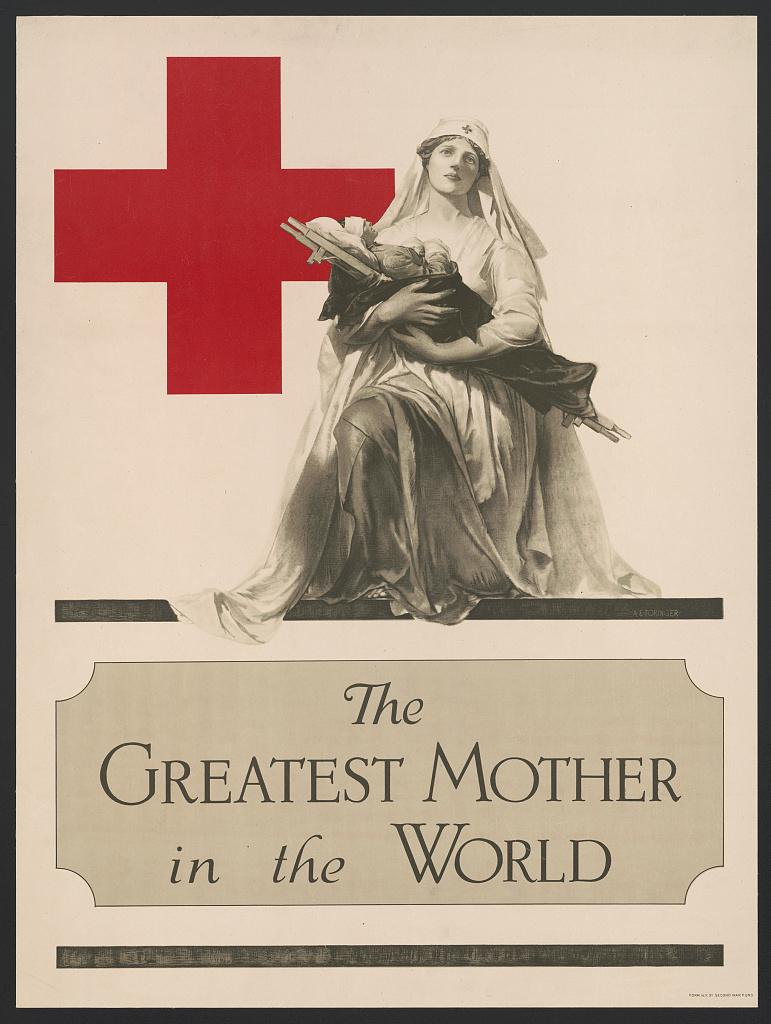
Appropriation also empties the symbol. Once the swastika had been a Nazi flag for twenty years, it could not be an Indian or Scandinavian good-luck sign in the West again; once the Red Cross nurse had posed as the Virgin, the Pietà was a recruiting pose. Exploits Halo Effect and Authority Bias.
Historical examples
Hitler adopted the swastika, an ancient Indian and European sign of good fortune already used by völkisch groups, for the Nazi party flag in the summer of 1920, and wrote in Mein Kampf of choosing red, white, and black for their effect on the crowd. By 1945 the borrowed symbol meant only the borrower, and it has not recovered its older meanings in the West.
Quinn, Malcolm. The Swastika: Constructing the Symbol. London: Routledge, 1994; Hitler, Adolf. Mein Kampf, vol. 2, ch. 7.
A. E. Foringer's "The Greatest Mother in the World" posed a Red Cross nurse holding a wounded soldier on a stretcher in the composition of Michelangelo's Pietà, the soldier shrunk to the size of a child. The reverence owed to the sculpture passed to a membership drive, which went from seventeen thousand members to more than twenty million in two years.
Rawls, Walton. Wake Up, America! World War I and the American Poster. New York: Abbeville, 1988; Library of Congress, Prints and Photographs Division, LC-USZC4-9553.
In advertising and commerce
The Quaker Oats Company registered a man in Quaker dress as its trademark in 1877, borrowing the sect's reputation for honesty and plain dealing for a cereal. The Religious Society of Friends objected for decades and petitioned Congress in 1915 to stop the use; the figure is still on the box.
Marquette, Arthur F. Brands, Trademarks and Good Will: The Story of the Quaker Oats Company. New York: McGraw-Hill, 1967.
In the archive
Posters and advertisements annotated with this technique.
Find a poster or advertisement that uses a religious or national symbol. What would the message lose if the symbol were removed?
In the wild
Short examples of the technique at work, each with what to notice. The same examples are questions in the quiz, where the answer is not given away.
A poster for a telephone company shows the company's logo set inside a laurel wreath, with an eagle above it and the words "A National Institution."
What to notice. The laurel and the eagle are state and classical emblems placed on a private firm so that their authority looks like the firm's own.
A political leaflet pictures the candidate in profile with light behind the head, in the composition of a saint on an icon.
What to notice. The halo composition is borrowed from religious painting; the sanctity is the picture's, not the candidate's.
An energy drink's label uses the colors and layout of a military medal ribbon, with the words "Serves those who serve."
What to notice. A medal's standing is attached to a drink. The symbol is appropriated; nothing about the product has changed.
Sources
- Quinn, Malcolm. The Swastika: Constructing the Symbol. London: Routledge, 1994. ISBN 978-0415100953
- Messaris, Paul. Visual Persuasion: The Role of Images in Advertising. Thousand Oaks, CA: Sage, 1997. ISBN 978-0803972469
- Rawls, Walton. Wake Up, America! World War I and the American Poster. New York: Abbeville Press, 1988. ISBN 978-0896598195