Hyperbole
Exaggerating the scale, quality, or stakes of something far beyond what the evidence supports, so that the audience's sense of proportion is reset before it judges.
Hyperbole works by anchoring. Call something the greatest, the worst, unprecedented, a catastrophe, a miracle, and even an audience that discounts the word settles on a judgment closer to it than it would have reached unprompted. The device also crowds out proportion: when every event is the biggest, there is no scale left on which to notice which ones are.
Advertising law recognizes the device as "puffery," claims so exaggerated that no reasonable buyer would take them literally, and exempts them from the truth-in-advertising rules that govern factual claims. Ivan Preston's study of the doctrine argued that the exemption rests on a fiction, since the claims are made precisely because they work. Exploits Anchoring and Availability Heuristic.
Historical examples
First World War propaganda on all sides magnified real events into fables, the Belgian atrocities into a catalog of severed hands, the German "corpse factory" story of 1917 into an industry rendering soldiers into fat. Arthur Ponsonby's 1928 survey of wartime falsehood traced the exaggerations and noted their after-effect: when the next war's real atrocities were reported, they were disbelieved.
Ponsonby, Arthur. Falsehood in War-Time. London: George Allen & Unwin, 1928; Neander, Joachim, and Randal Marlin. "Media and Propaganda: The Northcliffe Press and the Corpse Factory Story of 1917." Global Media Journal, Canadian ed., 3, no. 2 (2010): 67–82.
The Lees noted Father Coughlin's habit of scale: every opponent was the greatest menace the country had faced, every proposal the last chance, every year the year of decision. The constant maximum, they observed, removed the listener's ability to distinguish a real danger from the week's.
Lee, Alfred McClung, and Elizabeth Briant Lee. The Fine Art of Propaganda. New York: Harcourt, Brace, 1939.
In advertising and commerce
Preston's The Great American Blow-Up traced the legal doctrine of puffery, under which "the best coffee in the world" or "the ultimate driving machine" is exempt from proof because no one is supposed to believe it, and argued from the research that people do. The doctrine, he showed, licensed the device by declaring it harmless.
Preston, Ivan L. The Great American Blow-Up: Puffery in Advertising and Selling. Madison: University of Wisconsin Press, 1975.
In the archive
Posters and advertisements annotated with this technique.
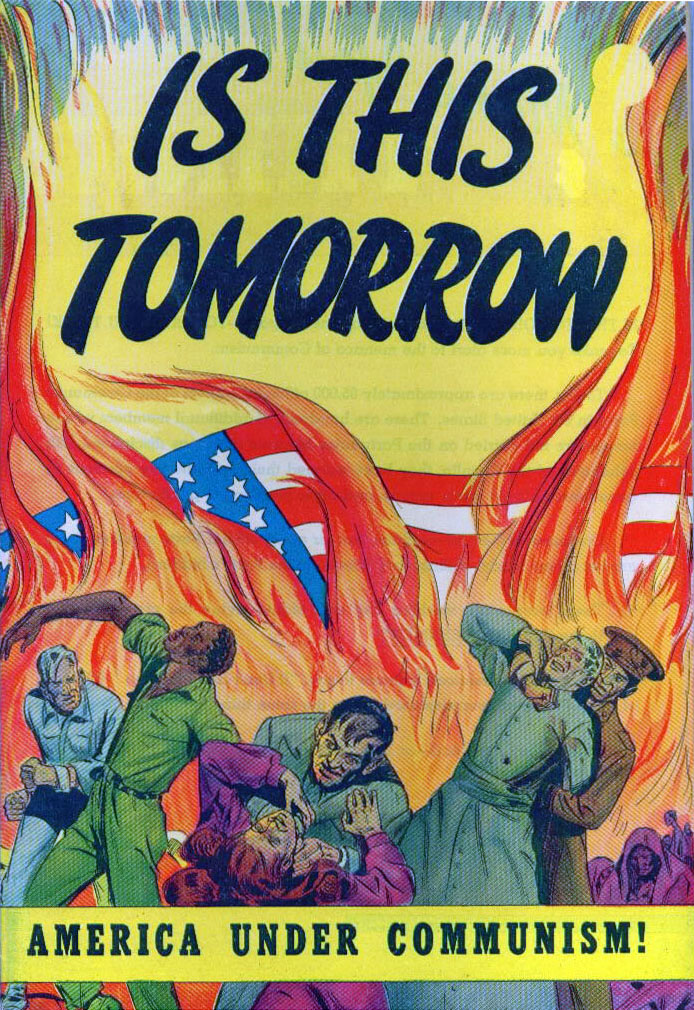 Is this tomorrow? America under Communism
United States · 1947 · 4 techniques annotated
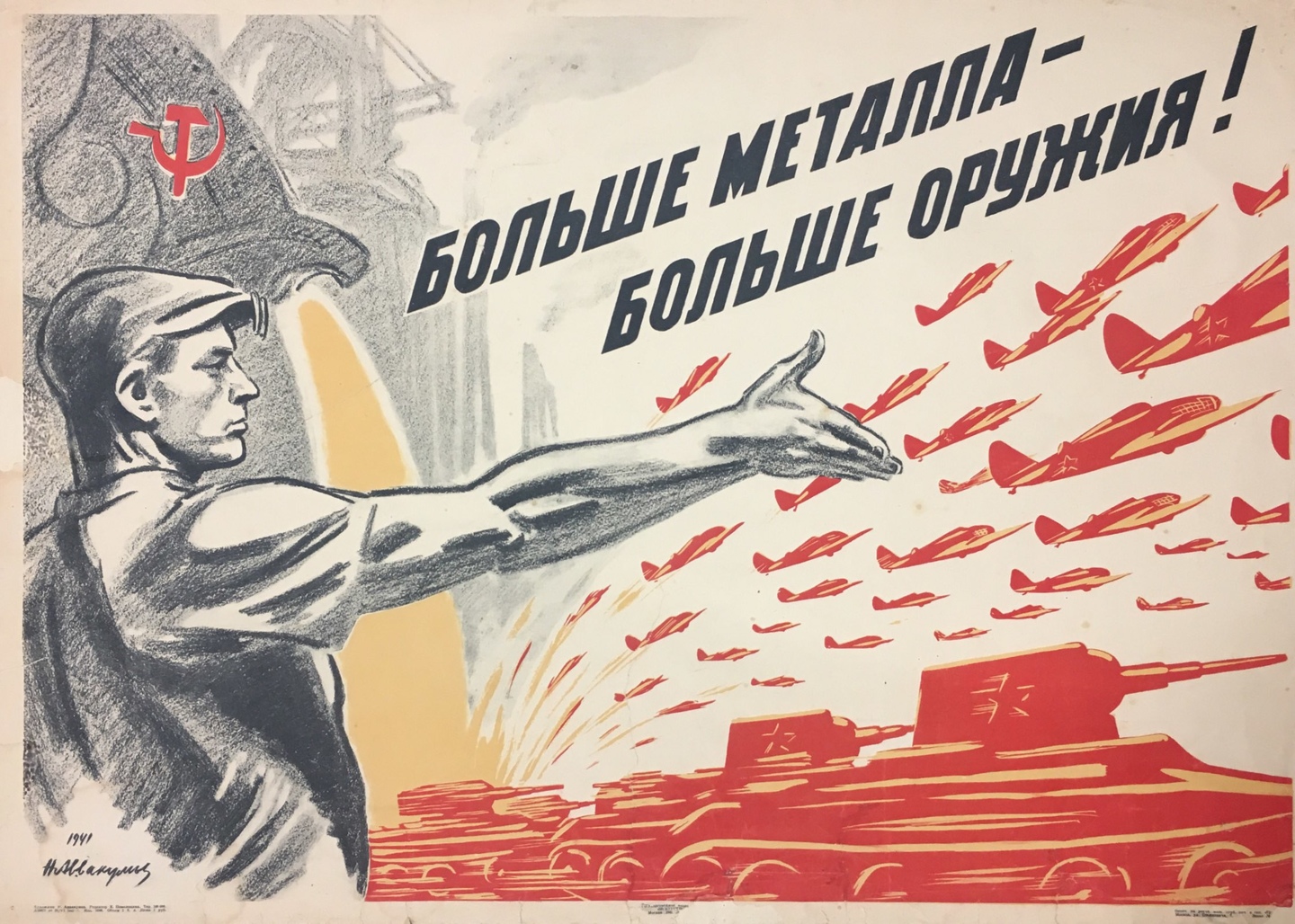 More metal, more weapons!
Soviet Union · 1941 · 4 techniques annotated
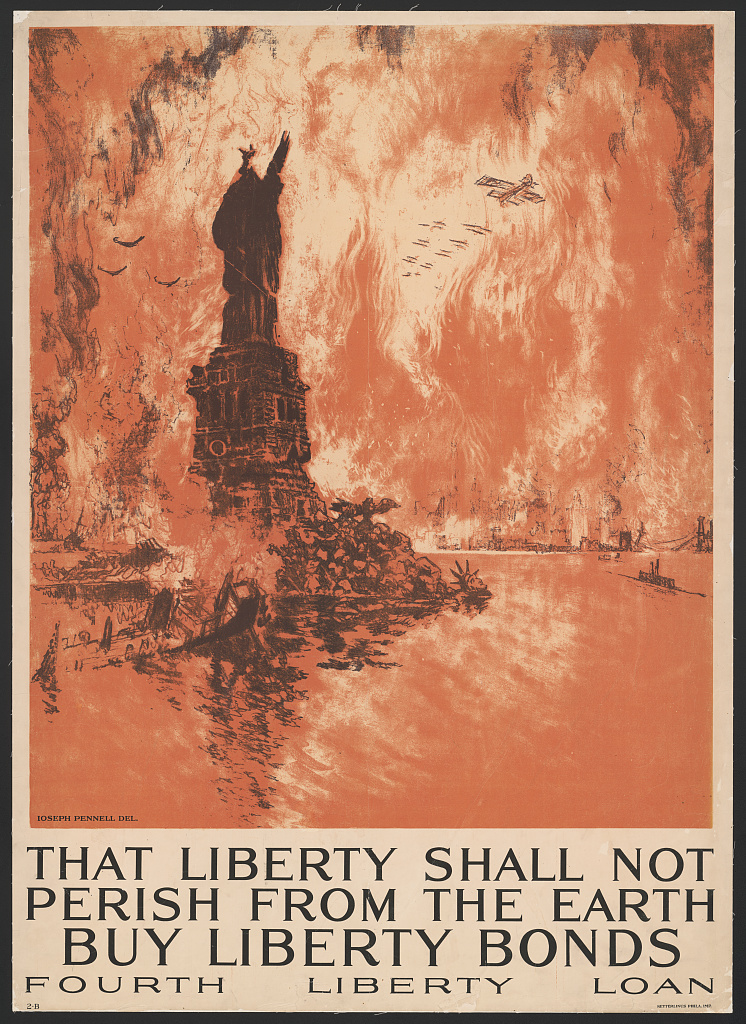 That liberty shall not perish from the earth
United States · 1918 · 3 techniques annotated
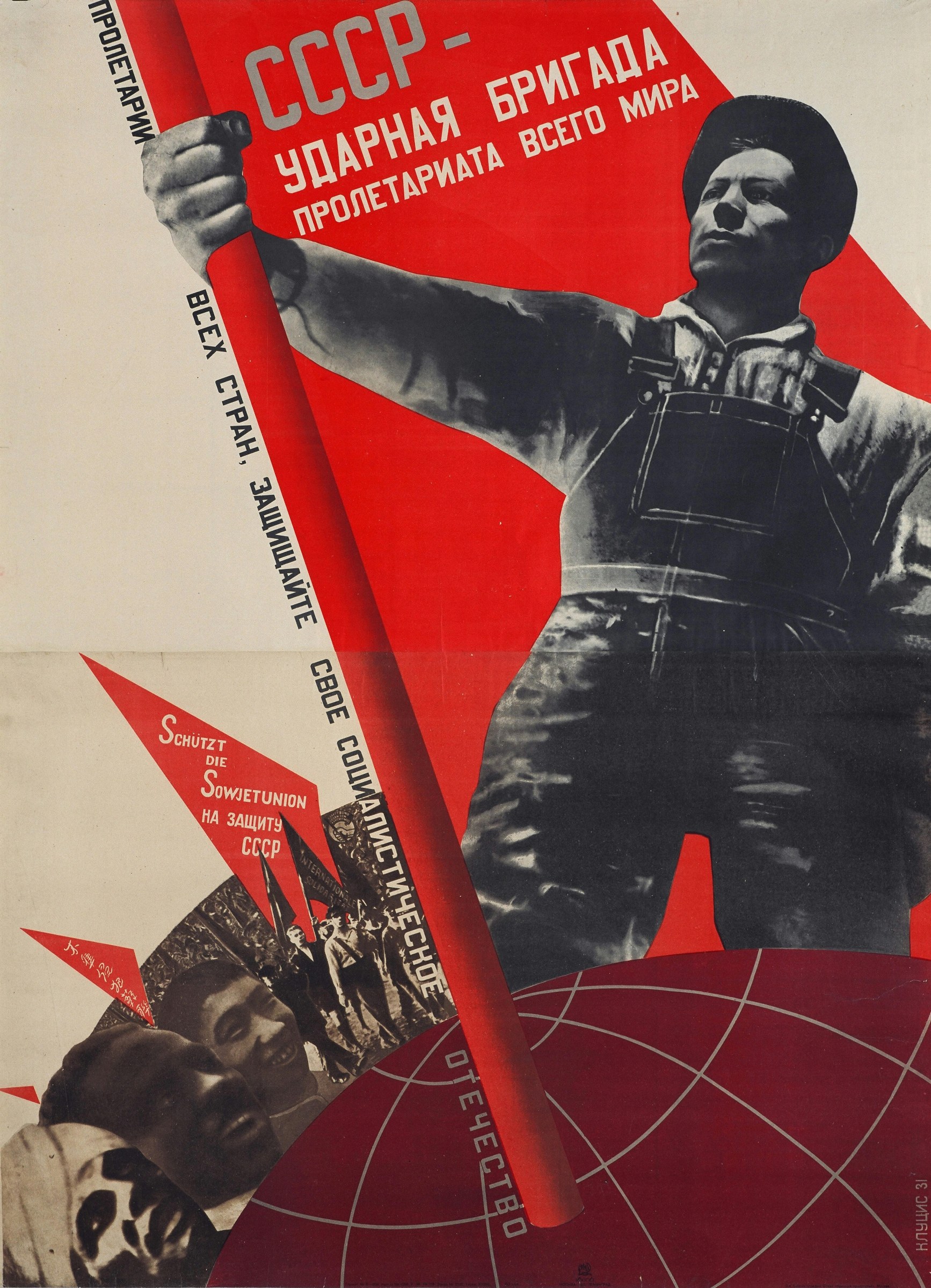 The USSR is the shock brigade of the world proletariat
Soviet Union · 1931 · 4 techniques annotated
Find three claims that use "best," "worst," "greatest," or "unprecedented." For each, find the comparison that would have to hold. Does it?
In the wild
Short examples of the technique at work, each with what to notice. The same examples are questions in the quiz, where the answer is not given away.
"This is the most important election in the history of our nation."
What to notice. A superlative without a comparison; said of most elections, it resets the stakes before any issue is named.
"The best cup of coffee in the world."
What to notice. Puffery: a claim exempt from proof because it is exaggerated, and made because the exaggeration works.
"The new parking rules are a catastrophe for local business. Shops will close within weeks."
What to notice. Catastrophe vocabulary for a parking change; the scale word replaces any estimate of effect.
Sources
- Preston, Ivan L. The Great American Blow-Up. Madison: University of Wisconsin Press, 1975. ISBN 978-0299067809
- Ponsonby, Arthur. Falsehood in War-Time. London: George Allen & Unwin, 1928.
- Lee, Alfred McClung, and Elizabeth Briant Lee. The Fine Art of Propaganda. New York: Harcourt, Brace, 1939.
- Pratkanis, Anthony, and Elliot Aronson. Age of Propaganda. Rev. ed. New York: W. H. Freeman, 2001. ISBN 978-0805074031