Appeal to fear
Raising the audience's fear of a threat, real, exaggerated, or invented, so that the proposed action is accepted as the way to be safe rather than judged on whether it works.
Fear narrows attention. A frightened audience stops weighing alternatives and looks for the exit, and the propagandist stands next to the exit. The device has two parts, and the second is the one to watch: first the threat is made vivid and near, then a single remedy is offered, usually the thing the speaker wanted all along.
The research is unusually clear. Fear appeals work when the audience believes the threat is serious, believes it applies to them, and believes the recommended action is effective and within their power. Take away the last part and fear turns into denial or fatalism; leave it in and fear turns into compliance. Propaganda supplies the first two parts generously and the third as a foregone conclusion. Exploits Negativity Bias and Availability Heuristic.
Historical examples
The Johnson campaign's "Daisy" advertisement, broadcast once on 7 September 1964, showed a small girl counting petals before a nuclear countdown and a mushroom cloud, and closed with "The stakes are too high for you to stay home." Goldwater was never named. The threat took the whole minute; the remedy was a vote.
Mann, Robert. Daisy Petals and Mushroom Clouds: LBJ, Barry Goldwater, and the Ad That Changed American Politics. Baton Rouge: LSU Press, 2011.
The Federal Civil Defense Administration's "Duck and Cover" film and its Bert the Turtle campaign taught schoolchildren to expect nuclear attack at any moment and offered a remedy, desks and doorways, that the same government's own studies knew was inadequate against a direct strike. The fear was made proportionate to a bomb; the remedy was proportionate to a habit.
Federal Civil Defense Administration. Duck and Cover. Archer Productions, 1951/1952; Oakes, Guy. The Imaginary War: Civil Defense and American Cold War Culture. New York: Oxford University Press, 1994.
In advertising and commerce
Lambert Pharmacal's Listerine campaigns of the 1920s invented a social affliction, "halitosis," and built advertisements around the woman who was "often a bridesmaid but never a bride" because of it. The disease was a medical-sounding name for bad breath; the fear was social ruin; the remedy was the bottle. Sales rose from about $100,000 to more than $4 million a year within seven years.
Vinikas, Vincent. Soft Soap, Hard Sell: American Hygiene in an Age of Advertisement. Ames: Iowa State University Press, 1992; Marchand, Roland. Advertising the American Dream: Making Way for Modernity, 1920–1940. Berkeley: University of California Press, 1985.
In the archive
Posters and advertisements annotated with this technique.
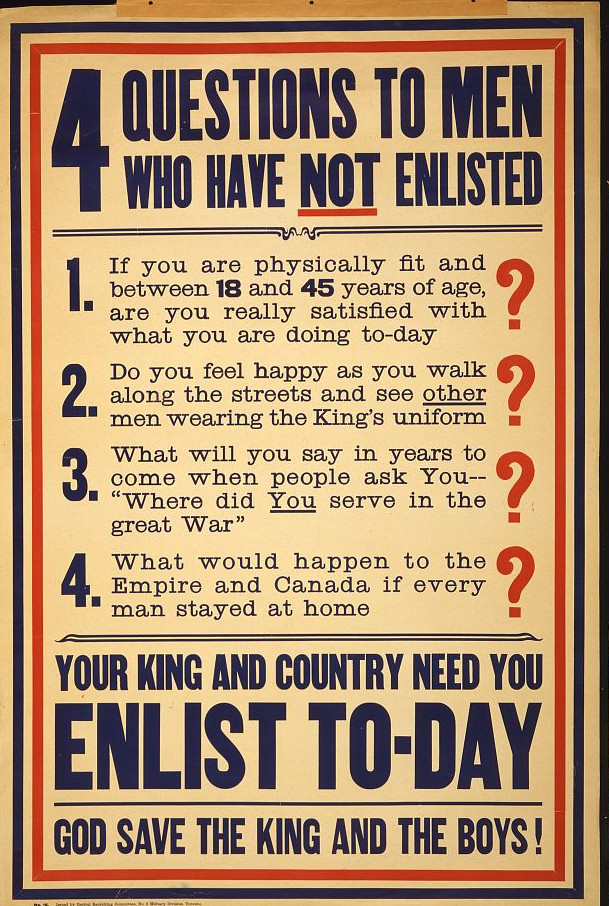 4 questions to men who have not enlisted
Canada · 1915 · 5 techniques annotated
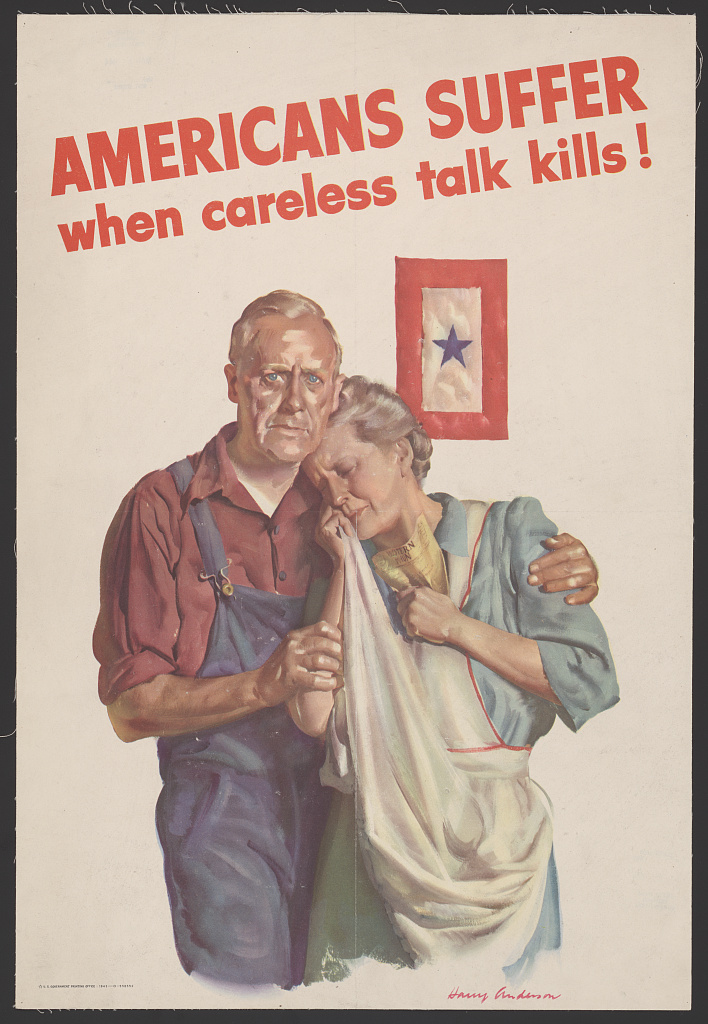 Americans suffer when careless talk kills!
United States · 1943 · 4 techniques annotated
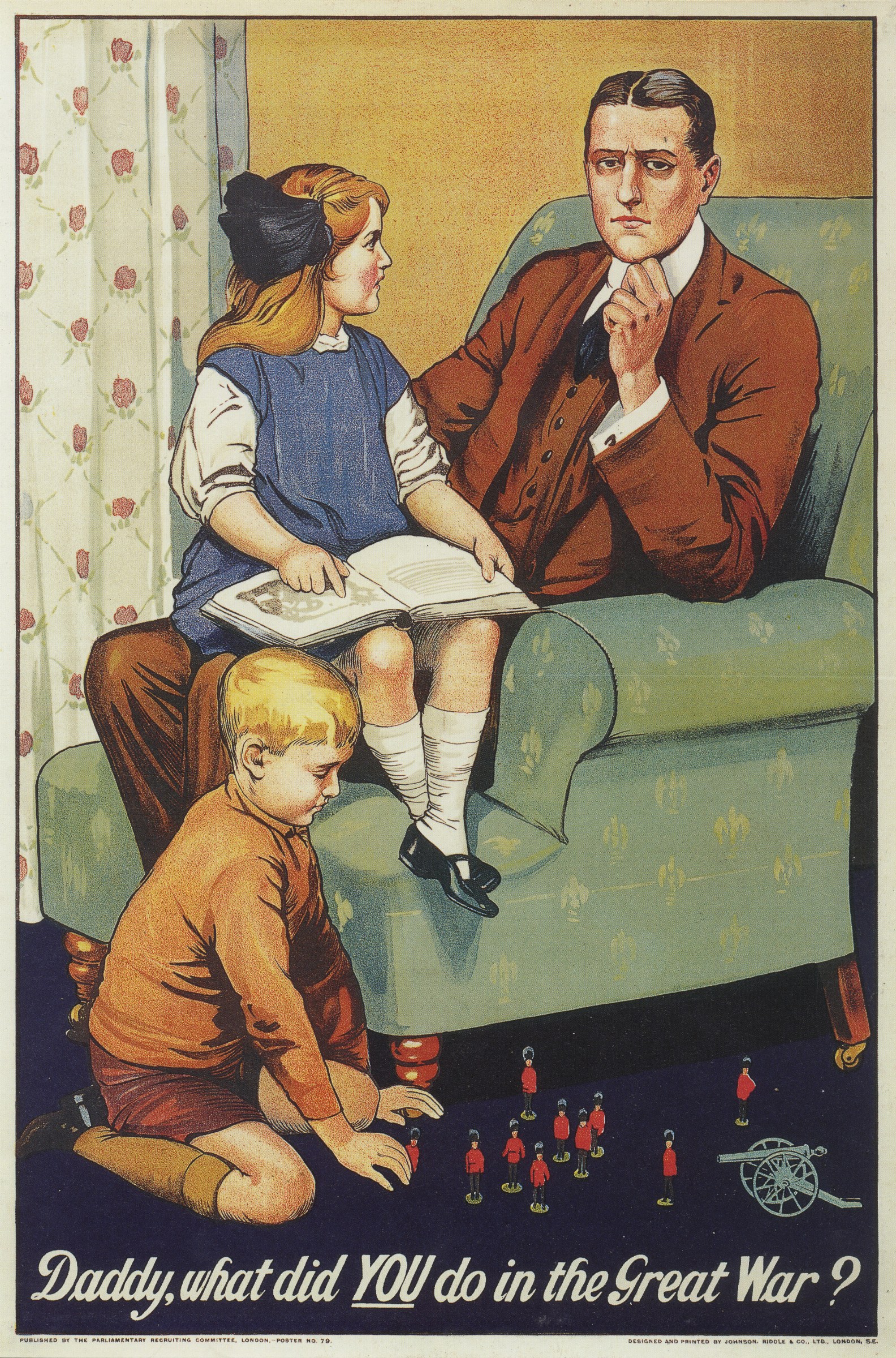 Daddy, what did YOU do in the Great War?
United Kingdom · 1915 · 3 techniques annotated
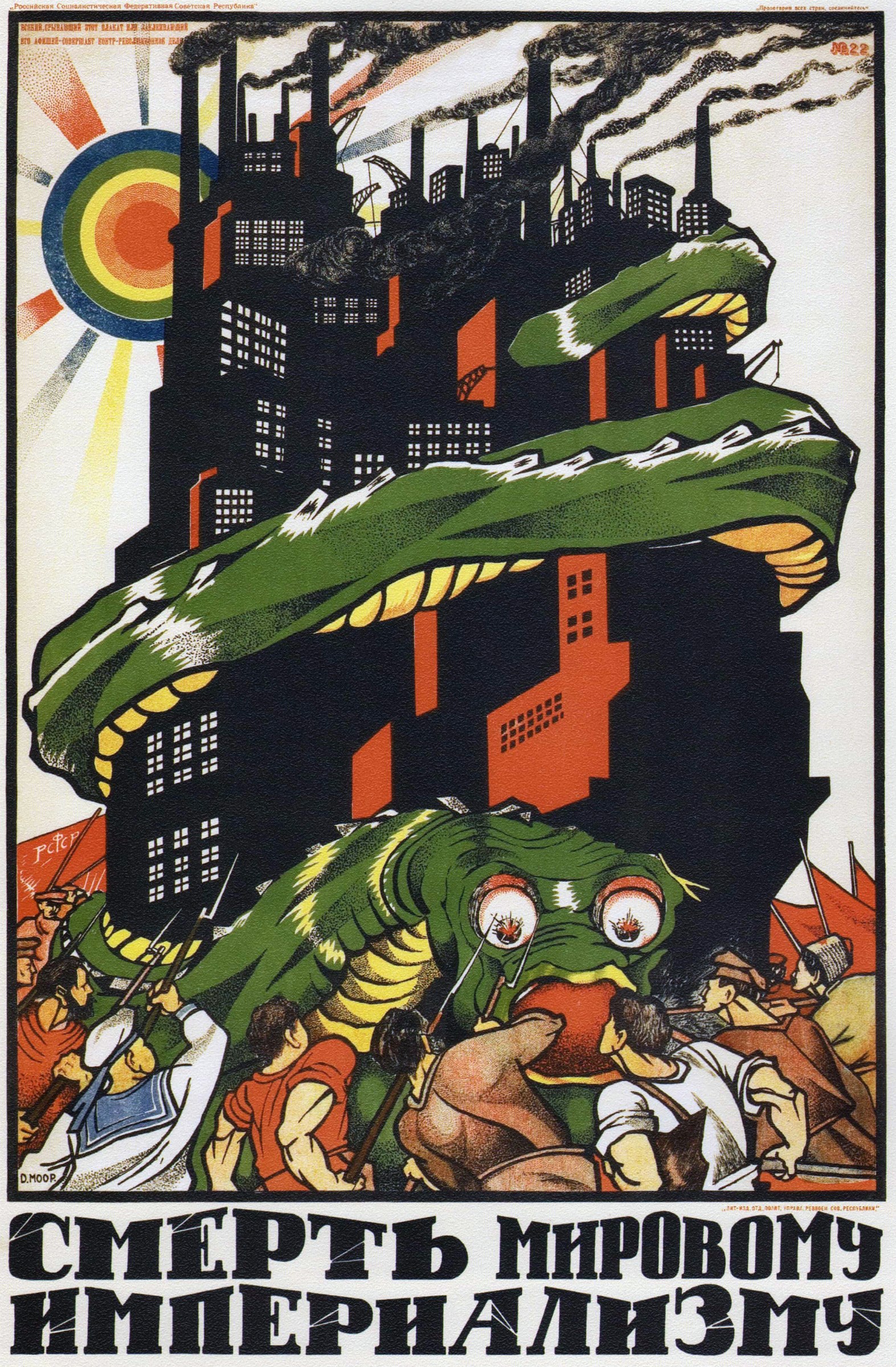 Death to world imperialism
Soviet Union · 1919 · 5 techniques annotated
Find an advertisement or a campaign message that describes something bad happening to you. What is the bad thing, how likely is it really, and what are you being asked to do about it?
In the wild
Short examples of the technique at work, each with what to notice. The same examples are questions in the quiz, where the answer is not given away.
"Every 11 seconds a home is broken into. Ask yourself: is your family protected tonight? Call now for a free assessment."
What to notice. A vivid, personal threat with a clock on it, and a single remedy the speaker sells.
"If this measure fails, the water will be unsafe by next summer. There is no plan B."
What to notice. The threat is specific and near; "no plan B" closes off any remedy but the speaker's.
"Most parents don't know what their children see online. Would you?"
What to notice. The fear is raised in the audience about themselves and their children; the ask follows.
Sources
- Janis, Irving L., and Seymour Feshbach. "Effects of Fear-Arousing Communications." Journal of Abnormal and Social Psychology 48, no. 1 (1953): 78–92.
- Witte, Kim, and Mike Allen. "A Meta-Analysis of Fear Appeals: Implications for Effective Public Health Campaigns." Health Education & Behavior 27, no. 5 (2000): 591–615.
- Pratkanis, Anthony, and Elliot Aronson. Age of Propaganda. Rev. ed. New York: W. H. Freeman, 2001. ISBN 978-0805074031
- Mann, Robert. Daisy Petals and Mushroom Clouds. Baton Rouge: LSU Press, 2011. ISBN 978-0807139653
- Vinikas, Vincent. Soft Soap, Hard Sell. Ames: Iowa State University Press, 1992.