Techniques · Family
Language propaganda techniques
Techniques that live in word choice.
- Big lie A falsehood so large and so confidently asserted that the audience cannot believe anyone would dare invent it, and so assumes there must be something to it.
- Dog whistle Language that carries an ordinary meaning for most of the audience and a second, sharper meaning for a target group, so that the speaker can send the sharper message while denying it.
- Dysphemism Replacing a neutral word with a harsh or contemptuous one, so that the audience's distaste for the word attaches to the thing it names. 1 in the archive
- Euphemism Replacing a blunt or unpleasant word with a mild or technical one, so that the audience is spared the reaction the plain word would produce. 1 in the archive
- False precision Stating a figure with more exactness than the underlying evidence supports, so that the precision of the number is mistaken for the reliability of the claim.
- Hyperbole Exaggerating the scale, quality, or stakes of something far beyond what the evidence supports, so that the audience's sense of proportion is reset before it judges. 5 in the archive
- Intentional vagueness Stating a position so loosely that every listener can hear what they wanted to hear and no listener can later say the speaker promised anything.
- Labeling Assigning a person, group, or position to a ready-made category, so that the audience responds to the category's reputation instead of to the thing itself. 3 in the archive
- Loaded language Choosing words that carry a strong feeling or judgment alongside their meaning, so that the audience absorbs the judgment while believing it has only received the facts. 5 in the archive
- Minimization Describing a serious matter in language that shrinks it, an isolated incident, a misunderstanding, a technical issue, so that the audience's response is scaled to the words rather than to the event. 1 in the archive
- Obfuscation Burying a simple fact under technical vocabulary, abstraction, and length, so that the audience cannot find it and either gives up or assumes the speaker knows best.
- Oversimplification Reducing a complicated question to a single cause, a single choice, or a single sentence, so that the audience accepts a simple answer because it is simple. 10 in the archive
- Redefinition Changing what a word means, or attaching a familiar word to a new thing, so that an argument is won by the definition before it is made.
- Repetition Saying the same thing so many times, in so many places, that familiarity does the work of evidence and the audience mistakes having heard a claim for having checked it. 4 in the archive
- Rhetorical question Putting a claim in the form of a question whose answer is meant to be obvious, so that the audience supplies the conclusion itself and feels it has reasoned rather than been told.
- Slogan A short, memorable phrase that stands in for an argument, so that the audience remembers and repeats the conclusion without ever having been given the reasoning. 21 in the archive
- Thought-terminating cliché A short, familiar phrase deployed to end a line of thought or discussion, so that a question that deserves an answer is dismissed instead with a formula. 1 in the archive
- Weasel words Using qualifiers, vague attributions, and hedges that make a claim sound firm while leaving the speaker committed to nothing that could be checked or held against them. 1 in the archive
In the archive
Posters and advertisements annotated with techniques from this family.
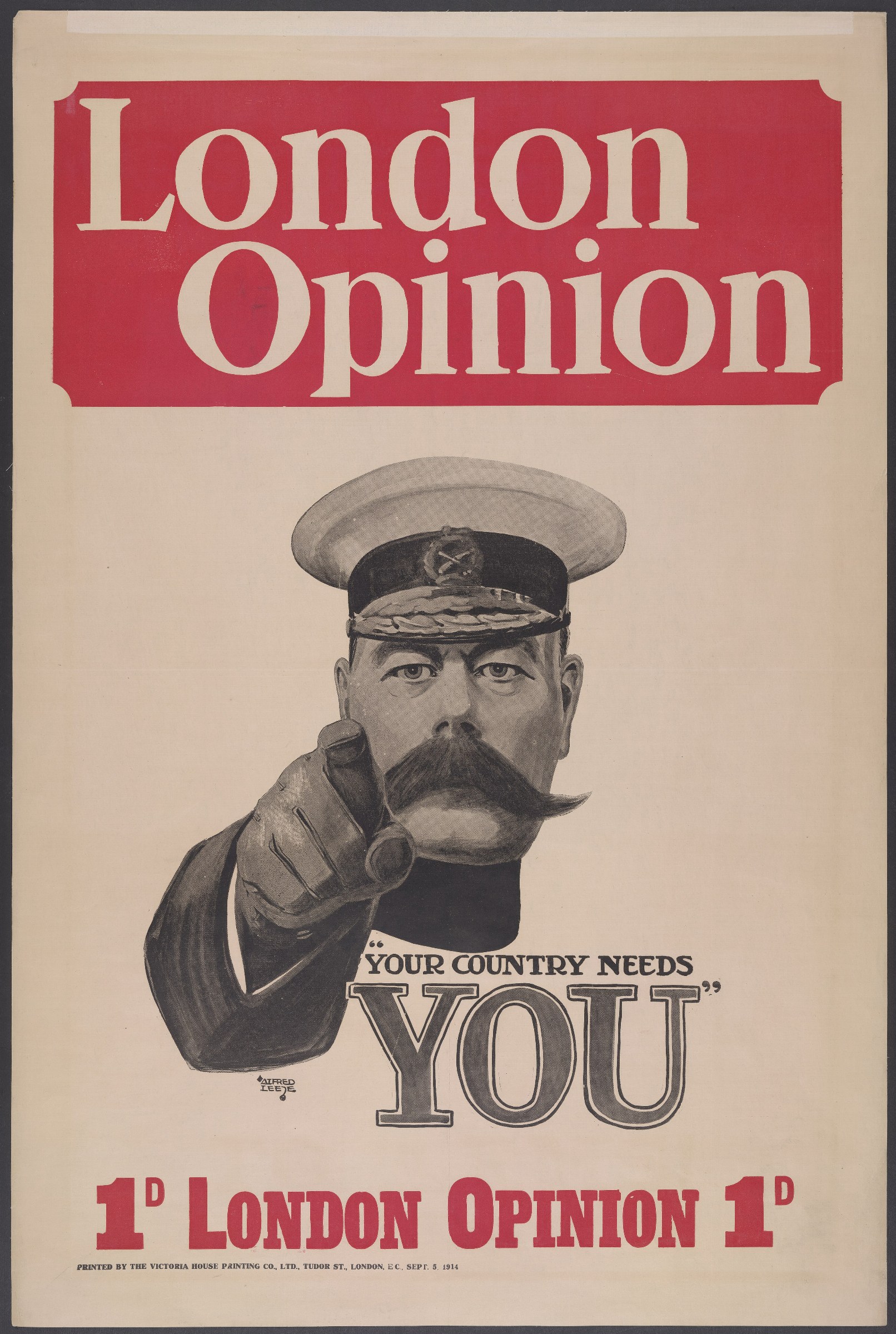 Your country needs you
United Kingdom · 1914 · 5 techniques annotated
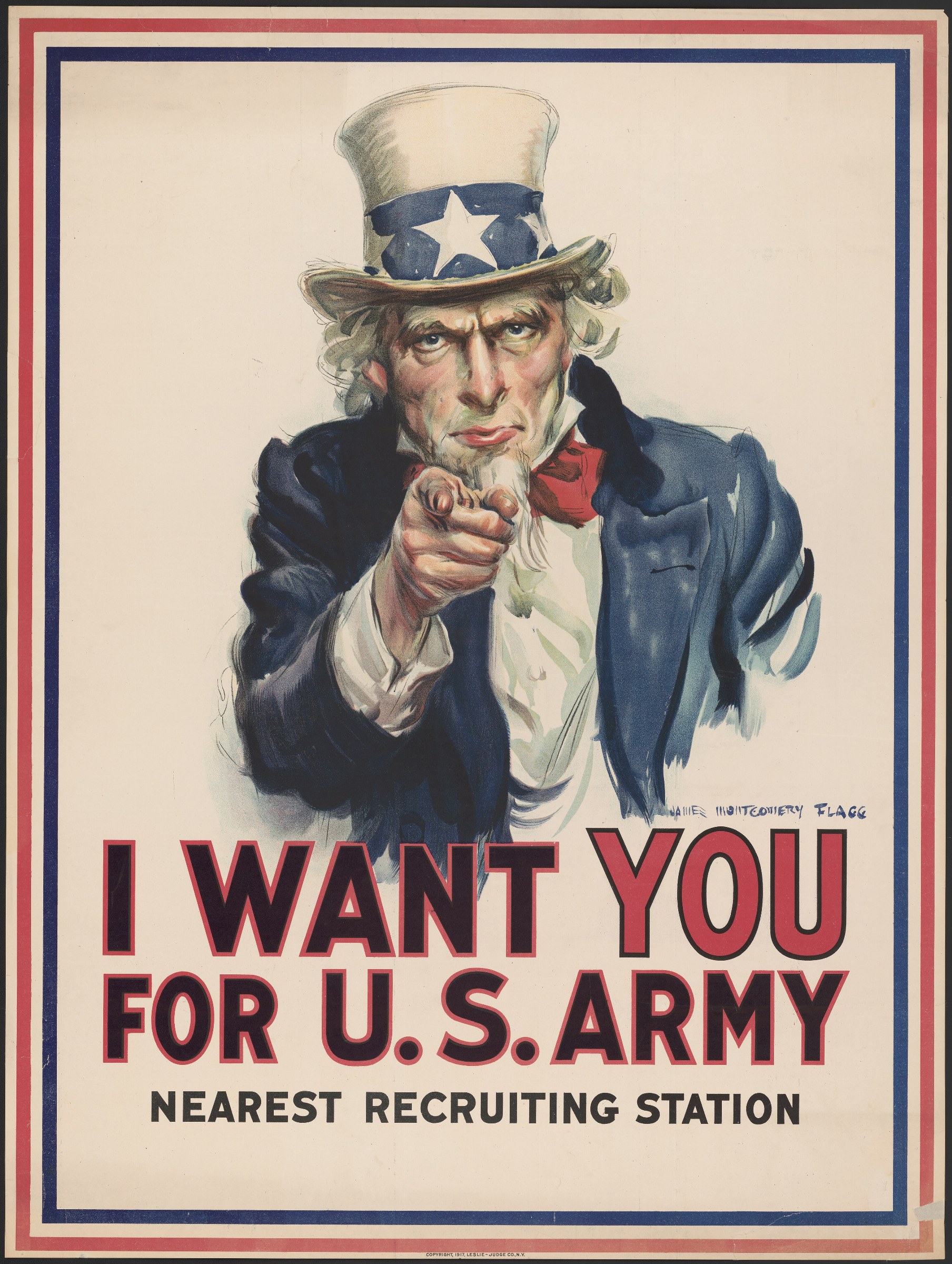 I want YOU for U.S. Army
United States · 1917 · 4 techniques annotated
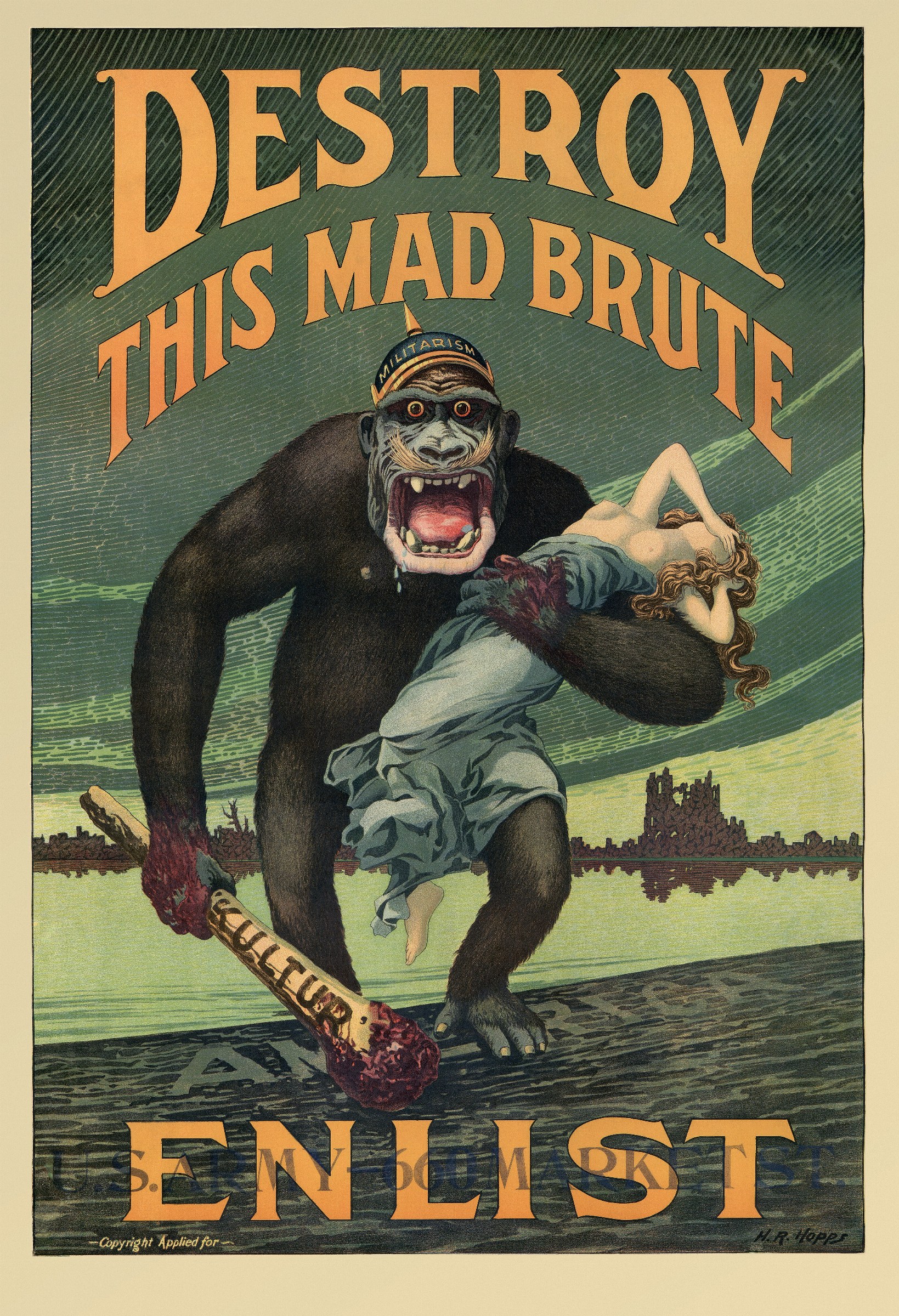 Destroy this mad brute
United States · 1917 · 4 techniques annotated
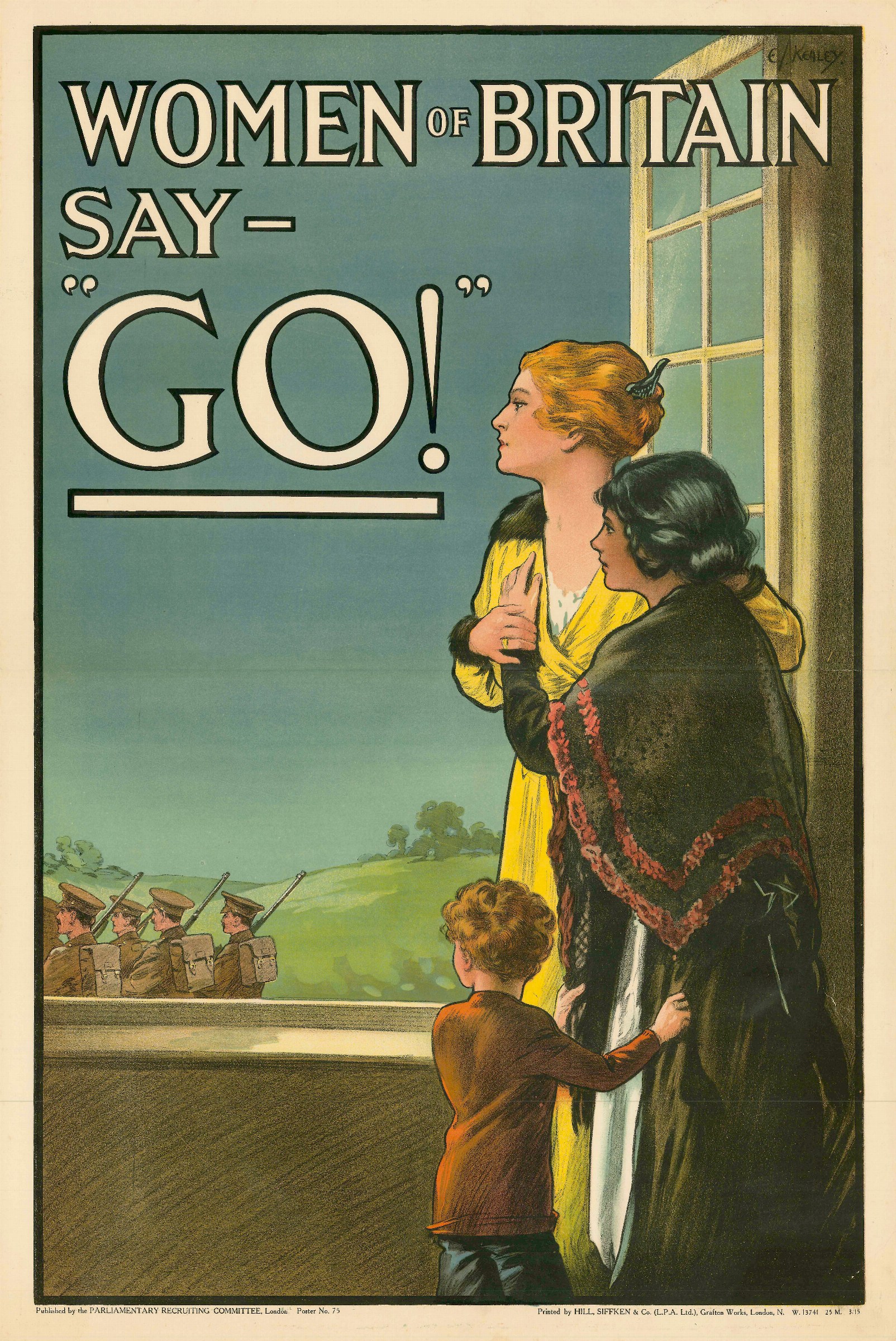 Women of Britain say "Go!"
United Kingdom · 1915 · 4 techniques annotated
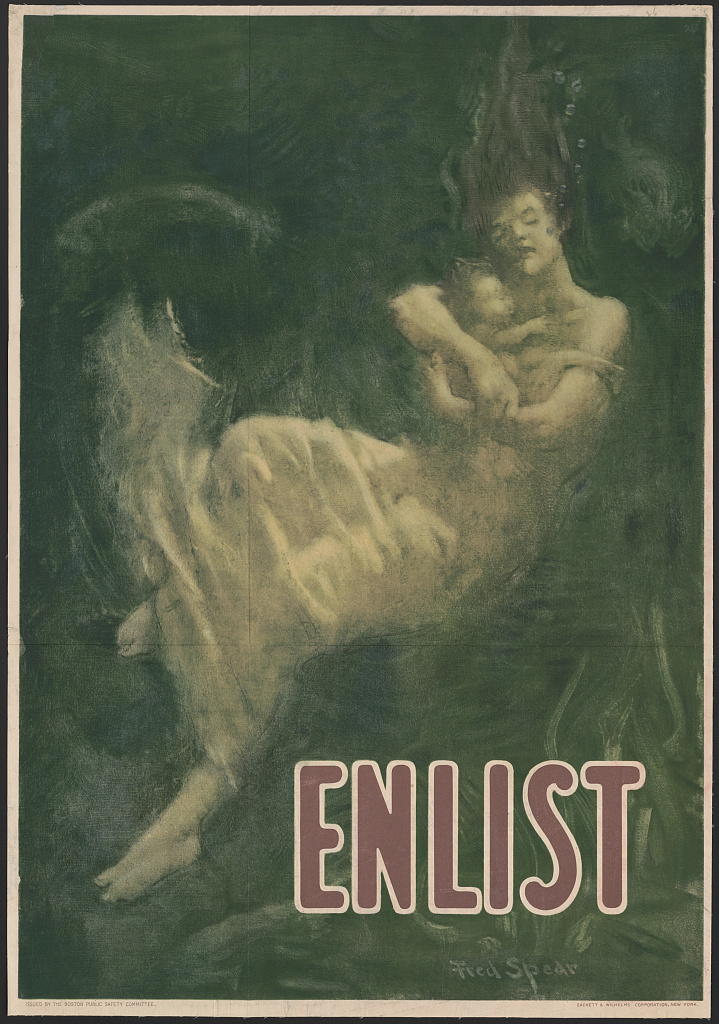 Enlist
United States · 1915 · 3 techniques annotated
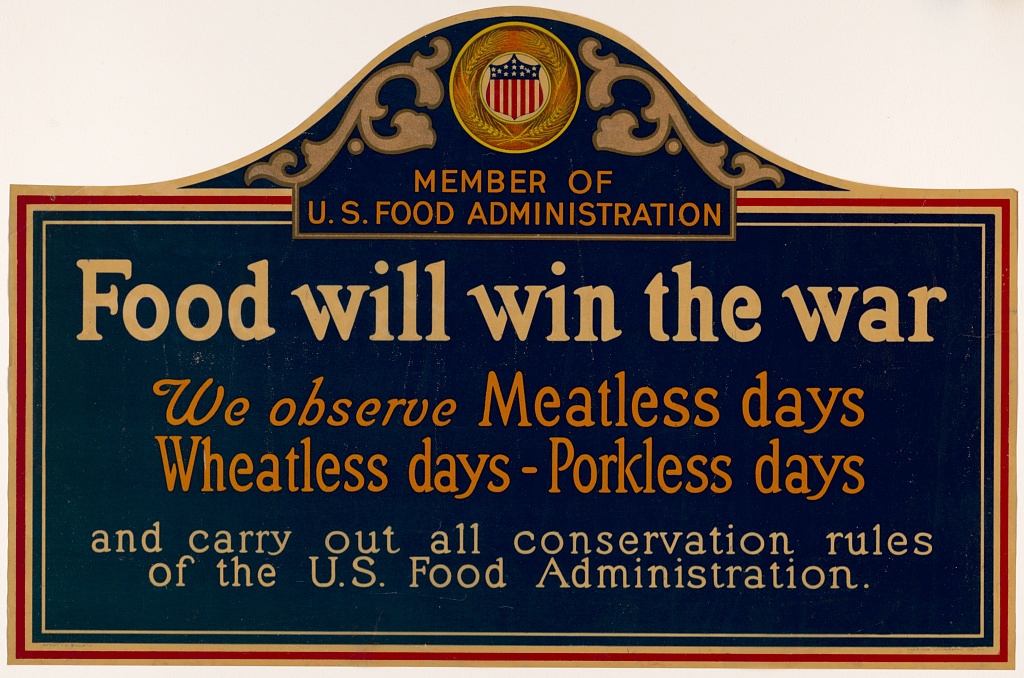 Food will win the war
United States · 1917 · 3 techniques annotated