Minimization
Describing a serious matter in language that shrinks it, an isolated incident, a misunderstanding, a technical issue, so that the audience's response is scaled to the words rather than to the event.
Minimization is hyperbole run backwards. Where exaggeration raises the stakes, this device lowers them, and the tools are the same: word choice, grammar, and scale. The passive voice removes the actor ("mistakes were made"); the singular removes the pattern ("an isolated incident"); the technical register removes the harm ("an anomaly," "a compliance issue"); and the comparison removes the significance ("a small fraction of").
The phrase "mistakes were made" has its own history in American politics, from Nixon's press secretary in 1973 to Reagan's 1987 State of the Union on Iran-Contra, and the political analyst William Schneider named its grammar "the past exonerative." Exploits Anchoring and Normalcy Bias.
Historical examples
Ron Ziegler, President Nixon's press secretary, told reporters in April 1973 that his earlier denials on Watergate were "inoperative," a word that turned a series of false statements into a technical status. The phrase entered the language as the model of the device, and "mistakes were made" followed it into the political lexicon.
Safire, William. Safire's Political Dictionary. Rev. ed. New York: Oxford University Press, 2008, entries "inoperative" and "mistakes were made."
For four decades the industry described the evidence on smoking and disease as "a statistical association," the risk as "a question," and the deaths as matters "on which responsible scientists disagree." The vocabulary was designed to keep public response scaled to the words, and internal documents released in litigation show the scaling was deliberate.
Proctor, Robert N. Golden Holocaust. Berkeley: University of California Press, 2011; Brandt, Allan M. The Cigarette Century. New York: Basic Books, 2007.
In advertising and commerce
Data breaches are "security incidents," product failures "quality events," and deaths "adverse outcomes." Crisis-communication manuals teach the register explicitly, and regulators have begun to require plain-language disclosure precisely because the minimizing vocabulary was found to delay consumer response.
Coombs, W. Timothy. Ongoing Crisis Communication: Planning, Managing, and Responding. 5th ed. Thousand Oaks: SAGE, 2019; Bandura, Albert. "Moral Disengagement in the Perpetration of Inhumanities." Personality and Social Psychology Review 3, no. 3 (1999): 193–209.
In the archive
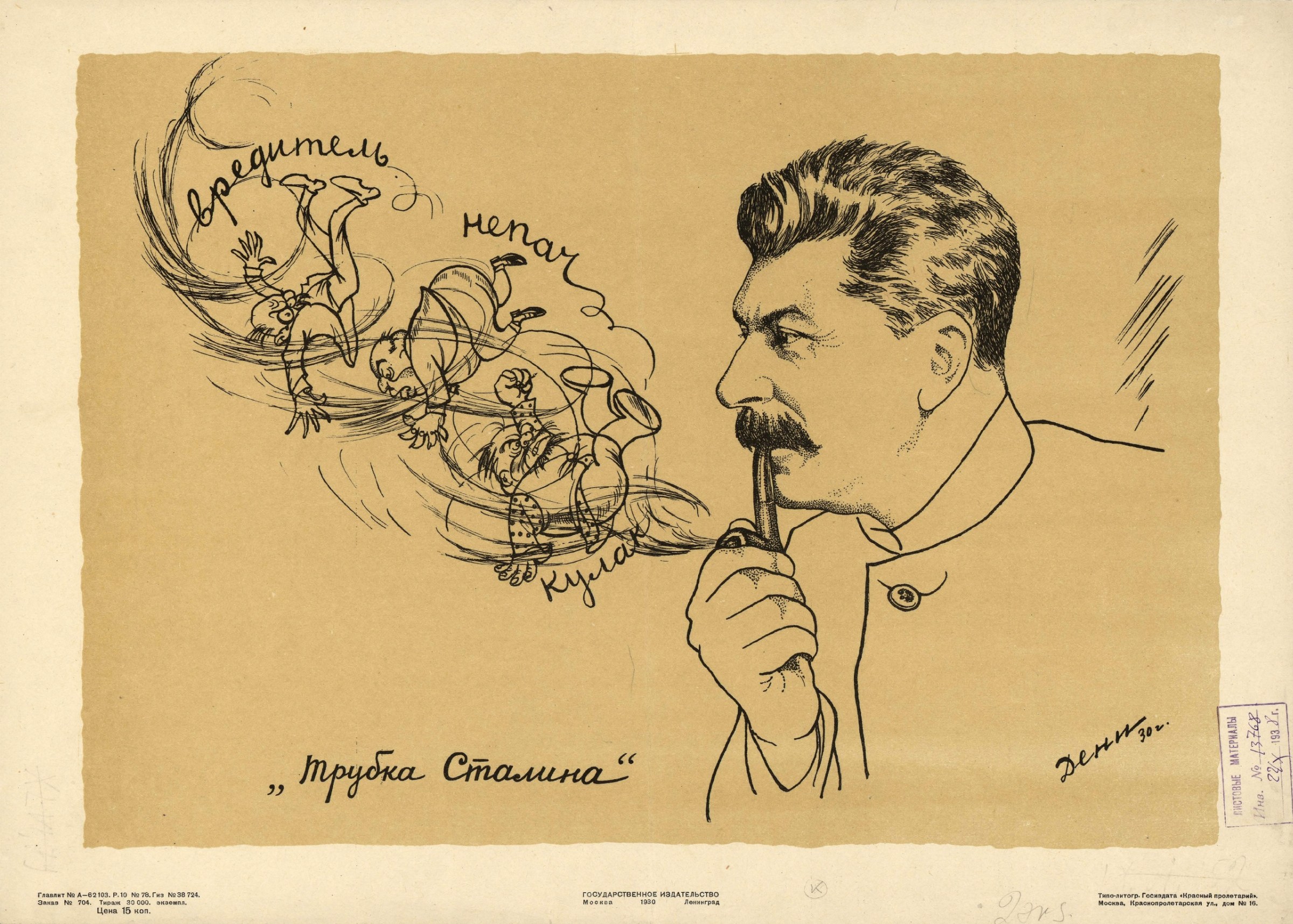
Posters and advertisements annotated with this technique.
Find an official apology or statement about something that went wrong. Underline every passive verb and every word that makes the event smaller. Rewrite it with an actor and a count.
In the wild
Short examples of the technique at work, each with what to notice. The same examples are questions in the quiz, where the answer is not given away.
"Mistakes were made in the handling of the accounts, and processes have since been strengthened."
What to notice. No actor, no count, no harm; the response gets more words than the event.
"This was an isolated incident involving a small number of files." The number was 40 million.
What to notice. "Isolated" and "small number" scale the reader's response down; the count would have scaled it up.
"A minor anomaly in the sensor data was noted prior to the event."
What to notice. A warning that was ignored becomes a "minor anomaly" that was "noted"; the harm is not in the sentence.
Sources
- Safire, William. Safire's Political Dictionary. Rev. ed. New York: Oxford University Press, 2008. ISBN 978-0195343342
- Bandura, Albert. "Moral Disengagement in the Perpetration of Inhumanities." Personality and Social Psychology Review 3, no. 3 (1999): 193–209. doi:10.1207/s15327957pspr0303_3
- Proctor, Robert N. Golden Holocaust. Berkeley: University of California Press, 2011. ISBN 978-0520270169
- Lutz, William. Doublespeak. New York: Harper & Row, 1989. ISBN 978-0060161347