Stalin's pipe
 1
2
3
4
Other · File:Deni - Trubka Stalina - Stalin's Pipe, 1930.jpg · Public domain · Catalog record
The pins
Context
For discussion
-
1
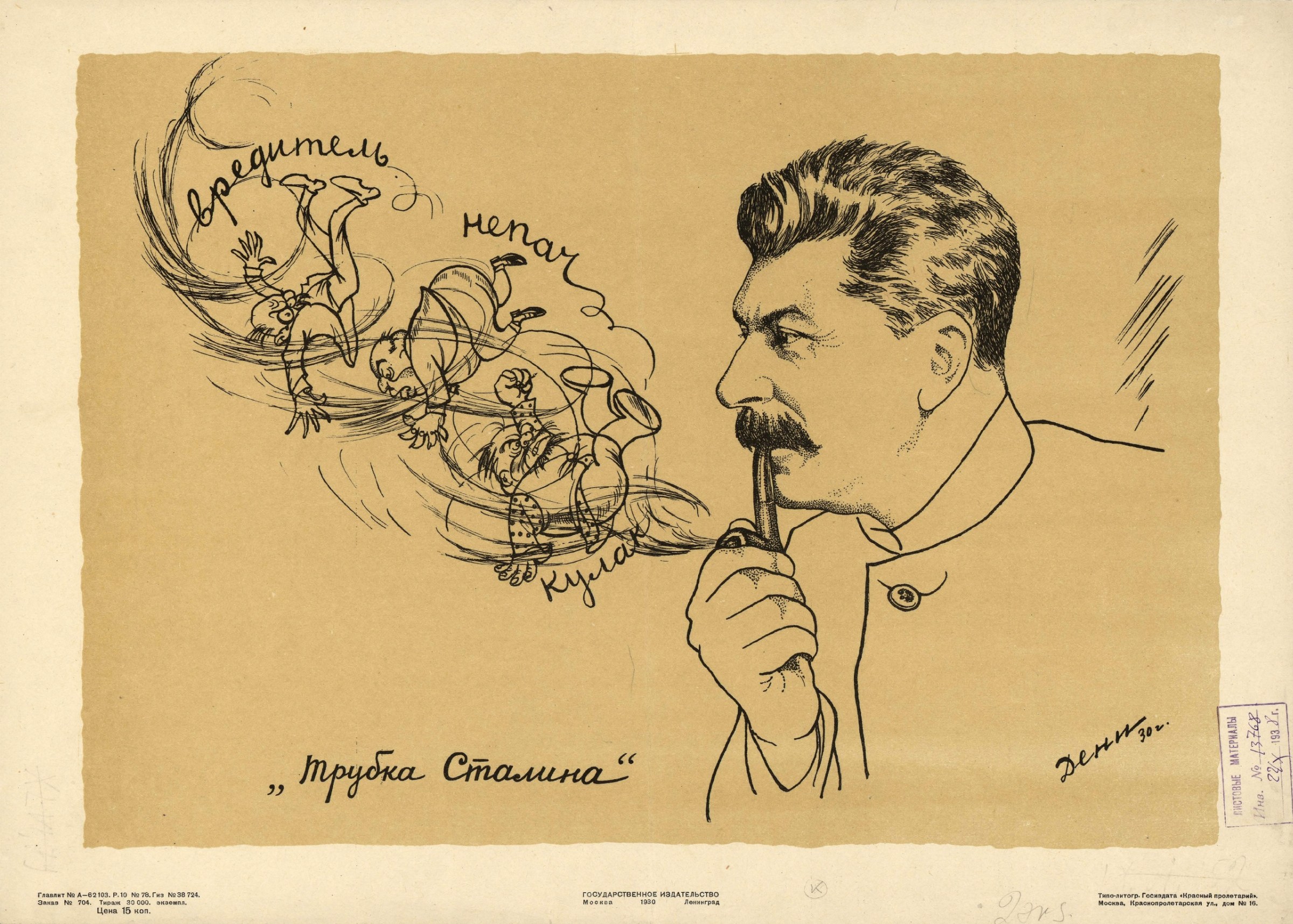
Cult of personality Stalin Stalin in profile, calm, pipe in hand, taking up half the sheet. The enemies of the state are dealt with by the leader's breath.
-
2
Labeling The labels "Wrecker," "NEPman," "kulak": three words that in 1930 could get a man shot, written on three cartoon figures small enough to blow away.
-
3
Minimization The smoke Collectivization and the first purges are a puff of pipe smoke. The scale of the drawing tells the viewer how little the people being removed matter.
-
4
Euphemism "Stalin's pipe" The caption names the pipe, not the police. What was being done to kulaks that year is referred to as a smoker's habit.
Viktor Deni's "Trubka Stalina," 1930, at the start of the first Five-Year Plan and the drive against the "wreckers" blamed for its failures. Stalin, in profile, draws on his pipe; the smoke blows away three tiny tumbling figures labeled "wrecker," "NEPman," and "kulak." The caricature style is the civil-war Deni, but the subject has changed: not the enemy as a monster but the leader as the man who disposes of enemies without effort.
- The enemies are tiny and the leader is calm. What does the difference in scale say about how the state wanted its purges understood?
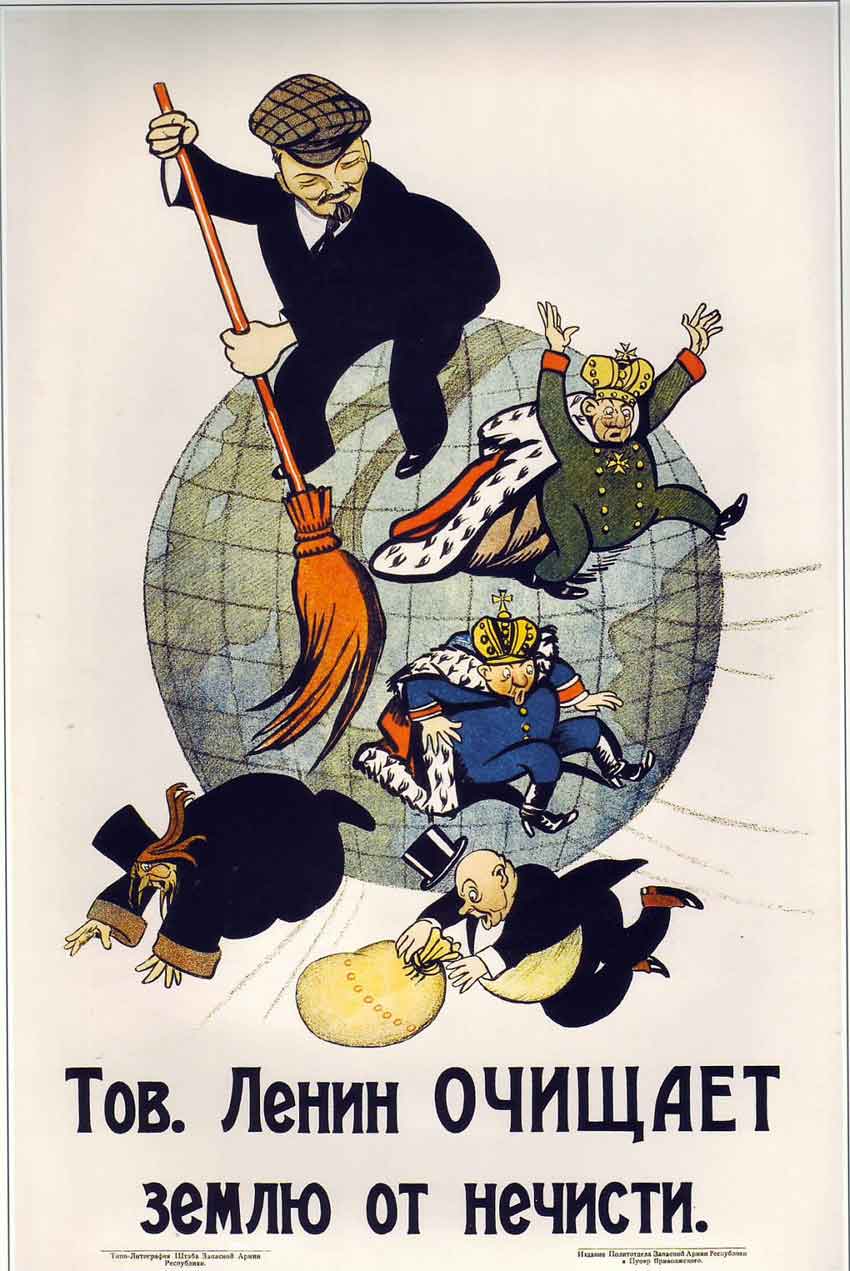
- Compare this with "Lenin cleanses the earth." What has changed in ten years?
- Why is Stalin shown from the side, not looking at the viewer?
See also
Same era, or the same techniques.