Weasel words
Using qualifiers, vague attributions, and hedges that make a claim sound firm while leaving the speaker committed to nothing that could be checked or held against them.
The weasel, the story goes, sucks the contents out of an egg and leaves the shell intact. Weasel words do the same to a sentence. "Up to 50% off," "helps fight," "may reduce," "some experts say," "it has been suggested": each reads as a claim and dissolves on inspection. The audience hears the strong version; the speaker has said only the weak one; if challenged, the speaker points to the qualifier.
The phrase was popularized by Theodore Roosevelt in a 1916 speech attacking an official statement that promised "universal voluntary training," two words that cancel each other, and it has been a term of art in advertising regulation ever since. Exploits Anchoring and Base Rate Neglect.
Historical examples
In a speech at St. Louis on 31 May 1916, Theodore Roosevelt attacked the Wilson administration's preparedness language: "You can have universal training, or you can have voluntary training, but when you use the word 'voluntary' to qualify the word 'universal' you are using a weasel word; it has sucked all the meaning out of 'universal.'" The phrase, taken from a 1900 short story, entered the political vocabulary through him.
Roosevelt, Theodore. Speech at St. Louis, 31 May 1916, reported in The New York Times, 1 June 1916; Chaplin, Stewart. "The Stained-Glass Political Platform." Century Magazine, June 1900.
Tobacco industry statements were built on hedges: research was "not conclusive," a link "has not been established," "many scientists" doubted it, the question "remained open." Each phrase was defensible in isolation and together they sustained a public impression of genuine uncertainty for forty years.
Proctor, Robert N. Golden Holocaust. Berkeley: University of California Press, 2011; Brandt, Allan M. The Cigarette Century. New York: Basic Books, 2007.
In advertising and commerce
"Helps prevent cavities," "up to 40% more," "may reduce the appearance of wrinkles," "new improved formula": these are the forms advertisers use because regulators can act on a claim but not on a hedge. Carl Wrighter's Sunday-supplement bestseller on the subject, I Can Sell You Anything, gave the general public its list in 1972.
Wrighter, Carl P. I Can Sell You Anything. New York: Ballantine, 1972; Preston, Ivan L. The Great American Blow-Up: Puffery in Advertising and Selling. Madison: University of Wisconsin Press, 1975.
In the archive
Posters and advertisements annotated with this technique.
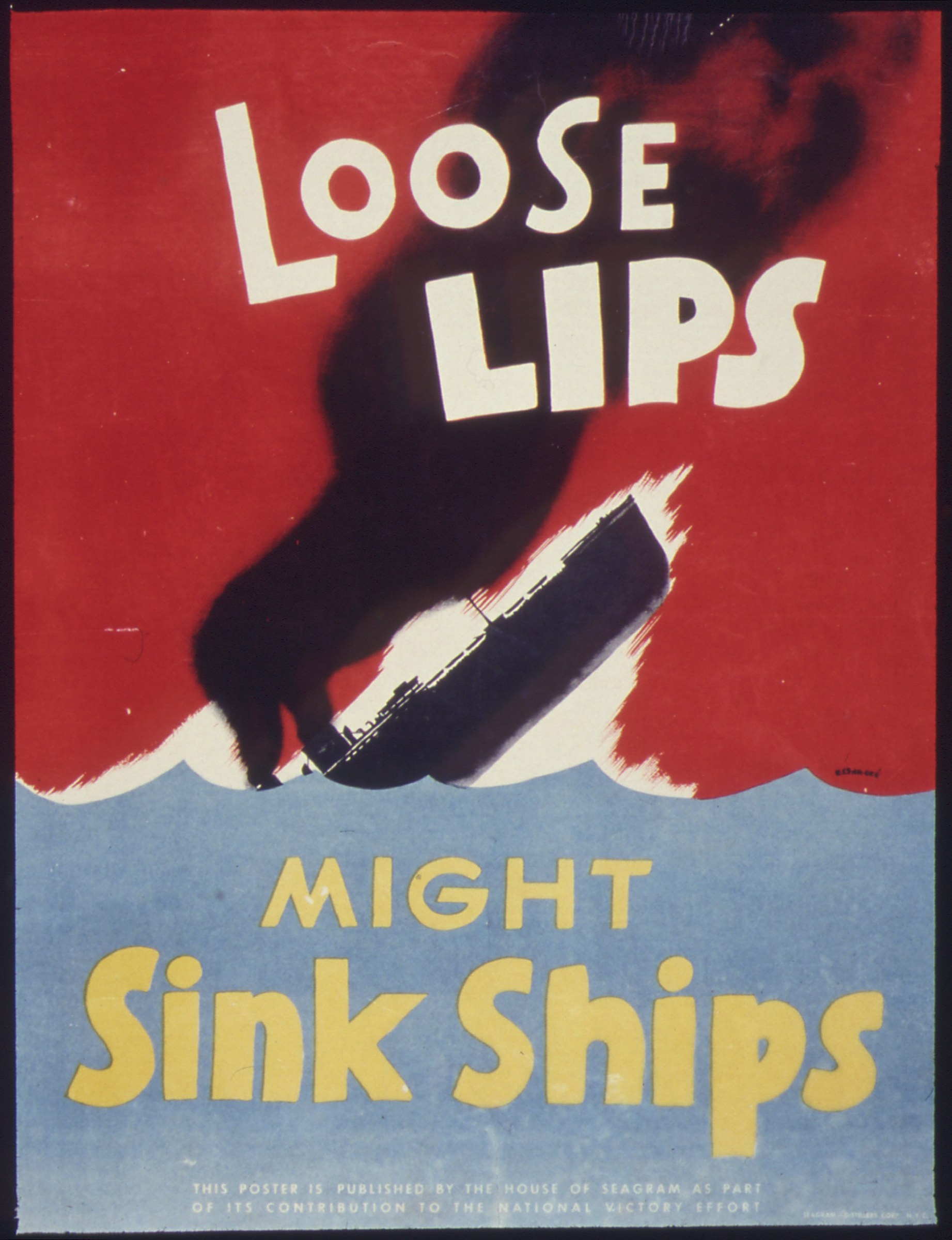
Find three advertisements with a number in them. For each, write down the exact promise once you remove "up to," "as much as," "helps," and their relatives.
In the wild
Short examples of the technique at work, each with what to notice. The same examples are questions in the quiz, where the answer is not given away.
"Save up to 70% on selected items this weekend only."
What to notice. "Up to" and "selected" empty the claim; one item at 70% and the rest at 5% satisfies it.
"Many experts now believe the treatment could be effective for some patients."
What to notice. "Many," "believe," "could," and "some" leave nothing checkable; no expert is named.
"This supplement helps support healthy immune function."
What to notice. "Helps support" promises nothing measurable, which is why the phrase survives regulation.
Sources
- Roosevelt, Theodore. Speech at St. Louis, 31 May 1916. The New York Times, 1 June 1916.
- Preston, Ivan L. The Great American Blow-Up: Puffery in Advertising and Selling. Madison: University of Wisconsin Press, 1975. ISBN 978-0299067809
- Wrighter, Carl P. I Can Sell You Anything. New York: Ballantine, 1972.
- Lutz, William. Doublespeak. New York: Harper & Row, 1989. ISBN 978-0060161347