Do the job HE left behind
 1
2
3
Library of Congress · LC-DIG-ppmscd-06222 (digital file from original) · Public domain · Catalog record
The pins
Context
For discussion
-
1
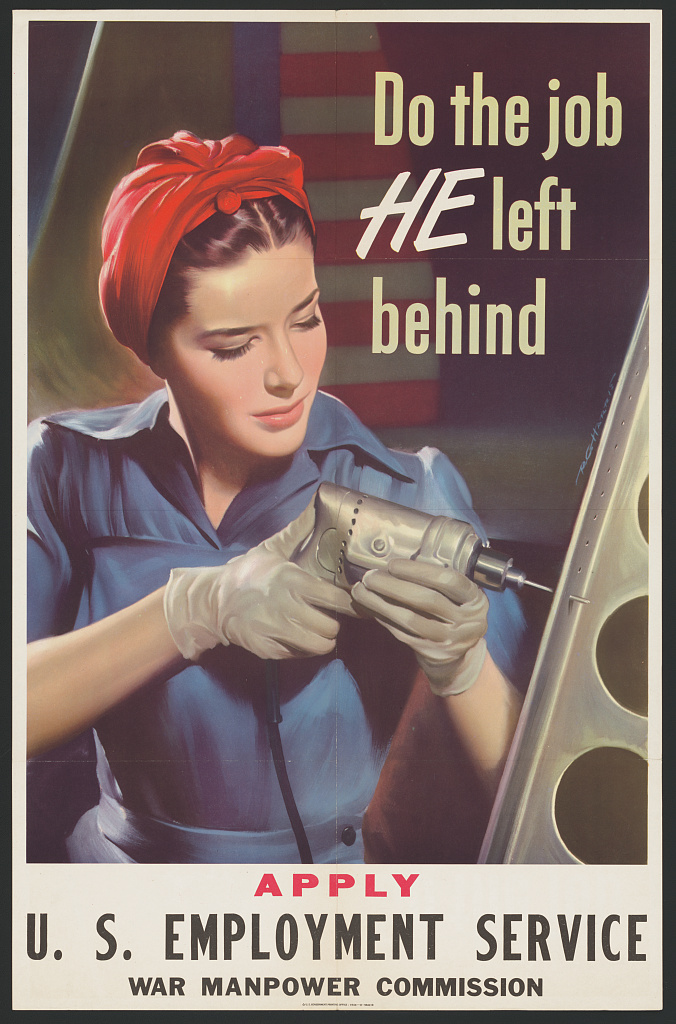
Color and typography "HE" One pronoun in capitals and italics. The job belongs to a man who is away; the woman is minding it, and the typography says so before she has started.
-
2
Idealized figure The woman Red turban, long lashes, clean gloves: war work as a beauty portrait with a drill in it.
-
3
Flag-waving The flag The stripes fill the background. The job is not drilling aluminum but serving the country, which makes it harder to refuse.
Robert Harris's poster for the War Manpower Commission, 1944. A woman in a red turban works a drill on an aircraft part, a flag behind her, with the instruction to apply at the Employment Service. The pronoun is capitalized: the job is his, and she is minding it. By 1944 the labor shortage was acute, and the appeal to women was framed as a favor to the men away.
- Why is "HE" in capitals?
- The woman is drawn looking down at her work, not at the viewer. What does that do that Rosie's stare does not?
- Compare this with "We Can Do It!" Which poster thinks the woman's job is hers?
See also
Same era, or the same techniques.