The greatest mother in the world
 1
2
3
4
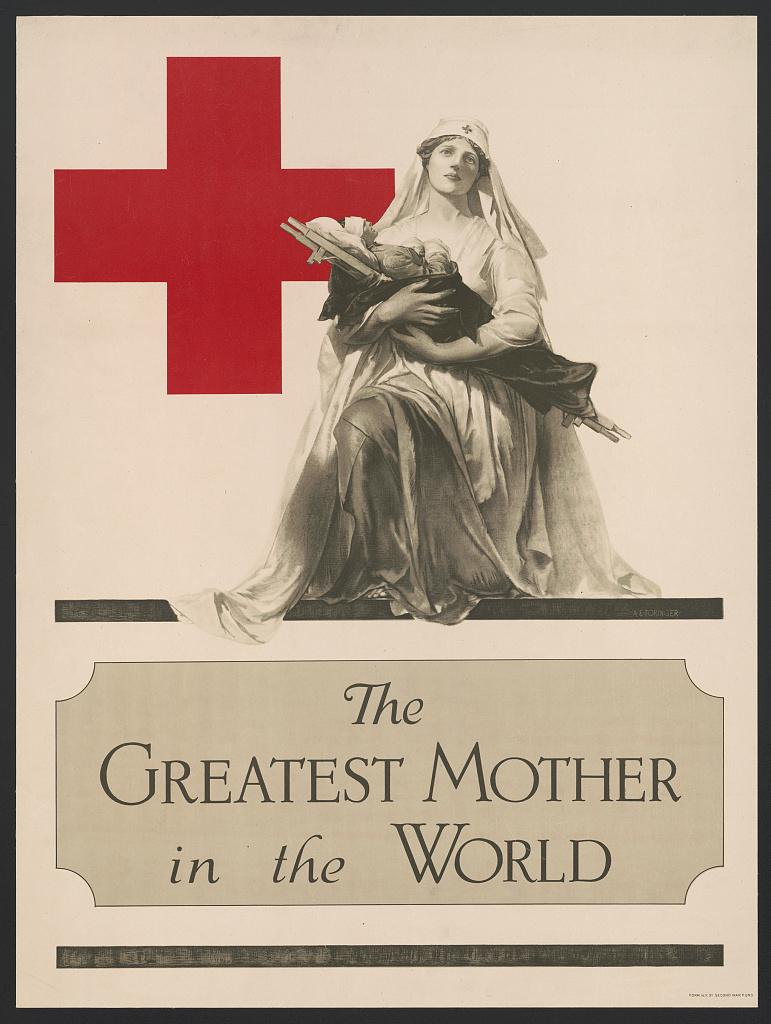
Library of Congress · LC-DIG-ppmsca-53574 (digital file from original) · Public domain · Catalog record
The pins
Context
For discussion
-
1
Symbol appropriation The nurse's face and veil The pose is Michelangelo's Pietà, the Virgin with the dead Christ. The reverence owed to the one image is transferred to a membership drive for the other.
-
2
Appeal to authority The red cross The emblem of a neutral institution with a treaty behind it. It lends the picture an authority the picture does not earn on its own.
-
3
Appeal to pity The soldier on the stretcher The wounded man is shrunk to the size of an infant. A grown soldier would be a patient; a child is someone the viewer must protect.
-
4
Glittering generalities The caption "Greatest," "mother," "world": three words nobody can argue with, which is why they are there. The caption says nothing about what the Red Cross does.
Alonzo Foringer's Red Cross poster for the 1918 Christmas membership drive. A nurse in a white veil holds a stretcher with a wounded soldier on it, shrunk to the size of a child, in the pose of Michelangelo's Pietà. The Red Cross grew from 17,000 members in 1914 to more than twenty million by the end of the war, and this image was its most reproduced.
- The soldier is drawn far smaller than the nurse. What does the change of scale do?
- Where have you seen this pose before, and what does the borrowing lend to a membership drive?
- What is being claimed with the word "greatest"?
See also
Same era, or the same techniques.