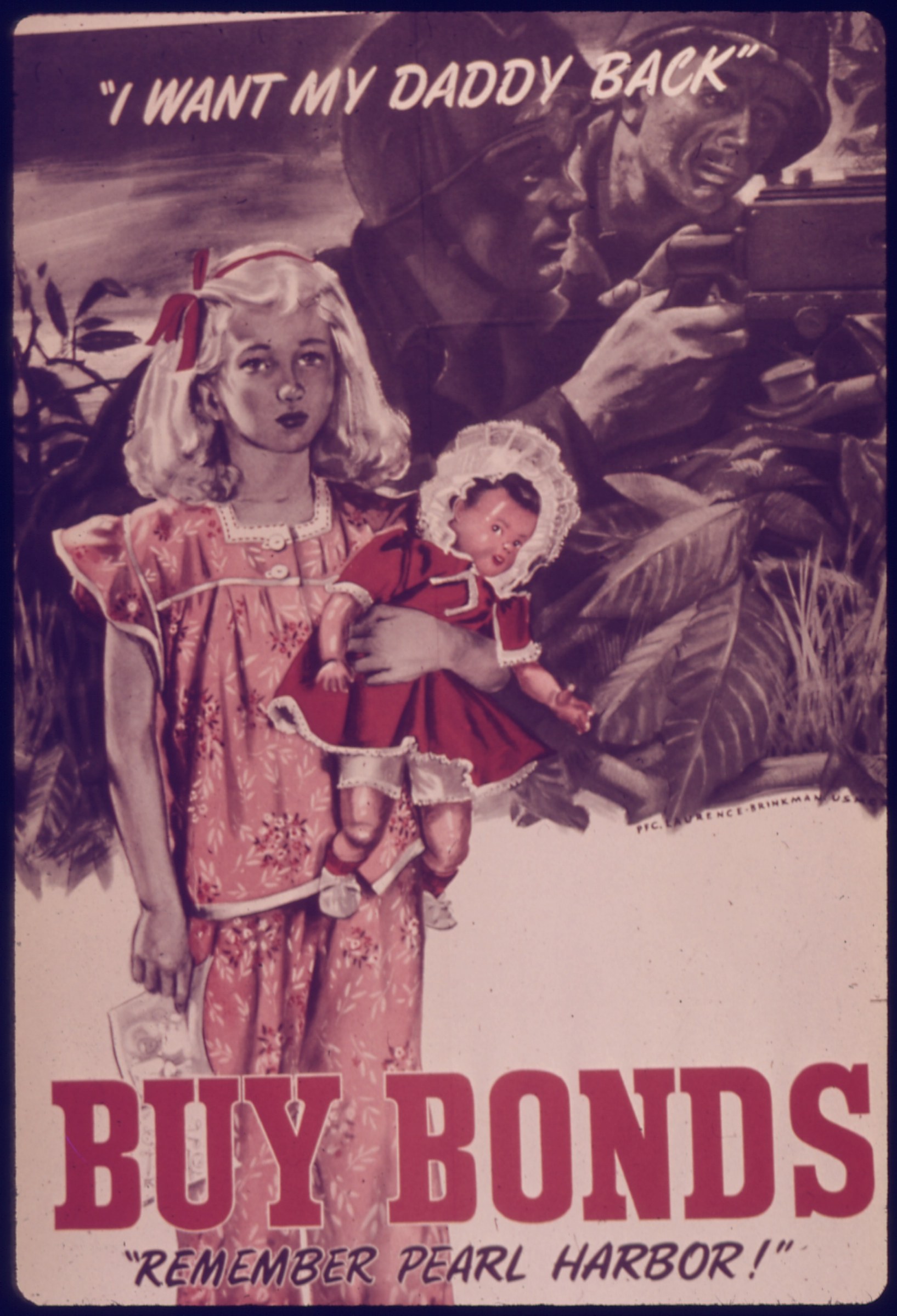
I want my Daddy back, buy bonds, remember Pearl Harbor
 1
2
3
4
National Archives · File:"I Want my Daddy Back." Buy Bonds "Remember Pearl Harbor" - NARA - 514566.jpg · Public domain · Catalog record
The pins
Context
For discussion
-
1
Appeal to pity The girl A small girl with a ribbon in her hair, a doll, and a photograph. The viewer is asked to feel for her before being told what to buy.
-
2
Appeal to fear The Marines Behind her, in monochrome, two Marines under fire in jungle grass. The father is in danger now, and the viewer's bond is drawn as what stands between him and death.
-
3
Transfer "Buy bonds" The child's wish is attached to a Treasury purchase. A bond does not bring anyone home, and the poster does not say it does; the layout does.
-
4
Appeal to outrage "Remember Pearl Harbor!" Grief for the child above, anger at the enemy below. The two feelings point in different directions and the poster uses both.
A Treasury war-bond poster, about 1943, from the National Archives. A girl in a pink dress holds her doll and a photograph; behind her, in monochrome, two Marines fight in jungle grass. The line is in the child's voice, the Pearl Harbor slogan beneath, and the painter was a Marine private. The bond drives raised about 185 billion dollars across the war, and did so by attaching the purchase to every available feeling, grief and revenge included.
- The child speaks for the poster, and holds a doll. Why give the line to a child?
- "Remember Pearl Harbor" and "I want my Daddy back" point in different directions. How does the poster join them?
- Does buying a bond bring anyone's father back? Why does the poster not care?
See also
Same era, or the same techniques.