Appeal to outrage
Provoking anger at an act, a person, or a group so that the audience acts on the anger before it has examined what actually happened.
Anger is the emotion most likely to be passed on. Angry people share, forward, repeat, and recruit, and they judge faster and more harshly while they do it. The device supplies an outrage and a target in the same breath, so that the audience's first act is to spread the message and its second, if it comes at all, is to check it.
Unlike fear, which makes people withdraw, anger makes them approach: it wants an object. That is why outrage appeals so often arrive with a name attached and a demand ready. The audience gets to feel righteous, which is pleasant, and the speaker gets the action. Exploits Negativity Bias and Moral Outrage Amplification.
Historical examples
After the battleship Maine exploded in Havana harbor in February 1898, the Hearst and Pulitzer papers ran headlines assigning blame to Spain before any inquiry, under slogans like "Remember the Maine, to hell with Spain." Circulation rose with the anger. The cause of the explosion has never been settled; the war followed within two months.
Campbell, W. Joseph. Yellow Journalism: Puncturing the Myths, Defining the Legacies. Westport: Praeger, 2001; Rickover, Hyman G. How the Battleship Maine Was Destroyed. Washington: Naval History Division, 1976.
British propaganda on the German invasion of Belgium collected and amplified atrocity stories, some documented and some not, into the Bryce Report of 1915, whose most lurid claims were later found unsupported. The purpose was outrage, and outrage in neutral America was the target. The report was translated into thirty languages.
Gullace, Nicoletta F. "Sexual Violence and Family Honor: British Propaganda and International Law during the First World War." American Historical Review 102, no. 3 (1997): 714–747; Jowett and O'Donnell, Propaganda and Persuasion, 7th ed. (2019).
In advertising and commerce
Research on what makes online articles spread found that content evoking anger was among the most shared, more than sadness or contentment, a finding that publishers and platforms absorbed into headline testing. "Rage bait," material engineered to provoke, is this device turned into an operating model; it has its own entry on this site.
Berger, Jonah, and Katherine L. Milkman. "What Makes Online Content Viral?" Journal of Marketing Research 49, no. 2 (2012): 192–205. Source
In the archive
Posters and advertisements annotated with this technique.
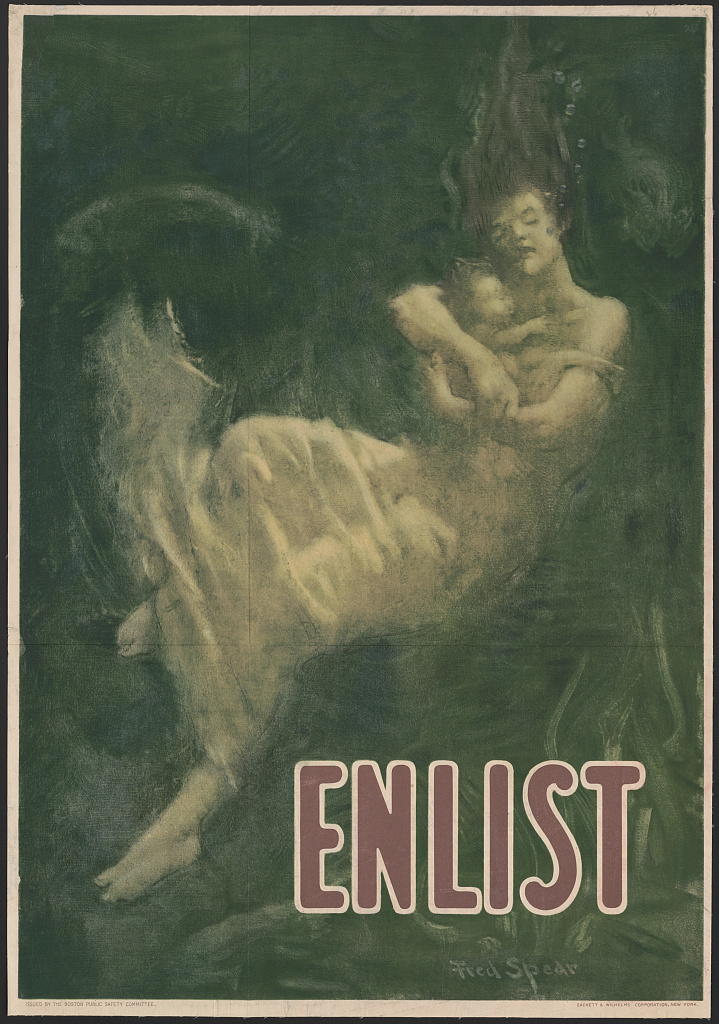 Enlist
United States · 1915 · 3 techniques annotated
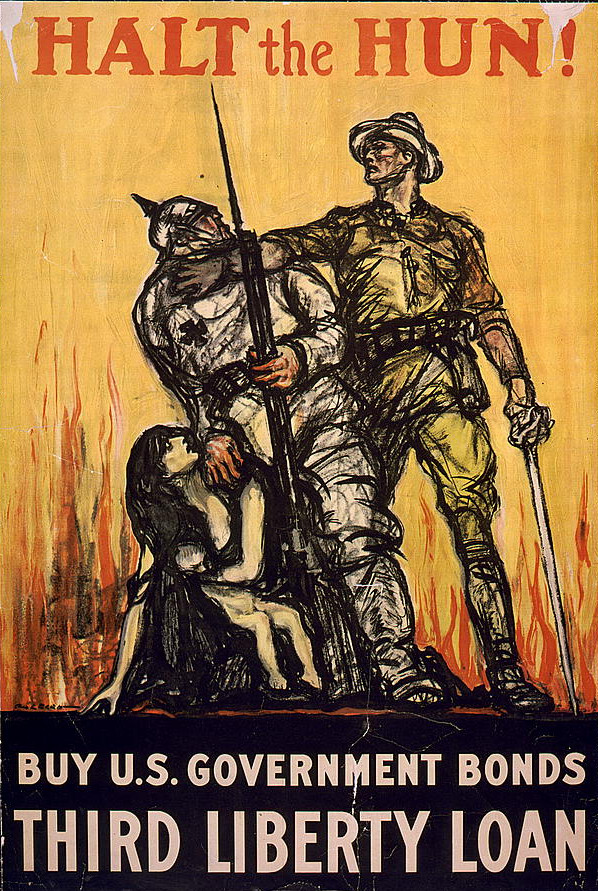 Halt the Hun! Buy U.S. Government bonds
United States · 1918 · 5 techniques annotated
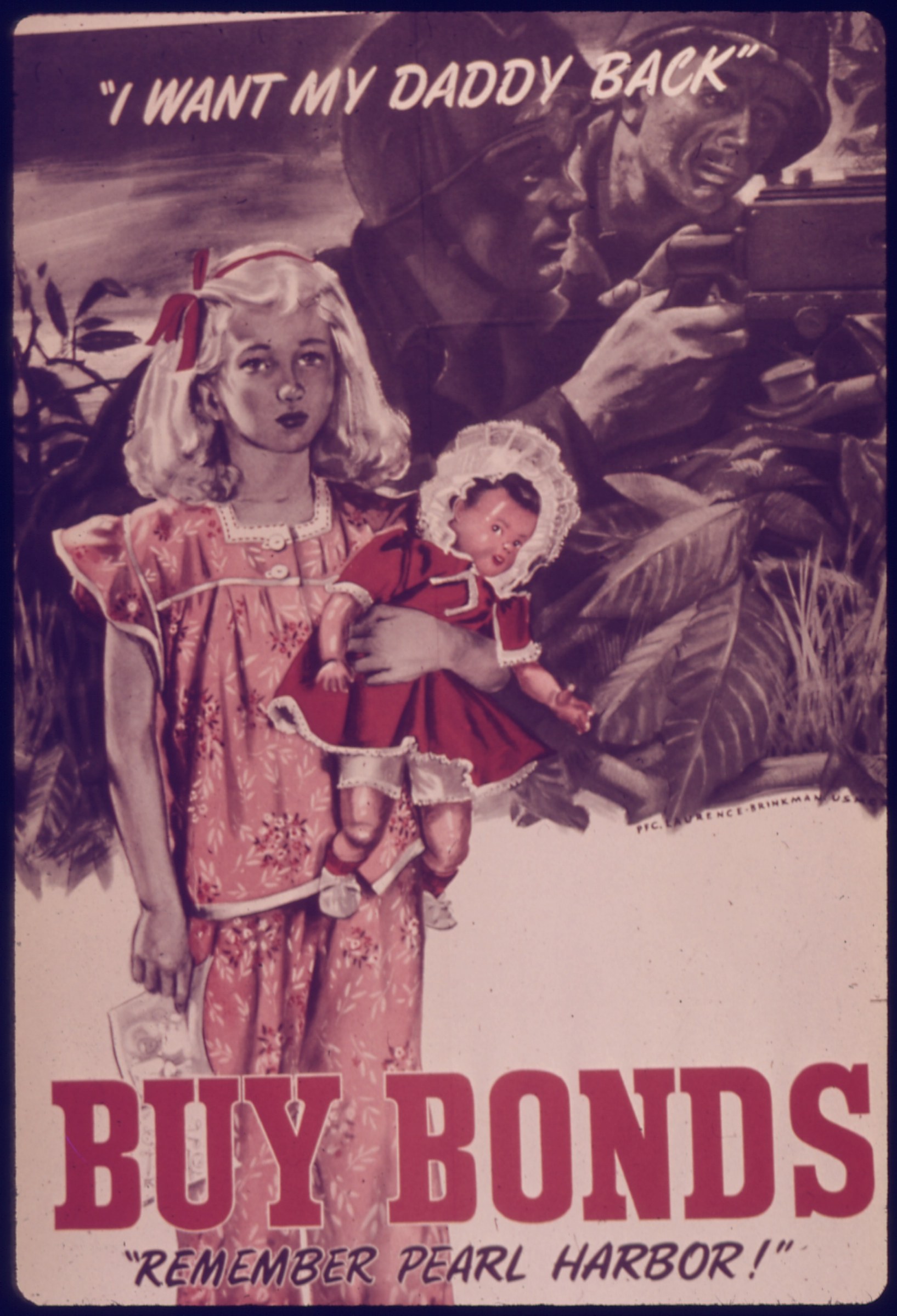 I want my Daddy back, buy bonds, remember Pearl Harbor
United States · 1943 · 4 techniques annotated
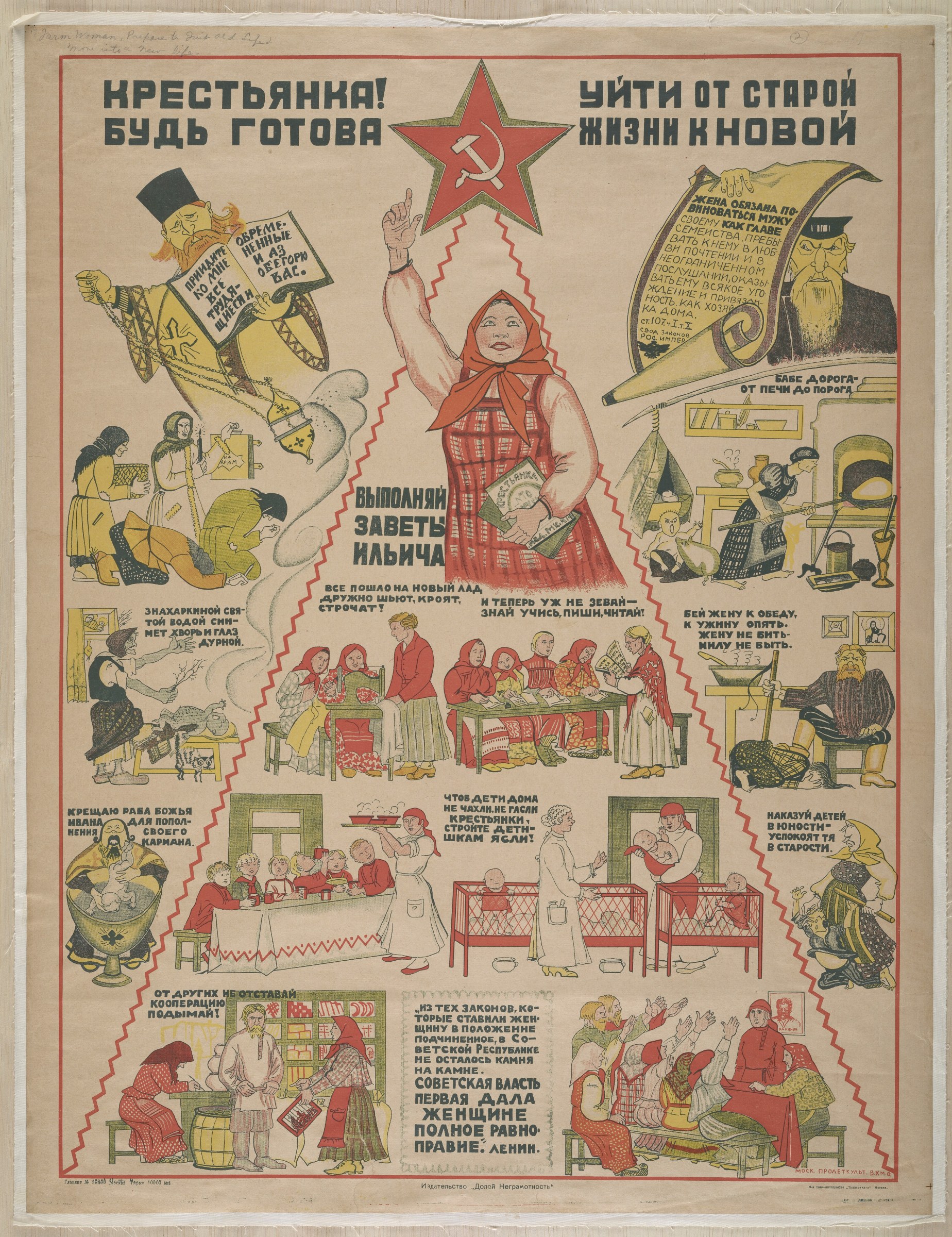 Peasant woman! Be ready to leave the old life for the new
Soviet Union · 1925 · 5 techniques annotated
Find a post this week that made you angry. Write down what it said happened. Then find the original source and write down what it says happened. Compare.
In the wild
Short examples of the technique at work, each with what to notice. The same examples are questions in the quiz, where the answer is not given away.
"They just voted themselves a raise while cutting your children's lunches. Share this before they bury it."
What to notice. Villain, injury, and an immediate share request, all before any source.
"A local business owner was fined for flying the flag. This is what we've come to. Sign the petition."
What to notice. The story arrives interpreted; the anger is the product and the petition is the ask.
"If you're not furious about this, you haven't been paying attention."
What to notice. The audience is told what to feel and shamed for not feeling it; nothing is argued.
Sources
- Berger, Jonah, and Katherine L. Milkman. "What Makes Online Content Viral?" Journal of Marketing Research 49, no. 2 (2012): 192–205. doi:10.1509/jmr.10.0353
- Brady, William J., et al. "Emotion Shapes the Diffusion of Moralized Content in Social Networks." Proceedings of the National Academy of Sciences 114, no. 28 (2017): 7313–7318. doi:10.1073/pnas.1618923114
- Campbell, W. Joseph. Yellow Journalism: Puncturing the Myths, Defining the Legacies. Westport: Praeger, 2001.
- Jowett, Garth S., and Victoria O'Donnell. Propaganda and Persuasion. 7th ed. Thousand Oaks: SAGE, 2019. ISBN 978-1506371344