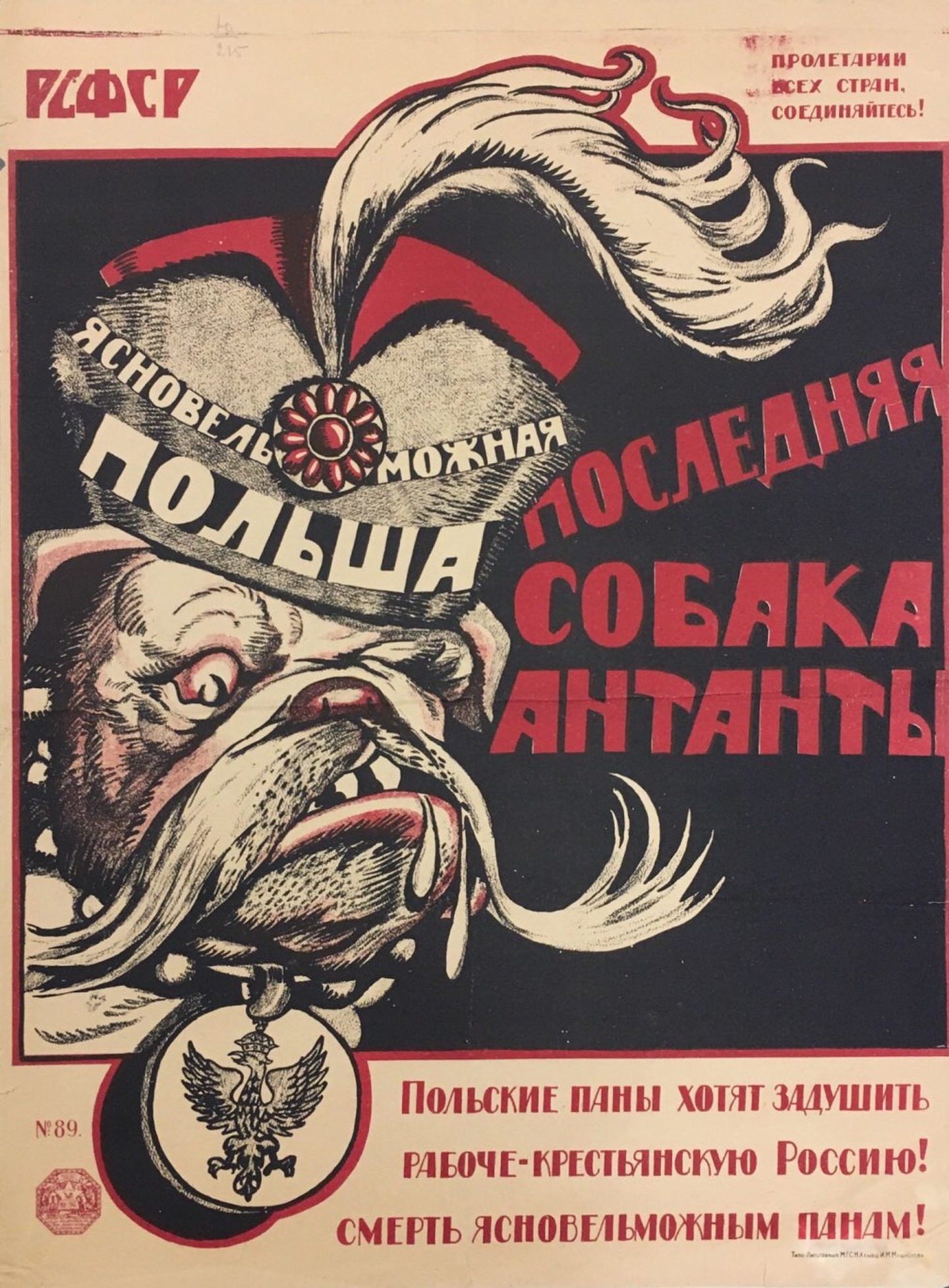
The last dog of the Entente
 1
2
3
4
Other · File:Viktor Nikolaevich Deni - The last dog of the Entente.jpg · Public domain · Catalog record
The pins
Context
For discussion
-
1
Dehumanizing imagery The bulldog Poland is a drooling bulldog. An animal has an owner and an appetite but no reasons, which is the point.
-
2
Name-calling "Most Illustrious Poland" "Yasnovelmozhnaya," the honorific of the Polish nobility, written on a dog's cap. The title is turned into a sneer.
-
3
Guilt by association "The last dog of the Entente" Poland is not fighting its own war but the Entente's, like the White generals before it. The viewer's enemy is always the same enemy in a new dog.
-
4
Appeal to fear The bottom lines "The Polish lords want to strangle worker-and-peasant Russia!" A border war becomes an attempt on the viewer's life.
Viktor Deni's "Poslednyaya sobaka Antanty," 1920, from the war with Poland. A bulldog in a plumed Polish cap labeled "Most Illustrious Poland," a Polish eagle on its collar, drools against a black ground. Below: "The Polish lords want to strangle worker-and-peasant Russia! Death to the illustrious lords!" The earlier dogs, the White generals, were by then beaten, and the caricature made the Polish war a continuation of the civil war by foreign proxy.
- Why a dog rather than a soldier?
- Whose dog is it? What does "of the Entente" do to a war between Russia and Poland?
- What does calling it "the last" do for the viewer in 1920?
See also
Same era, or the same techniques.