False dilemma
Presenting two options as the only ones available, usually one unacceptable and one the speaker wants, so that the audience chooses the speaker's without noticing the others.
The device narrows the field before the audience looks at it. "Either we build the wall or we lose control." "You're with us or you're with the enemy." "Love it or leave it." Once the question is accepted as two-sided, the argument is over, because one side has been made intolerable. The omitted options, compromise, delay, a third policy, doing something else entirely, are the ones the speaker most needs the audience not to consider.
It is oversimplification with a fork in it, and it pairs naturally with fear: the rejected option is described in catastrophe terms so that the speaker's option feels like rescue. Exploits Cognitive Ease and False Consensus Effect.
Historical examples
"America: Love It or Leave It," a slogan of the Vietnam years printed on bumpers and banners, reduced the range of possible relationships to a country to two, affection and exile, and placed criticism outside both. The phrase is the device in its purest form: a whole civic vocabulary of dissent, reform, and argument is missing from the menu.
Safire, William. Safire's Political Dictionary. Rev. ed. New York: Oxford University Press, 2008, entry "love it or leave it."
"Better dead than red" and its Soviet-era counterparts offered a public two conditions to choose between and no third, and the slogan's rhetorical work, as Jowett and O'Donnell note, was to make negotiation, coexistence, and deterrence sound like the second option. The dilemma was manufactured; the policies pursued by both sides were the omitted third.
Jowett, Garth S., and Victoria O'Donnell. Propaganda and Persuasion. 7th ed. Thousand Oaks: SAGE, 2019; Safire, William. Safire's Political Dictionary. Rev. ed. New York: Oxford University Press, 2008, entry "better red than dead."
In advertising and commerce
"Either you're protected or you're not." "You can have peace of mind or you can take your chances." Security, insurance, and extended-warranty advertising sells with a two-option frame in which the second option is a disaster and the first is the product, while the realistic third, the low probability of the disaster, goes unmentioned.
Pratkanis, Anthony, and Elliot Aronson. Age of Propaganda. Rev. ed. New York: W. H. Freeman, 2001, on fear appeals paired with a single remedy.
In the archive
Posters and advertisements annotated with this technique.
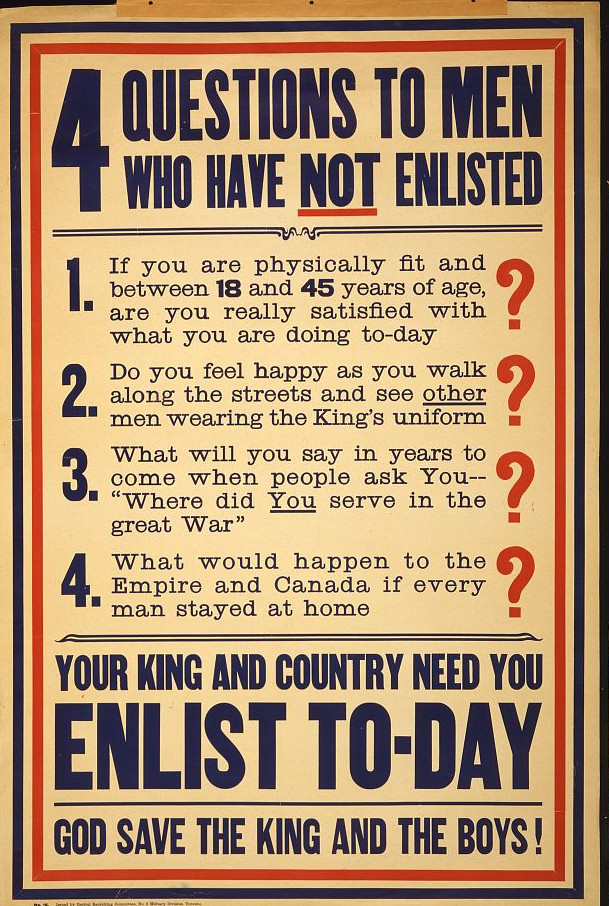
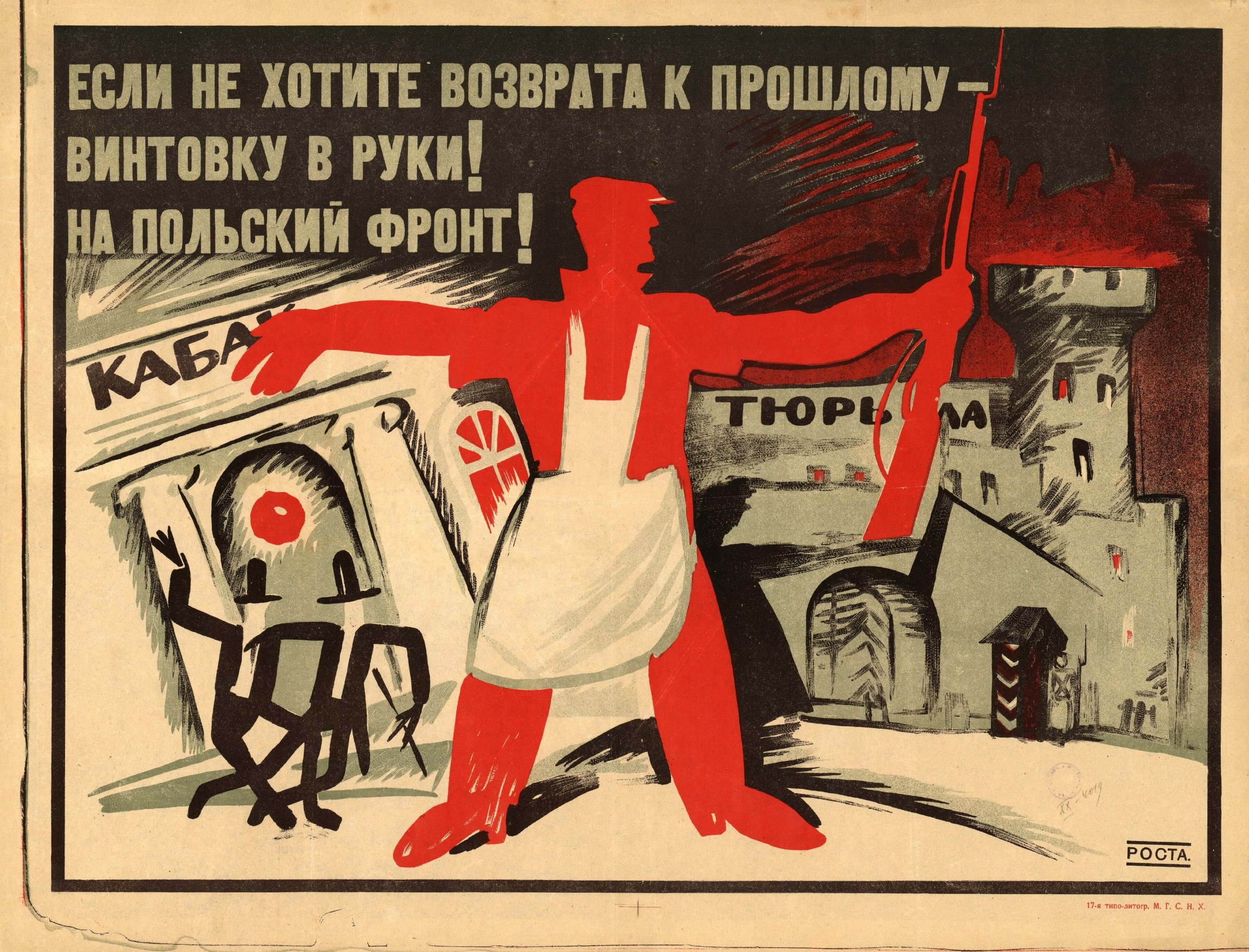
Find a message that says there are only two choices. List every other choice you can think of. Why did the speaker want you to see only two?
In the wild
Short examples of the technique at work, each with what to notice. The same examples are questions in the quiz, where the answer is not given away.
"Either we approve the merger or the plant closes. There is no third way."
What to notice. Two options, one catastrophic, with every alternative erased by "no third way."
"You can either stand with our farmers or side with the importers."
What to notice. A policy with many possible positions is reduced to a choice of sides.
"Protect your family, or gamble with their safety." The product is a water filter.
What to notice. Buying is the only alternative to gambling; the actual risk and other remedies are absent.
Sources
- Safire, William. Safire's Political Dictionary. Rev. ed. New York: Oxford University Press, 2008. ISBN 978-0195343342
- Walton, Douglas. Informal Logic: A Pragmatic Approach. 2nd ed. Cambridge: Cambridge University Press, 2008, on the fallacy of false dilemma. ISBN 978-0521713801
- Jowett, Garth S., and Victoria O'Donnell. Propaganda and Persuasion. 7th ed. Thousand Oaks: SAGE, 2019. ISBN 978-1506371344