Repetition
Saying the same thing so many times, in so many places, that familiarity does the work of evidence and the audience mistakes having heard a claim for having checked it.
A statement heard before is easier to process than a new one, and the mind reads that ease as a sign of truth. Psychologists call it the illusory truth effect, and it has been measured since 1977: repeated statements are rated truer than novel ones, whether or not they are true, and even when the audience knows better. The device is the deliberate use of that quirk. Say it, say it again, say it everywhere, and by the tenth hearing the claim has the feel of common knowledge.
Repetition is also the engine inside other techniques: a slogan works only because it is repeated, and a big lie survives only by drumbeat. The line "repeat a lie often enough and it becomes the truth" is routinely attributed to Goebbels; there is no evidence he said it, which is itself a small demonstration of the device. Exploits Illusory Truth Effect and Mere Exposure Effect.
Historical examples
Cato the Elder is reported by Plutarch to have ended every speech in the Senate, on whatever subject, with the words "Carthage must be destroyed." The policy was eventually adopted. The anecdote has been the standard illustration of the device for two thousand years, which is a demonstration of the device in itself.
Plutarch, Life of Cato the Elder, 27; Pliny the Elder, Natural History 15.74.
Hasher, Goldstein, and Toppino showed participants plausible statements on three occasions over several weeks and found that statements they had seen before were rated more likely to be true than new ones, independent of their actual truth. Later work found the effect holds even when the audience knows the correct answer, and that a single prior exposure is enough.
Hasher, Lynn, David Goldstein, and Thomas Toppino. "Frequency and the Conference of Referential Validity." Journal of Verbal Learning and Verbal Behavior 16, no. 1 (1977): 107–112; Fazio, Lisa K., et al. "Knowledge Does Not Protect Against Illusory Truth." Journal of Experimental Psychology: General 144, no. 5 (2015): 993–1002.
In advertising and commerce
Frequency is the first principle of media buying: the same message, bought at a level of repetition the advertiser can afford, because a claim seen a dozen times is believed more than one seen once. Jingles and taglines are repetition engineered to be self-repeating by the audience. Pratkanis and Aronson's review of the research puts repetition at the center of how advertising works.
Pratkanis, Anthony, and Elliot Aronson. Age of Propaganda. Rev. ed. New York: W. H. Freeman, 2001; Krugman, Herbert E. "Why Three Exposures May Be Enough." Journal of Advertising Research 12, no. 6 (1972): 11–14.
In the archive
Posters and advertisements annotated with this technique.

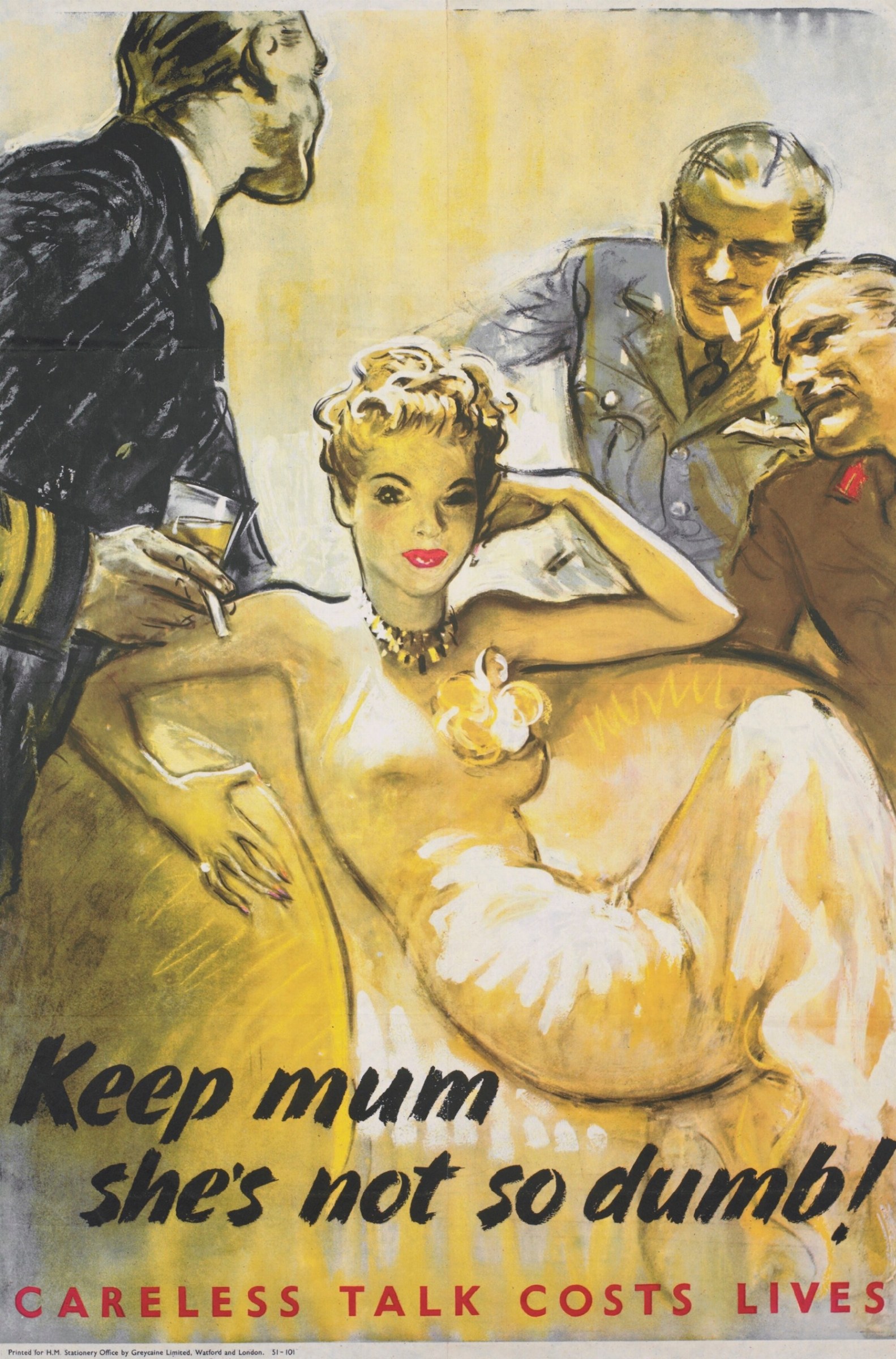
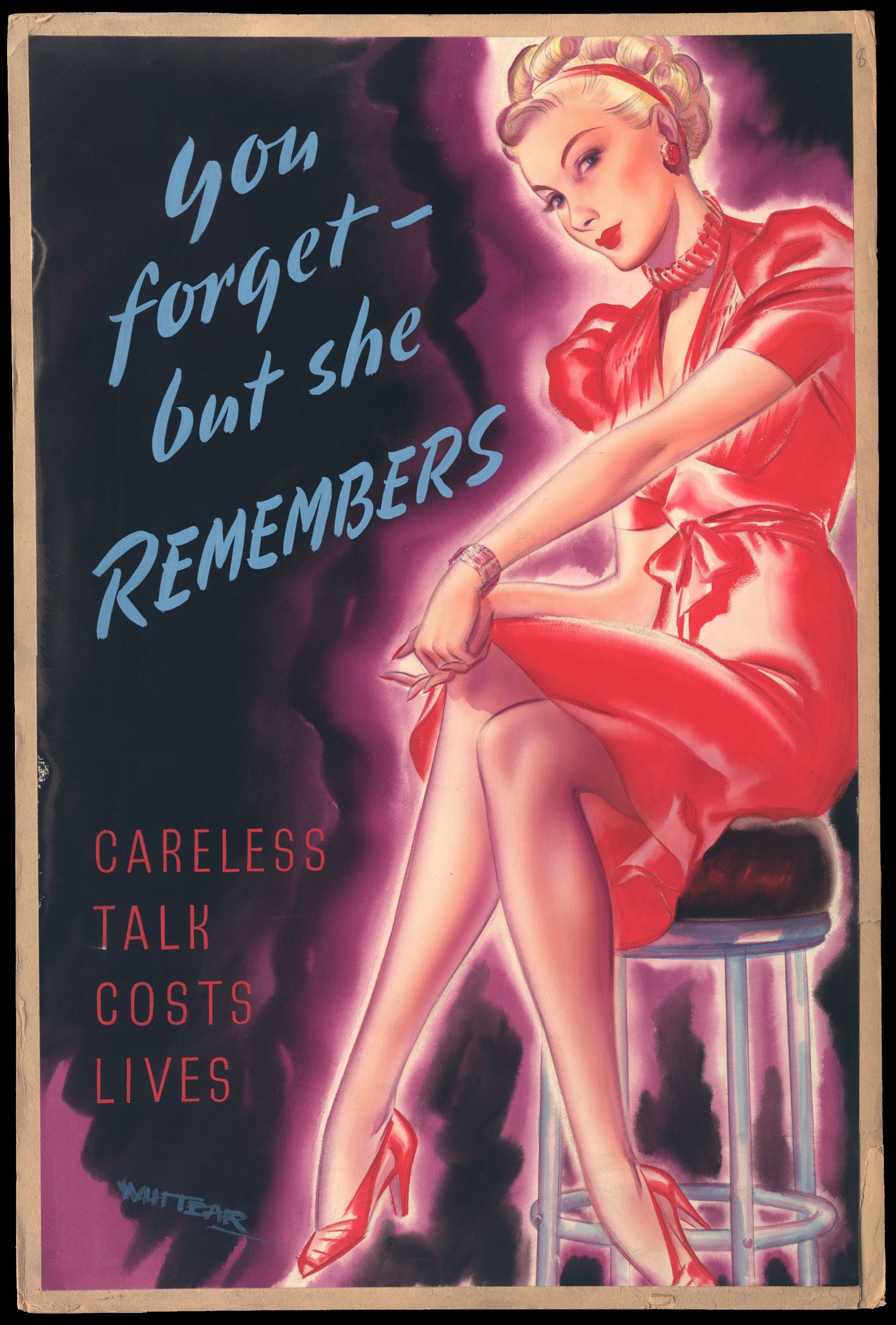
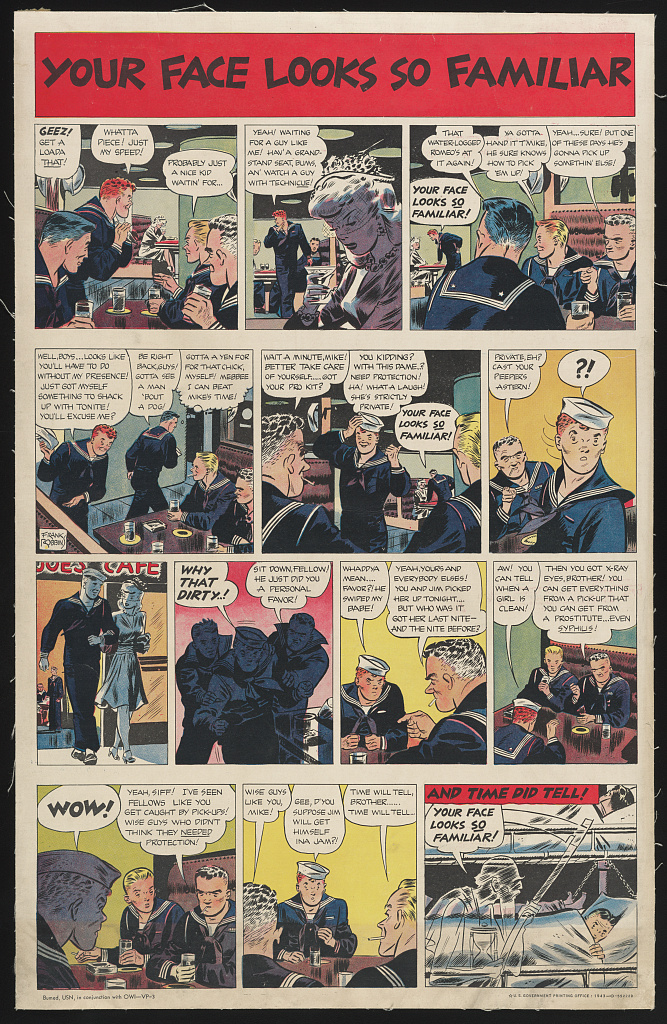
Pick a claim you believe is obviously true. Where did you learn it? Can you find where it was shown to be true, rather than where it was repeated?
In the wild
Short examples of the technique at work, each with what to notice. The same examples are questions in the quiz, where the answer is not given away.
Every spokesperson for the company used the phrase "safe, tested, and trusted" in every interview for a month. No test was ever cited.
What to notice. The claim's only support is the number of times it was said, in identical words, everywhere.
"As everyone knows, the old system was bankrupt. Everyone knows that."
What to notice. A claim presented as common knowledge with no source; the phrase itself is repeated to make it so.
The same thirty-second advertisement ran before every video on the site for six weeks.
What to notice. Frequency is the strategy; the message is meant to feel familiar, and familiar feels true.
Sources
- Hasher, Lynn, David Goldstein, and Thomas Toppino. "Frequency and the Conference of Referential Validity." Journal of Verbal Learning and Verbal Behavior 16, no. 1 (1977): 107–112.
- Fazio, Lisa K., Nadia M. Brashier, B. Keith Payne, and Elizabeth J. Marsh. "Knowledge Does Not Protect Against Illusory Truth." Journal of Experimental Psychology: General 144, no. 5 (2015): 993–1002. doi:10.1037/xge0000098
- Plutarch. Life of Cato the Elder. Translated by Bernadotte Perrin. Loeb Classical Library.
- Pratkanis, Anthony, and Elliot Aronson. Age of Propaganda. Rev. ed. New York: W. H. Freeman, 2001. ISBN 978-0805074031