We Can Do It!
 1
2
3
4
Library of Congress · Public domain · Catalog record
The pins
Context
For discussion
-
1
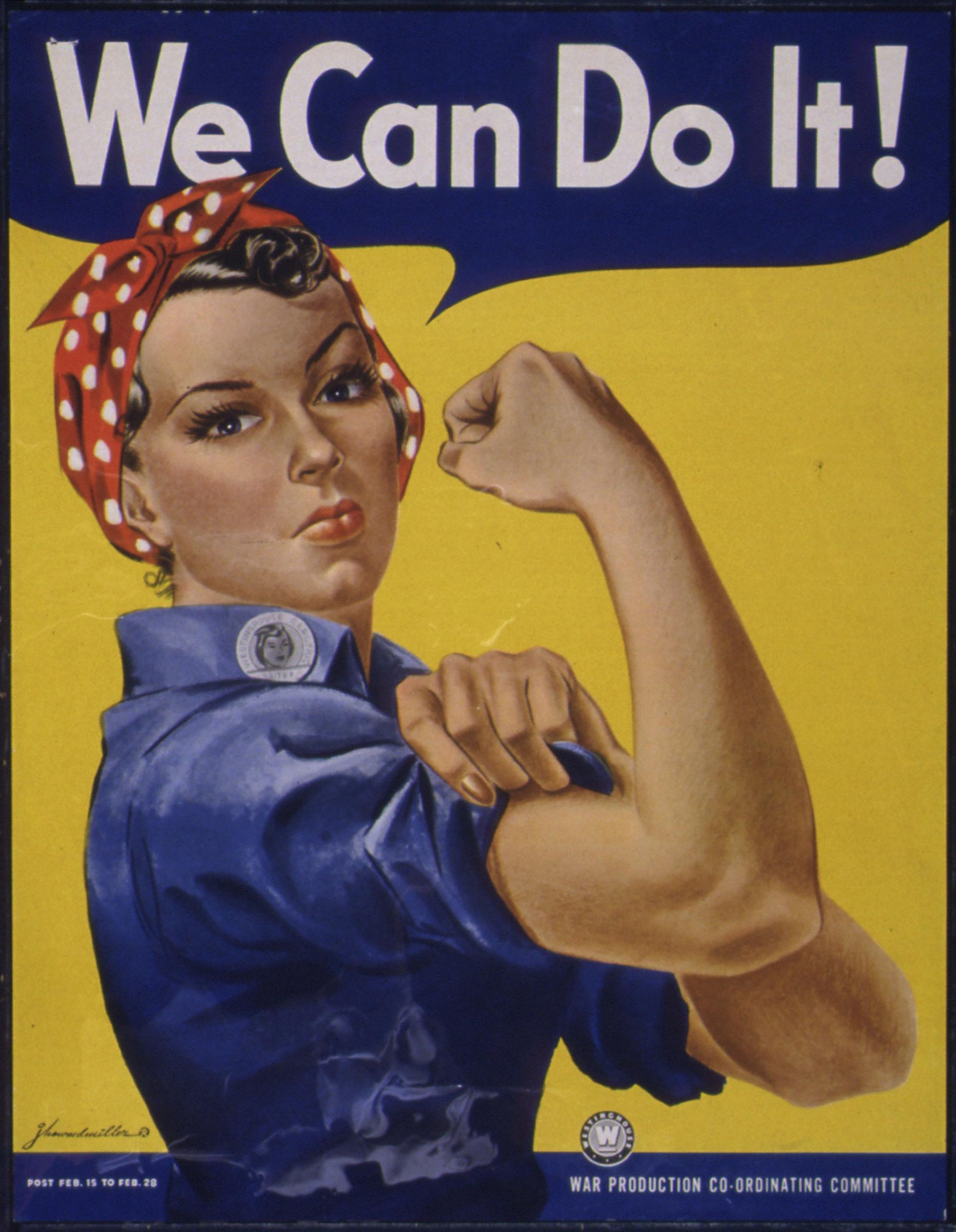
Slogan The speech bubble Four words in a comic-strip balloon. They name no task and no enemy, which is why they could later mean anything.
-
2
Idealized figure The face Plucked brows, mascara, lipstick, and a polka-dot bandanna: the munitions worker as a pin-up. The poster sold the job by making it pretty.
-
3
Bandwagon The fist "We" and a flexed arm. The viewer is told she is already part of a team, and that the team is strong.
-
4
Message discipline "Post Feb. 15 to Feb. 28" A posting schedule from Westinghouse's internal committee. This was one sheet in a two-week rotation meant to keep a plant's workers on schedule and off the picket line.
J. Howard Miller's poster for Westinghouse's internal "War Production Co-ordinating Committee," displayed in the company's Midwest plants for two weeks in February 1943 and then taken down. It was one of a series meant to keep the workforce, including the newly hired women, in line and on schedule. The poster was almost unknown until the 1980s, when it was rediscovered and became the image called "Rosie the Riveter," a name it never carried.
- The poster was made for the employees of one company. What does knowing that change?
- Who is "we"?
- The image now means something it did not mean in 1943. How does that happen to a picture?
See also
Same era, or the same techniques.