Scapegoating
Assigning the blame for a complex problem to a single person or group, so that anger has a target and the real causes, and the speaker's own share of them, go unexamined.
Problems without authors are hard to bear. Unemployment, a lost war, a bad harvest, a price rise: each has many causes and no villain, and an audience that is suffering wants a villain. The device supplies one. It works best when the target is visible, already disliked, and unable to answer back, and it offers the audience two rewards at once: an explanation, and someone to be angry at instead of themselves or the speaker.
Gordon Allport described scapegoating as displaced aggression onto a group that cannot retaliate, and noted that the chosen group is usually blamed for contradictory faults at once. The contradiction is a tell: the target is not the cause of the problem, it is the container for the feeling. Exploits Fundamental Attribution Error and Out Group Homogeneity.
Historical examples
The "stab in the back" legend blamed Germany's defeat in 1918 on socialists and Jews at home rather than on the military collapse the army's own leadership had reported, and Nazi propaganda extended the same target to inflation, unemployment, and cultural decline. The accusations contradicted one another, Jews as both Bolsheviks and financiers, which Allport later identified as the signature of the device.
Welch, David. The Third Reich: Politics and Propaganda. 2nd ed. London: Routledge, 2002; Allport, Gordon W. The Nature of Prejudice. Reading, MA: Addison-Wesley, 1954.
The Salem witch trials assigned a run of illnesses, deaths, and misfortunes in a frightened community to named individuals, most of them women on the margins of the town. The accusations resolved the community's anxiety by giving it culprits; the executions did not resolve the misfortunes.
Boyer, Paul, and Stephen Nissenbaum. Salem Possessed: The Social Origins of Witchcraft. Cambridge, MA: Harvard University Press, 1974.
In advertising and commerce
The "Crying Indian" public service announcement, produced for Keep America Beautiful, an organization funded by beverage and packaging companies, placed the blame for litter on individuals ("People start pollution. People can stop it") at the moment legislators were considering deposit laws and packaging regulation. The scapegoat was the consumer; the manufacturers who paid for the campaign were absent from it.
Dunaway, Finis. Seeing Green: The Use and Abuse of American Environmental Images. Chicago: University of Chicago Press, 2015.
In the archive
Posters and advertisements annotated with this technique.
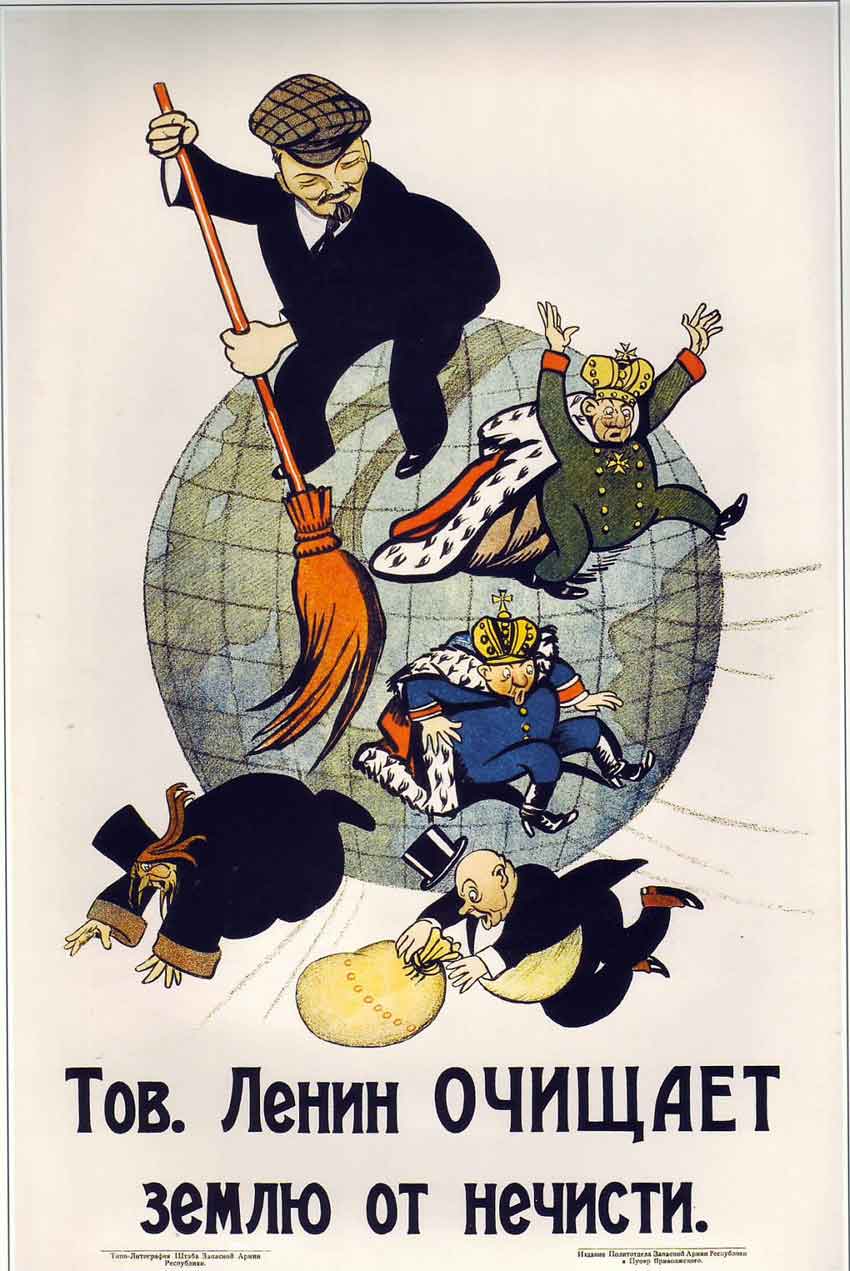
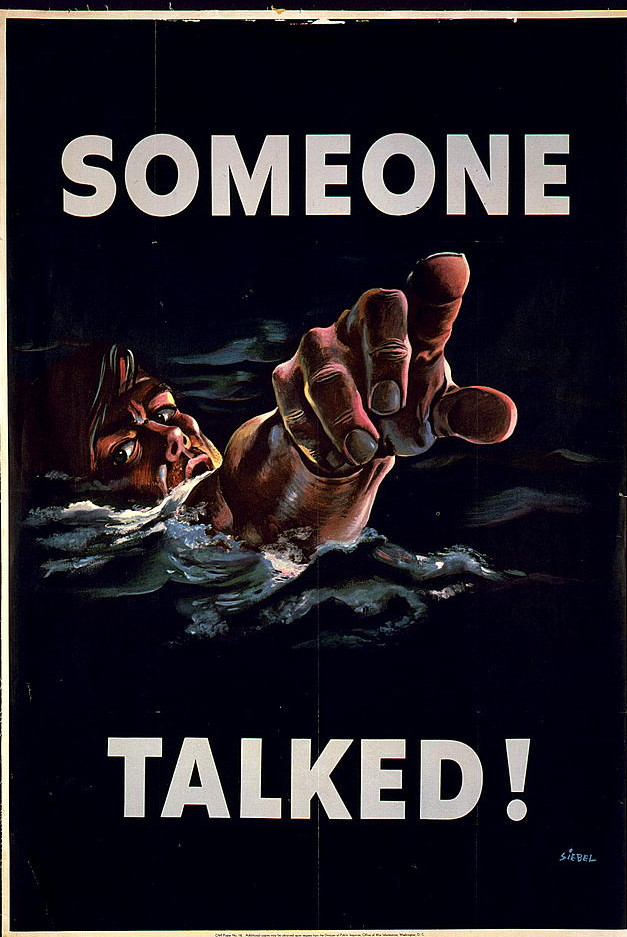
Find a message that blames a problem on one group. List three other causes of the same problem. Why might the speaker prefer the one they chose?
In the wild
Short examples of the technique at work, each with what to notice. The same examples are questions in the quiz, where the answer is not given away.
"Rents are up because of the newcomers. Before they came, everyone could afford a place."
What to notice. A single group is blamed for a problem with many causes; the account has no other factors.
"The project failed because the contractors were lazy. And also because they overcharged us for all that overtime."
What to notice. Contradictory faults on one target, lazy and overworked, and no mention of the client's own decisions.
"Every problem in this league traces back to one club and its owners."
What to notice. One culprit for a whole system's problems; the speaker's club is not in the account.
Sources
- Allport, Gordon W. The Nature of Prejudice. Reading, MA: Addison-Wesley, 1954. ISBN 978-0201001792
- Welch, David. The Third Reich: Politics and Propaganda. 2nd ed. London: Routledge, 2002. ISBN 978-0415275088
- Dunaway, Finis. Seeing Green: The Use and Abuse of American Environmental Images. Chicago: University of Chicago Press, 2015. ISBN 978-0226169903
- Boyer, Paul, and Stephen Nissenbaum. Salem Possessed. Cambridge, MA: Harvard University Press, 1974.