Dehumanization
Describing a group as animals, vermin, disease, or objects, so that the moral rules the audience applies to people no longer seem to apply to them.
Most people find it hard to harm other people and easy to exterminate pests. Dehumanization moves a group from the first category to the second by language and imagery: rats, cockroaches, a plague, a flood, a swarm. Once the metaphor is accepted, the acts that follow feel like hygiene rather than violence, and the audience's own restraint, which would have protested, has nothing to protest about.
The device is the most dangerous on this site because it prepares the ground for the worst things groups do to each other, and every modern genocide has been preceded by it. It also appears in milder forms wherever a group is discussed as a quantity, a problem, or an infestation rather than as people. Exploits Out Group Homogeneity and Moral Disengagement.
Historical examples
The film Der ewige Jude ("The Eternal Jew"), produced under Goebbels's ministry, intercut footage of Jewish neighborhoods with footage of rats swarming from a sewer while the narration compared the two directly. The film was released in November 1940; the deportations that the metaphor made thinkable began the following year.
Welch, David. Propaganda and the German Cinema, 1933–1945. Rev. ed. London: I.B. Tauris, 2001; Herf, Jeffrey. The Jewish Enemy: Nazi Propaganda during World War II and the Holocaust. Cambridge, MA: Harvard University Press, 2006.
Radio Télévision Libre des Mille Collines referred to Tutsis as inyenzi, cockroaches, in broadcasts before and during the genocide, and the International Criminal Tribunal for Rwanda convicted the station's founders and a newspaper editor of incitement in 2003, the first such judgment since Nuremberg. The tribunal's judgment quotes the vocabulary at length.
Thompson, Allan, ed. The Media and the Rwanda Genocide. London: Pluto Press, 2007; International Criminal Tribunal for Rwanda, Prosecutor v. Nahimana, Barayagwiza and Ngeze, Judgement and Sentence, 3 December 2003.
In advertising and commerce
Pears' Soap advertisements of the 1890s presented the product as an instrument of empire, "the first step towards lightening the White Man's Burden," with colonized peoples shown as subjects to be cleaned rather than customers to be served. The imagery cast a population as a hygiene problem, which is the device in its commercial form.
McClintock, Anne. Imperial Leather: Race, Gender and Sexuality in the Colonial Contest. New York: Routledge, 1995; Ramamurthy, Anandi. Imperial Persuaders: Images of Africa and Asia in British Advertising. Manchester: Manchester University Press, 2003.
In the archive
Posters and advertisements annotated with this technique.
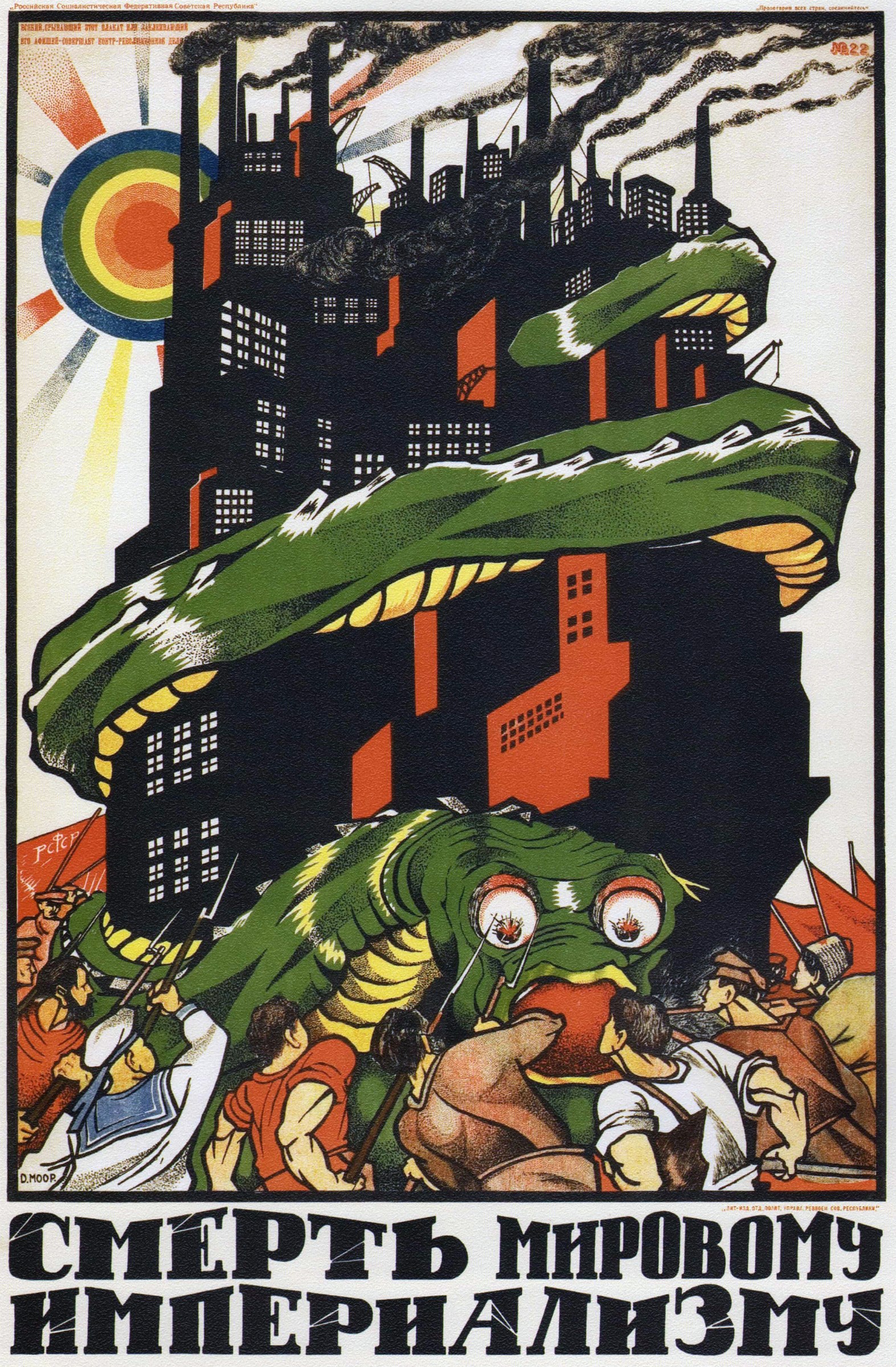
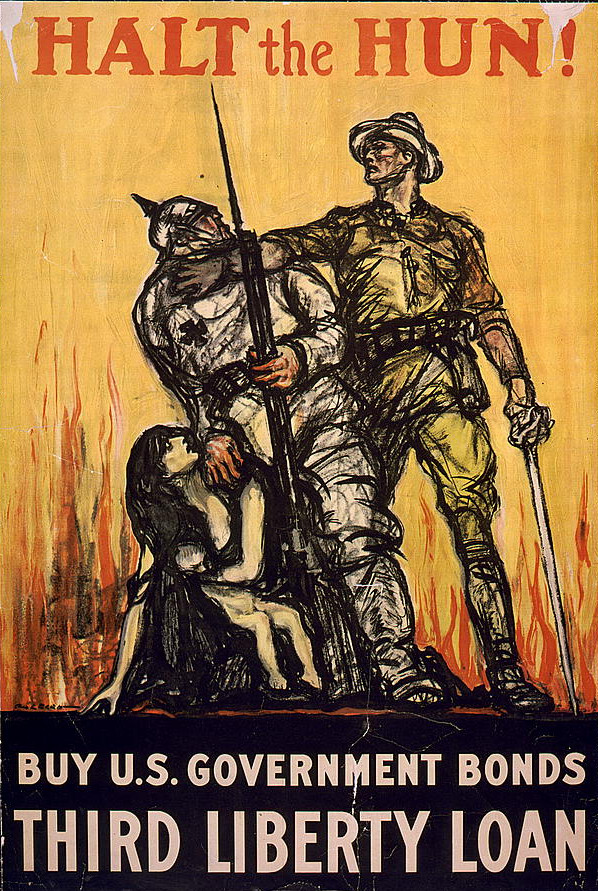
Find a description of a group of people that uses a word normally used for animals, weather, or disease. Rewrite the sentence with the word "people." What changes?
In the wild
Short examples of the technique at work, each with what to notice. The same examples are questions in the quiz, where the answer is not given away.
"We are being overrun. A tide of them is pouring through the gap, and it has to be stemmed."
What to notice. People are described as water; the response that fits water, stemming, is then the natural one.
"The city needs to clear out the infestation downtown before it spreads to the suburbs."
What to notice. An infestation is a thing you exterminate. The sentence has removed the people from the people.
"Those aren't citizens. They're a number on a spreadsheet, and the number is too high."
What to notice. A population is reduced to a quantity so that reducing it sounds like arithmetic.
Sources
- Smith, David Livingstone. Less Than Human: Why We Demean, Enslave, and Exterminate Others. New York: St. Martin's Press, 2011. ISBN 978-0312532727
- Haslam, Nick. "Dehumanization: An Integrative Review." Personality and Social Psychology Review 10, no. 3 (2006): 252–264. doi:10.1207/s15327957pspr1003_4
- Herf, Jeffrey. The Jewish Enemy. Cambridge, MA: Harvard University Press, 2006. ISBN 978-0674027381
- Thompson, Allan, ed. The Media and the Rwanda Genocide. London: Pluto Press, 2007. ISBN 978-0745326252