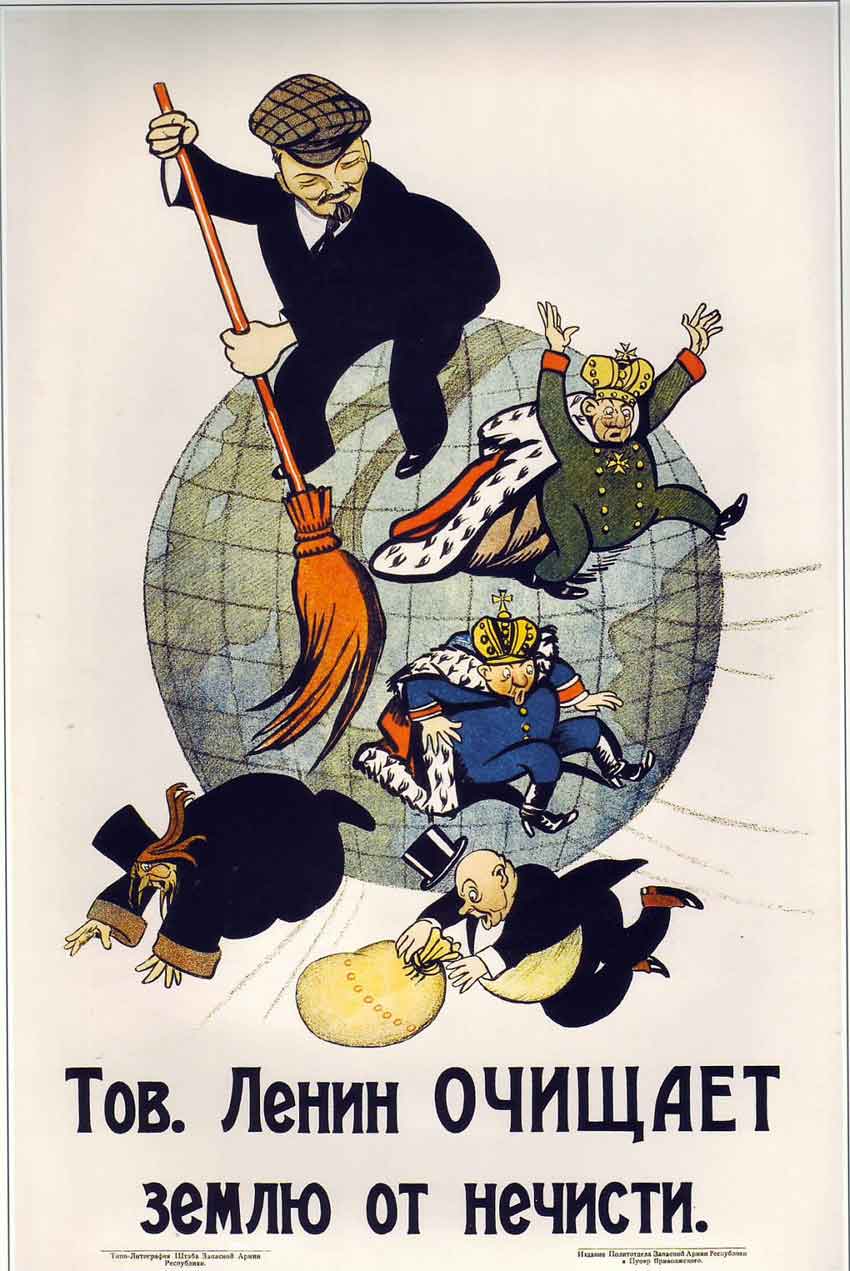
Comrade Lenin cleanses the earth of filth
 1
2
3
4
5
Other · File:Неизвестный художник. Тов. Ленин очищает землю от нечисти.jpg · Public domain · Catalog record
The pins
Context
For discussion
-
1
Heroic scale Lenin Lenin stands on the globe, larger than the earth, doing the work alone. The party, the army, and the people are nowhere in the picture.
-
2
Scapegoating The tumbling monarchs Two crowned kings fall off the planet. The misery of 1920, famine and war, is given a face and a cause that can be swept away.
-
3
Common enemy The priest The priest goes with the kings and the banker. Religion is placed in the same heap as monarchy and capital, so that opposing one means opposing all.
-
4
Caricature The capitalist Top hat, tailcoat, bald head, and a sack of money clutched as he falls. The figure is a type from the satirical magazines, recognizable before he is read.
-
5
Dysphemism "nechist" (filth) "Filth" or "vermin": a word for what is cleaned, not fought. The poster's enemies are not defeated but swept, and sweeping needs no trial.
"Tov. Lenin ochishchaet zemlyu ot nechisti," 1920, usually attributed to Viktor Deni with Mikhail Cheremnykh. Lenin stands on the globe with a broom, sweeping off two crowned monarchs, a priest, and a capitalist with his money bag. It is one of the earliest posters to make Lenin himself the hero of the picture, and the broom and the "filth" were a motif the Soviet poster returned to for seventy years, with the figures being swept changing to suit the campaign.
- The figures being swept away wear crowns, a cassock, and a top hat. Who is being named as the enemy, and who is left out?
- "Filth" is a word for what you clean, not whom you fight. What does that word do?
- Lenin is drawn larger than the earth. What is the poster claiming about him?
See also
Same era, or the same techniques.