Stereotyping
Presenting a simplified, fixed image of a group as though it described every member, so that the audience judges individuals by the image instead of by anything they have done.
Walter Lippmann borrowed the word from printing, where a stereotype is a plate that reproduces the same page indefinitely, and applied it to "the pictures in our heads": the ready-made images by which we handle a world too large to know. Everyone uses them; the device is their deliberate supply. Propaganda hands the audience a portrait of the group, the greedy this, the lazy that, the treacherous other, and thereafter every member is seen through the plate.
Stereotyping is the framing device that makes scapegoating and dehumanization possible; it supplies the group that will be blamed and then reduced. It also works in flattering directions, the plain-folks portrait of "ordinary people" or the glamour of "the modern woman," and advertising has used both for a century. Exploits Representativeness Heuristic and Out Group Homogeneity.
Historical examples
Lippmann's Public Opinion introduced "stereotype" in its modern sense and argued that such pictures, fixed by culture and supplied by the press, stand between the citizen and the world. He was writing about the wartime propaganda he had helped produce, and his account of how a public is given its images of foreigners and enemies remains the device's founding description.
Lippmann, Walter. Public Opinion. New York: Harcourt, Brace, 1922, part III, "Stereotypes."
John Dower's War Without Mercy documented the racial stereotypes each side used of the other in the Pacific: the Japanese as apes, insects, and a faceless mass in American cartoons and posters; Americans as demons and Anglo-Saxon beasts in Japanese ones. The portraits made the war's brutality possible and, Dower shows, evaporated within years of its end, which is evidence of how manufactured they were.
Dower, John W. War Without Mercy: Race and Power in the Pacific War. New York: Pantheon, 1986.
In advertising and commerce
Erving Goffman's Gender Advertisements analyzed hundreds of print advertisements and cataloged the recurring postures assigned to women, the lowered head, the canting body, the hand that touches rather than grasps, that together composed a stereotype the advertisements did not argue for but simply repeated until it read as nature. The study founded the analysis of advertising's group portraits.
Goffman, Erving. Gender Advertisements. Cambridge, MA: Harvard University Press, 1979.
In the archive
Posters and advertisements annotated with this technique.
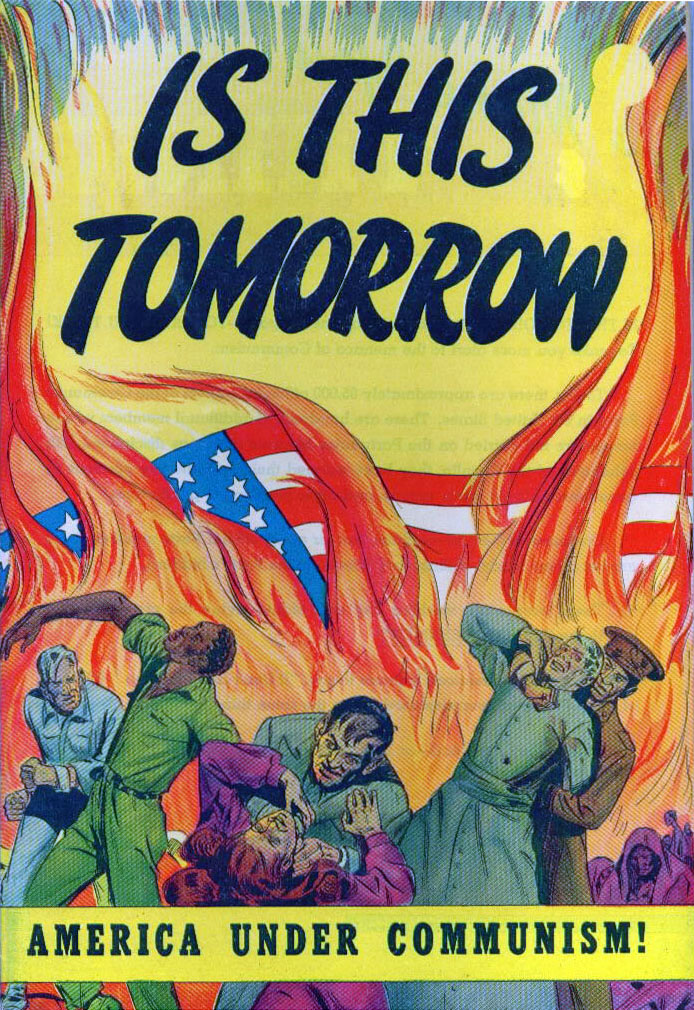 Is this tomorrow? America under Communism
United States · 1947 · 4 techniques annotated
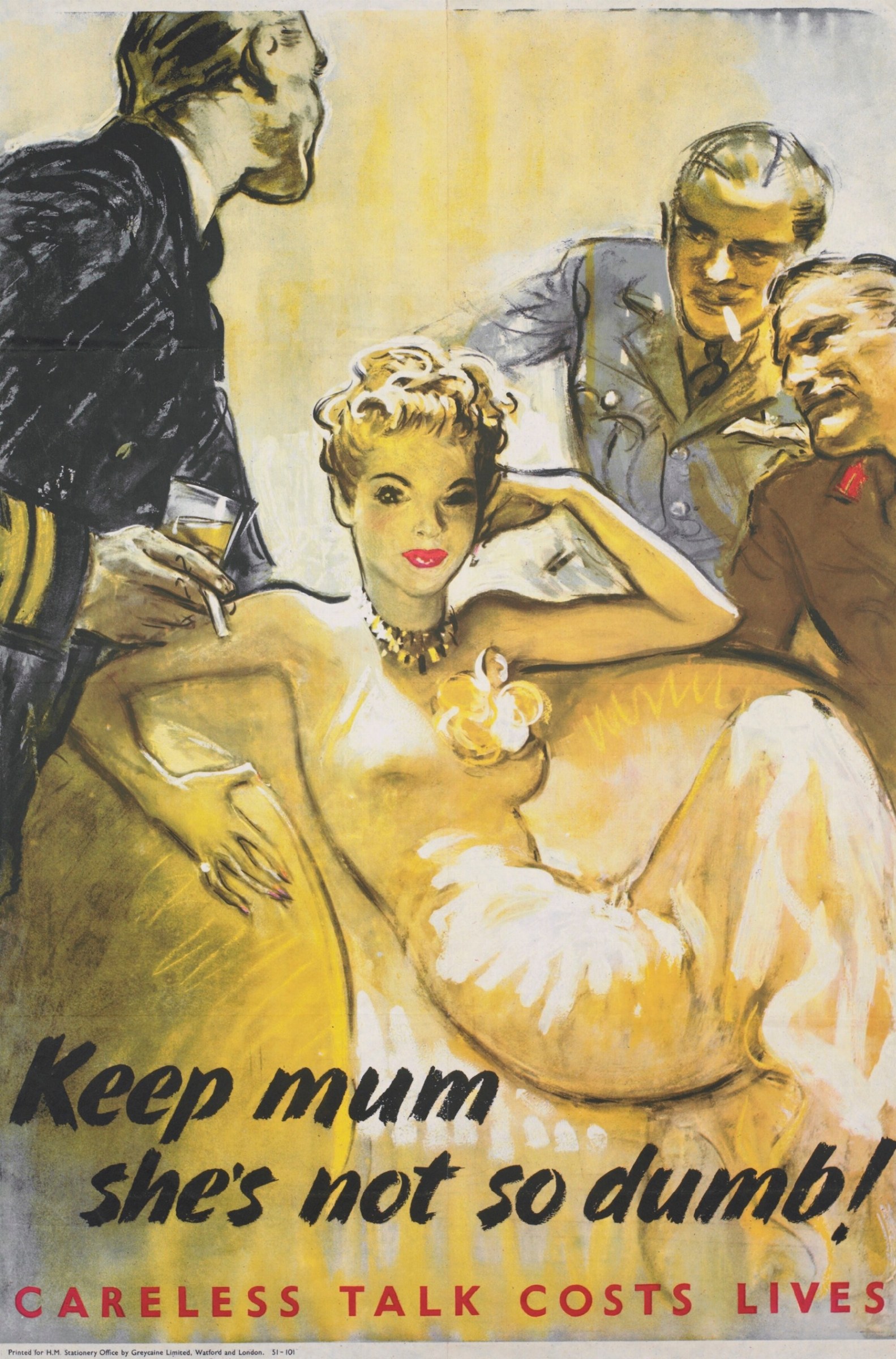 Keep mum, she's not so dumb
United Kingdom · 1942 · 4 techniques annotated
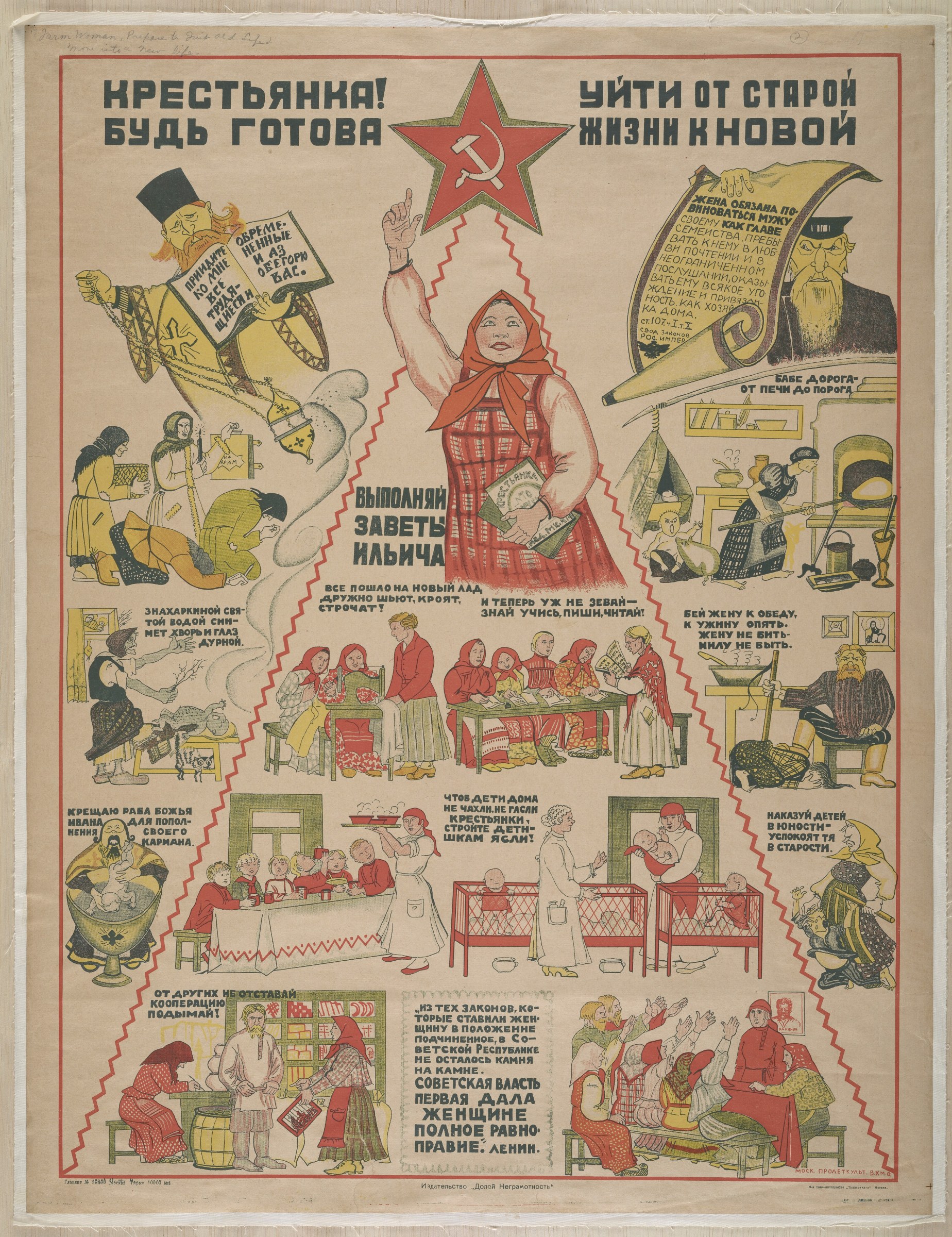 Peasant woman! Be ready to leave the old life for the new
Soviet Union · 1925 · 5 techniques annotated
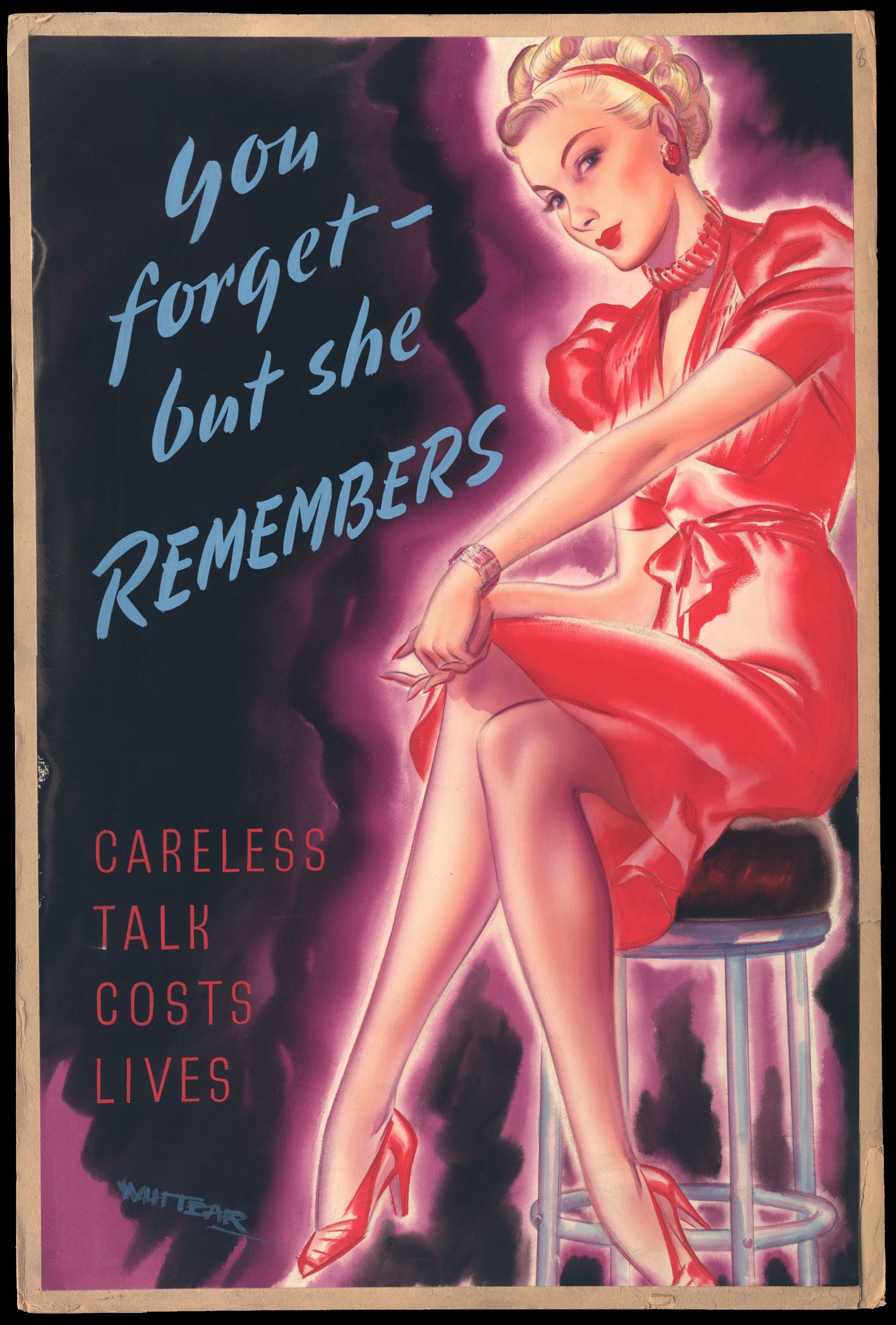 You forget, but she remembers
United Kingdom · 1940 · 3 techniques annotated
Find a message that says what a group of people "are." List three members of the group you know or know of who don't fit. What is the message for, that it needs them to fit?
In the wild
Short examples of the technique at work, each with what to notice. The same examples are questions in the quiz, where the answer is not given away.
"Everyone knows what those people are like. You can't trust them with money."
What to notice. A group is given a fixed portrait that predicts every member's behavior in advance.
The advertisement's every family is the same: a father who fixes, a mother who serves, a boy who builds, a girl who watches.
What to notice. A repeated group portrait presented as nature; nothing is argued, the plate is reprinted.
"She's one of the good ones." Said of a colleague from a group the speaker otherwise describes in one adjective.
What to notice. The counter-example is treated as an exception so the stereotype survives.
Sources
- Lippmann, Walter. Public Opinion. New York: Harcourt, Brace, 1922.
- Allport, Gordon W. The Nature of Prejudice. Reading, MA: Addison-Wesley, 1954. ISBN 978-0201001792
- Dower, John W. War Without Mercy: Race and Power in the Pacific War. New York: Pantheon, 1986. ISBN 978-0394751726
- Goffman, Erving. Gender Advertisements. Cambridge, MA: Harvard University Press, 1979. ISBN 978-0674341654