Remember Scarborough! Enlist now
 1
2
3
4
5
Library of Congress · LC-USZC4-11361 (color film copy transparency) · Public domain · Catalog record
The pins
Context
For discussion
-
1
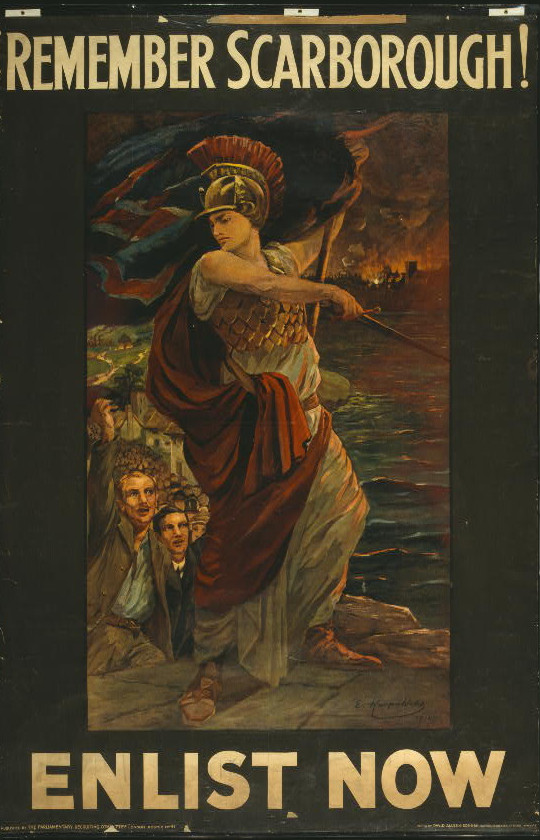
Appeal to outrage The headline "Remember" assumes the reader is already angry and only needs reminding. The raid killed 137 civilians; the poster does not need to say so.
-
2
Transfer Britannia The nation as a helmeted goddess with the flag at her back. Enlisting becomes following her, and refusing becomes letting her go alone.
-
3
Appeal to fear The burning town A British coastal town on fire under a red sky. The first enemy shells to fall on Britain are shown as if they could fall on any town.
-
4
Bandwagon The men following A crowd of men in civilian clothes is already rising to follow her. The viewer is asked to join a movement that the picture says has begun without him.
-
5
Slogan ENLIST NOW Two words in the largest type, with "now" doing the work: the picture supplies the reason, the slogan removes the time to think about it.
On 16 December 1914 German battlecruisers shelled Scarborough, Hartlepool, and Whitby, killing 137 civilians, the first deaths on British soil from enemy action in the war. Edith Kemp-Welch's poster for the Parliamentary Recruiting Committee shows Britannia with drawn sword, a burning town behind her, leading a column of men who follow her out of the frame. The raid became the standard British atrocity image of the war's first winter, used wherever recruiting lagged.
- "Remember" is an instruction. What is the viewer being told to remember, and what to forget?
- Why Britannia, rather than a soldier or a victim of the shelling?
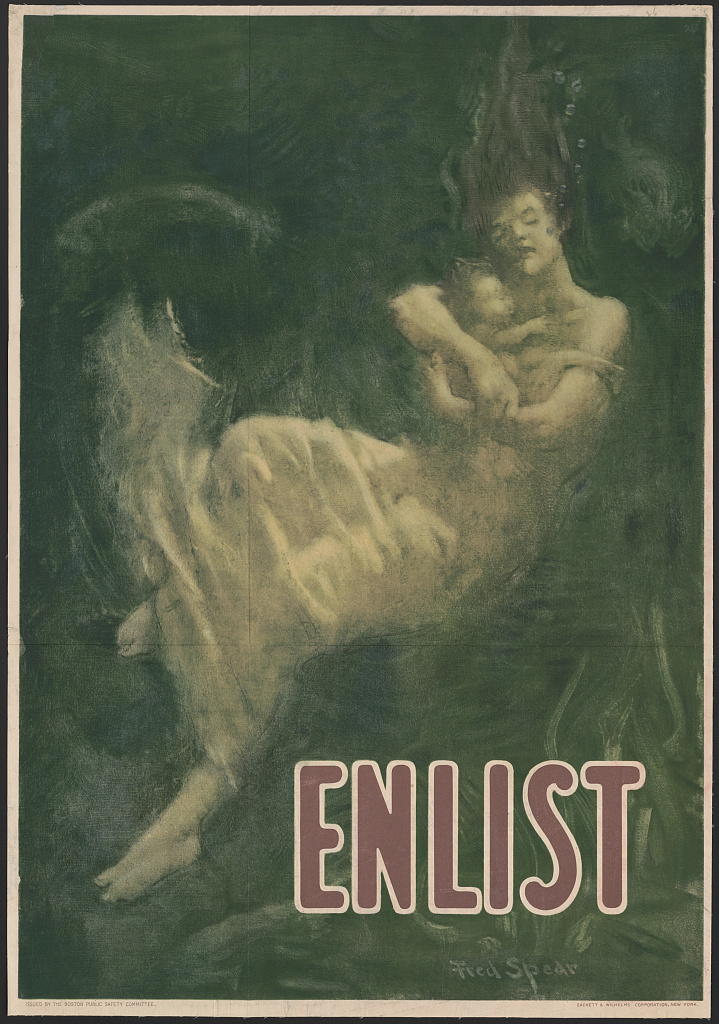
- Compare this with "Enlist" (the Lusitania poster). Which is the more direct appeal to anger?
See also
Same era, or the same techniques.